Physician weighs cold plunges, showers, cryotherapy, and recovery science
Cold exposure is useful, but not magic. Jesse Morse’s read is simple: the best evidence points to short-term recovery, while the right protocol, and the best bang for your buck, are still murky.
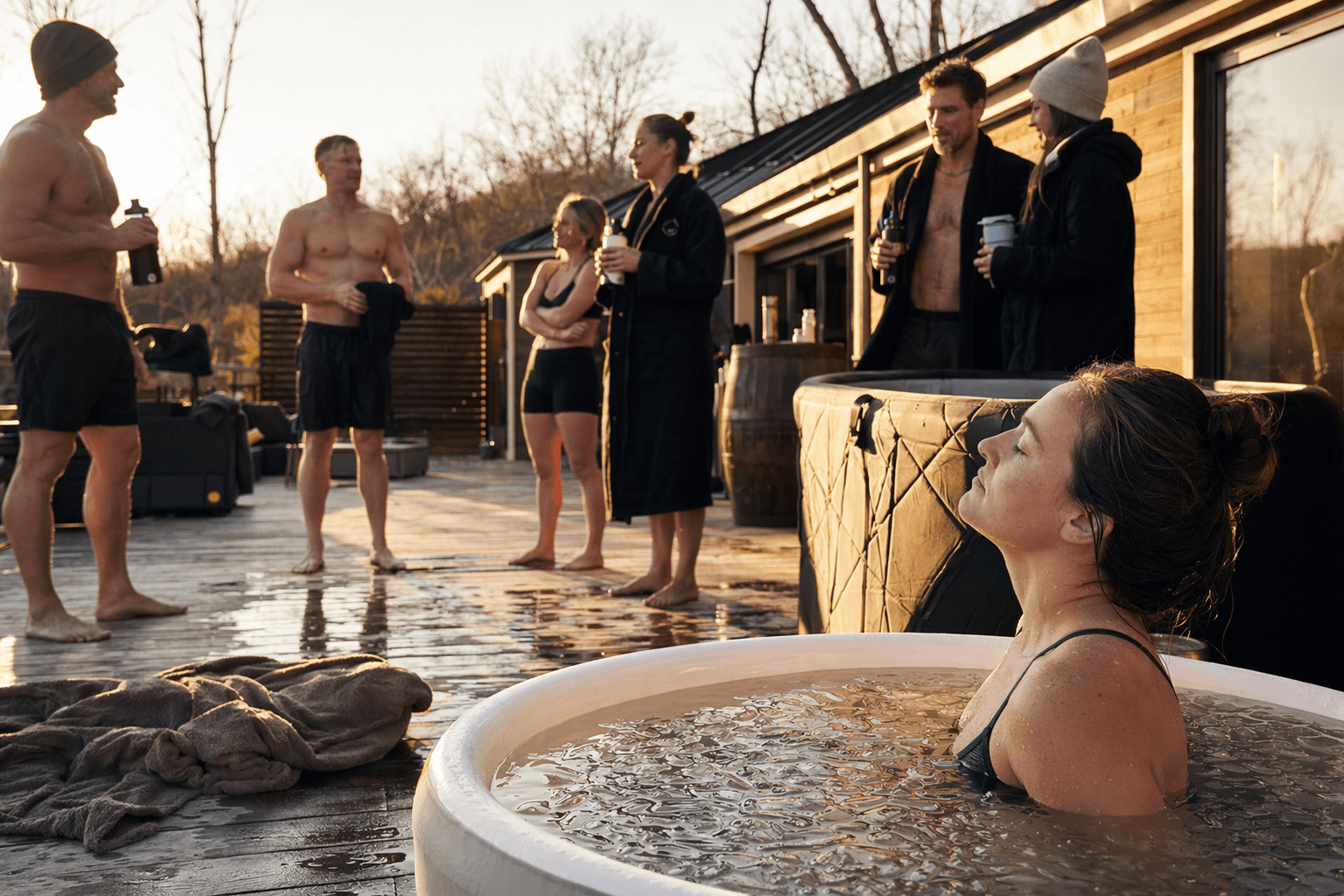
Cold therapy has outgrown the fringe
Dr. Jesse Morse brings the kind of lens that matters here: he is a board-certified family and sports medicine physician with more than a decade of experience, and his work leans into non-surgical orthopedics, PRP, stem cell therapy, and performance optimization. That matters because the cold plunge conversation gets noisy fast, full of breathless claims and expensive setups, while the real question is much narrower: what actually helps recovery, and what is just expensive suffering with a wellness label?
The research picture is broad, but not settled. A 2023 systematic review and meta-analysis pulled in 68 studies on cold water immersion, which tells you this is not some tiny niche with one or two flashy papers behind it. Even with that volume, a newer 2026 review still says the optimal protocol is not well understood, and the lack of exercise-specific guidelines keeps creating confusion about how cold water immersion should be used in different training settings.
What the evidence keeps circling back to
The strongest, most repeatable takeaway is that cold water immersion has a real role in post-exercise recovery. A 2012 British Journal of Sports Medicine meta-analysis described it as a common recovery method after strenuous exercise, and a 2018 review said it is used to minimize fatigue and speed recovery after training. That lines up with why athletes keep reaching for it: when your legs are cooked, cold exposure can feel like a reset button.
But that is also where the fine print matters. The same 2018 review noted that debate still exists about its long-term effects on training adaptation. In plain language, cold exposure may help you feel better faster, but feeling better faster is not the same thing as building better performance over months of hard training. Morse’s evidence-backed stance lands in that gap, where recovery relief is real, but the grander claims often outrun the science.
Why the cold craze keeps spreading
The cold therapy boom is not subtle anymore. A 2022 British Journal of Sports Medicine article said there has been an explosion in the number of people using cold water immersion for claimed mental and physical health benefits. It also makes clear that this category is bigger than the classic ice bath: home-based ice baths, cold showers, open-water swims, and dips all fall under the same umbrella.
That matters for readers choosing a routine, because the market treats these as very different experiences, even if they overlap physiologically. A built-in plunge tub, a blast of shower water, and a commercial cryotherapy session may all promise the same recovery halo, but the real-world tradeoffs are not the same. The best choice is not the most dramatic one. It is the one you will actually do consistently without wrecking your schedule or your budget.
Cold plunge, cold shower, cryotherapy: what changes in practice
A cold plunge is the most direct version of the idea. It gives you the cleanest immersion experience, which is why it remains the reference point in so much of the recovery talk. If you are trying to match the research conversation around cold water immersion as closely as possible, this is the closest fit, and it is also the most controllable of the three options.
A cold shower is the easiest entry point. It does not offer the same full-body immersion, but it is cheap, immediate, and easy to repeat, which gives it a practical edge for people who want cold exposure without turning recovery into a whole production. In a weekly routine, that convenience can matter more than perfection.
Cryotherapy sits in a different lane entirely. It is the most branded and the least home-friendly of the three, and for most people it is the hardest to justify on cost and logistics alone. The broader evidence base in the material here is centered on cold water immersion, not a flashy machine or a spa package, so cryotherapy should be treated as the most optional of the group unless you already have a strong reason to use it.
The real decision is not which one sounds toughest
The smarter question is which modality earns space in an actual training week. Morse’s evidence-backed frame suggests the highest payoff comes from the version you can repeat after hard sessions, especially when fatigue is the immediate problem. That puts a cold plunge in the lead for people who want the most complete cold water experience, a cold shower in the lead for people who want the lowest-cost entry, and cryotherapy in the position of a convenience purchase rather than a necessity.
If you want the practical version, it looks like this:
- Use cold exposure when recovery is the goal, not as a superstition after every workout.
- Favor the method that fits your routine, because consistency beats novelty.
- Be skeptical of any claim that cold exposure will solve everything from soreness to motivation to long-term adaptation.
- Treat the strongest evidence as support for short-term recovery, not a blanket endorsement of every cold therapy pitch.
Safety is the part people skip, and it is the part that matters most
There is a hard safety line here. The Centers for Disease Control and Prevention warns that standing or working in cold water causes rapid body heat loss and can lead to hypothermia. The National Health Service is even more explicit: hypothermia is a medical emergency, defined as a body temperature below 35C, and its symptoms include shivering, pale or blue-gray skin, slurred speech, slow breathing, tiredness, and confusion.
That warning is not decorative. Cold exposure feels controlled right up until it does not, especially when people confuse discomfort with toughness. If the session stops being a training tool and starts becoming a fight against numbness, poor judgment, or altered breathing, you are no longer in the recovery zone. You are in the danger zone.
Where Morse’s take actually lands
The cleanest way to read Jesse Morse’s stance is this: cold exposure is legitimate, widely used, and backed by a meaningful body of research, but it is still not a magic formula. The science supports a role for short-term recovery, yet the best protocol is unsettled and the long-term training tradeoffs remain debated. That makes the smartest cold routine surprisingly modest.
For most people, the best weekly setup is not the most expensive one or the most extreme one. It is the one that gives you a real recovery benefit, fits your budget, and does not ask you to gamble with safety.
This article was produced by Prism’s automated news system from verified source data, official records, and press releases, then run through automated quality and moderation checks before publishing. The system is built and supervised by the people who set the standards it runs under. Read our full AI policy.
Did this article answer your question?