Science-Backed Breathing Techniques Can Triple Your Cold Plunge Immersion Time
The right breathing pattern before and during your cold plunge can triple immersion time and cut heart rate by up to 20 bpm — here's the three-phase playbook.

Your first cold plunge will last about 45 seconds. Not because the temperature beats you, but because your breathing does. The gasp reflex hits the moment cold water touches your skin, your chest tightens, your breath goes shallow and fast, and your brain starts negotiating an exit. What separates a 45-second panic from a three-minute controlled plunge is not willpower. It is a specific, repeatable breathing strategy applied across three phases: before, during, and after immersion. Get the breathing right, and research suggests you can extend your immersion time by 2-3x compared to untrained first-timers, while dropping your heart rate by 15-20 beats per minute in the water.
What Actually Happens in the First 30 Seconds
When you first immerse yourself in cold water, your body's initial response is to take a deep breath in, and it might feel less like a breath and more like a gasp. The primary components of the cold shock reflex include gasping, tachypnea (abnormally rapid breathing), reduced breath-holding time, and peripheral vasoconstriction. Your sympathetic nervous system fires a full alarm: fight-or-flight, heart rate spike, shallow rapid breathing. The first 10-30 seconds in the plunge are the hardest. You'll feel a gasp reflex, shallow breathing, and urge to tense up.
This 60-90 second window is where the real risk lives for first-time plungers. Your job is not to white-knuckle through it. Your job is to interrupt the pattern before it starts.
Phase 1: Pre-Plunge (2-3 Minutes Before You Get In)
Do not walk straight from the locker room to the tub. Spend 2-3 minutes on controlled breathwork before you enter. The goal here is to pre-load your parasympathetic nervous system so the cold shock response has less room to run wild.
The most practical method: spend one to two minutes on diaphragmatic breathing to calm down. Inhale gently through your nose to warm and humidify the air, then exhale slowly, about 2 to 3 times longer than your inhale. Keep your shoulders dropped and your jaw loose. You are not hyperventilating. You are doing the opposite: slowing everything down and signaling safety to your nervous system before the cold hits.
The 4-7-8 technique, developed by Dr. Andrew Weil, promotes deep relaxation by regulating oxygen flow and slowing the heart rate. Inhale for a count of four, hold for seven, exhale for eight. One to two rounds of this in the minute before you step in is enough to measurably lower your baseline heart rate heading into the plunge. The prolonged exhalation phase activates the vagus nerve, promoting relaxation and helping suppress the body's panic response.
Phase 2: During Immersion — 4-6 Breaths Per Minute
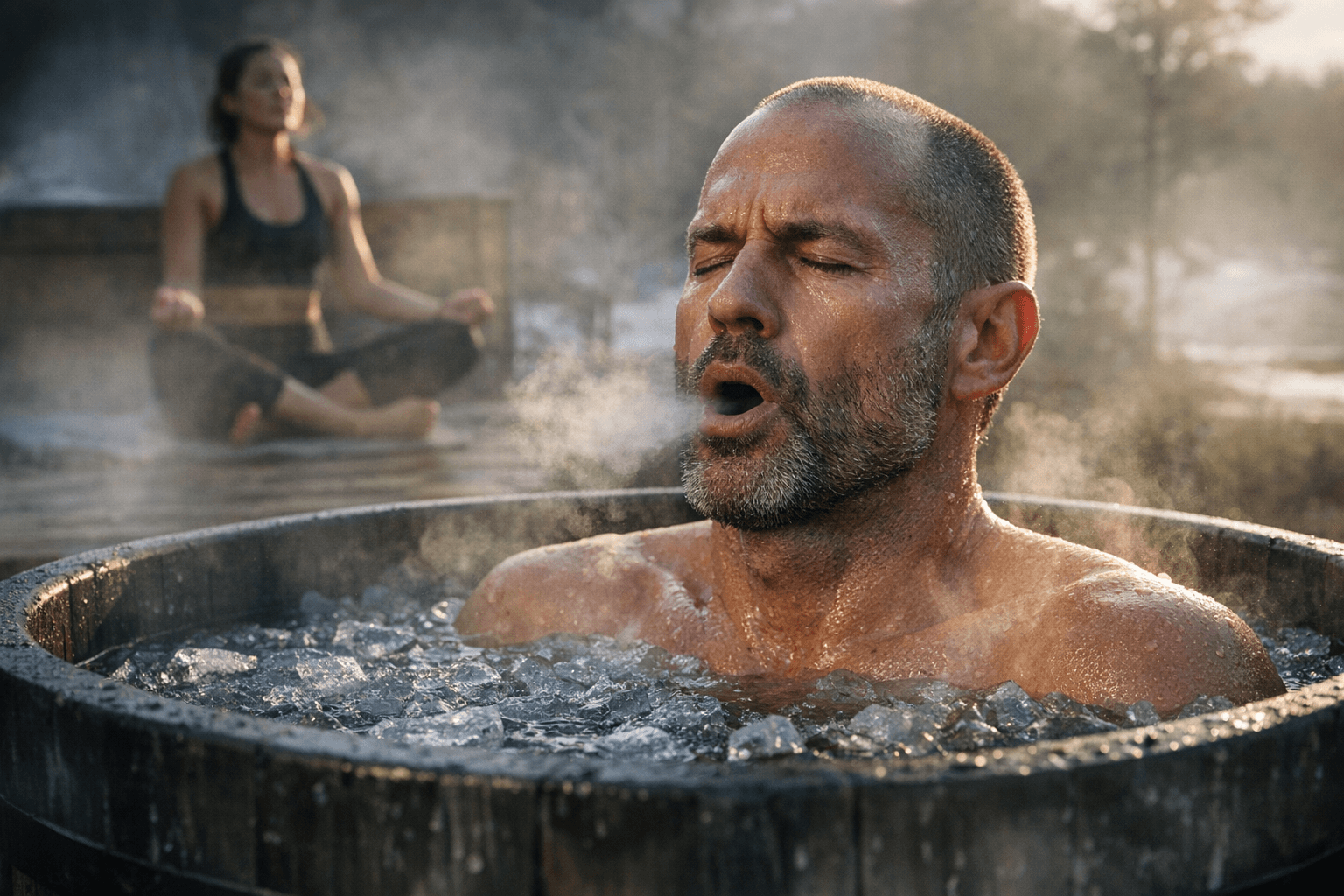
Once you are in the water, your target is a controlled cadence of roughly 4-6 breaths per minute: slow nasal inhalation followed by an extended exhale. This is the evidence-backed sweet spot. Slow diaphragmatic breathing at 4-6 breaths per minute during and after cold immersion is the breathwork pattern most likely to synergize with cold immersion for vagal tone enhancement. Slow breathing during cold immersion helps moderate the cold shock response by engaging the vagal respiratory-cardiac coupling, potentially reducing the sympathetic overshoot and allowing the vagal recovery phase to begin sooner during immersion rather than only after exiting the water.
In practice, that rhythm looks like this: focus on breath control for the first 30 seconds, taking slow, deep breaths through the nose to manage the cold shock response. Once settled, maintain a pattern of breathing: 4-second inhales through the nose, 6-second exhales through slightly pursed lips.
If the gasp reflex catches you mid-breath, use box breathing to reset: box breathing is used by elite military and high-stress performers to stay composed under pressure; it balances your CO2/O2 levels and smooths out your internal freak-out. Inhale for four counts, hold for four, exhale for four, hold for four. Two rounds brings most first-timers back to a manageable state. Sustain that cadence through the rest of your session, staying present, letting the water do its work, and keeping the system quiet.
Phase 3: After the Plunge — Recovery Breathing
When you exit, your body needs a soft landing. Do not slam a hot shower immediately and do not start talking at a rapid pace. Give yourself 90 seconds of continued slow nasal breathing while standing or sitting. The same 4-6 breath-per-minute pattern that served you in the water continues to drive parasympathetic recovery out of it. This phase, easy to skip, is where a significant portion of the mood and clarity benefit actually consolidates. Regular practice of this full three-phase routine improves vagal tone over weeks, meaning each subsequent plunge starts from a higher baseline of nervous system resilience.
The Red Lines: What Not to Do
Here is where the "do this, not that" framing matters most, because one very popular approach is genuinely dangerous in this context.
Do not do Wim Hof-style breathing in or immediately before water immersion. Wim Hof breathing is a hyperventilation-based protocol: rapid, deep cycles followed by extended breath holds. On dry land, as a standalone practice, it has its proponents. In or near water, it is a different story entirely. According to one expert, immersion in cold water can produce cardiac arrhythmia in 1 to 3 percent of young healthy subjects, but up to 63 percent will suffer arrhythmia when asked to hold their breath before the plunge. That jump from 3 percent to 63 percent is the number worth sharing with any friend who plans to "Wim Hof" their way into the tub.
The dangers associated with hypocapnic breathwork methods, particularly in proximity to water, are rooted in the intricate physiological responses triggered by hyperventilation and cold exposure. The combination of hypocapnic (low CO2) breathwork methods, such as the Wim Hof breathing technique, with water immersion, particularly in ice baths, creates significant risk of shallow water blackout and fainting. Wim Hof's own written instructions warn against this combination. The rule is simple: Wim Hof breathing belongs on dry land only, always separated from your plunge session.
The second red line: do not try to suppress the gasp reflex by forcibly holding your breath when you enter the water. It is better to enter the water slowly rather than all at once, to avoid the automatic gasping response that can cause people to inhale water into their lungs. A slow, controlled entry combined with a sustained exhale through pursed lips is a far safer approach.
Who Should Not Plunge
Breathing technique can manage the physiological stress of cold immersion for healthy adults, but it cannot eliminate the underlying cardiovascular load. Cold water can cause a heart attack due to severe vasoconstriction, where the heart has to work harder to pump the same volume of blood throughout the arteries. For people with pre-existing cardiovascular disease, the additional workload can result in myocardial infarction or acute heart failure. Anyone with a history of heart arrhythmia, uncontrolled hypertension, Raynaud's disease, or who is pregnant should consult a physician before cold plunging, regardless of breathing proficiency. Breathing training is a performance and safety tool for healthy practitioners, not a medical override.
Making Progress Measurable
The 2-3x immersion time improvement that trained breathing can deliver is not a ceiling; it is an early benchmark. Track your sessions: note how many seconds before your breath stabilizes after entry, your resting heart rate before and after, and your total comfortable immersion time. Breath control is the single most important skill for cold plunging. The cold shock response triggers a gasping reflex and rapid, shallow breathing; your job is to interrupt this pattern and establish slow, controlled breathing. When the gasp reflex stops surprising you, it stops controlling you. At that point, the cold plunge becomes exactly what the best practitioners describe it as: a skill, not an ordeal.
This article was produced by Prism’s automated news system from verified source data, official records, and press releases, then run through automated quality and moderation checks before publishing. The system is built and supervised by the people who set the standards it runs under. Read our full AI policy.
Did this article answer your question?