Study Finds Wim Hof Experts Show Distinct Brainwave Patterns During Ice Baths
Wim Hof experts showed posterior gamma activity and theta-linked interoception during cold immersion, while novices displayed frontopolar gamma tied to decision uncertainty.
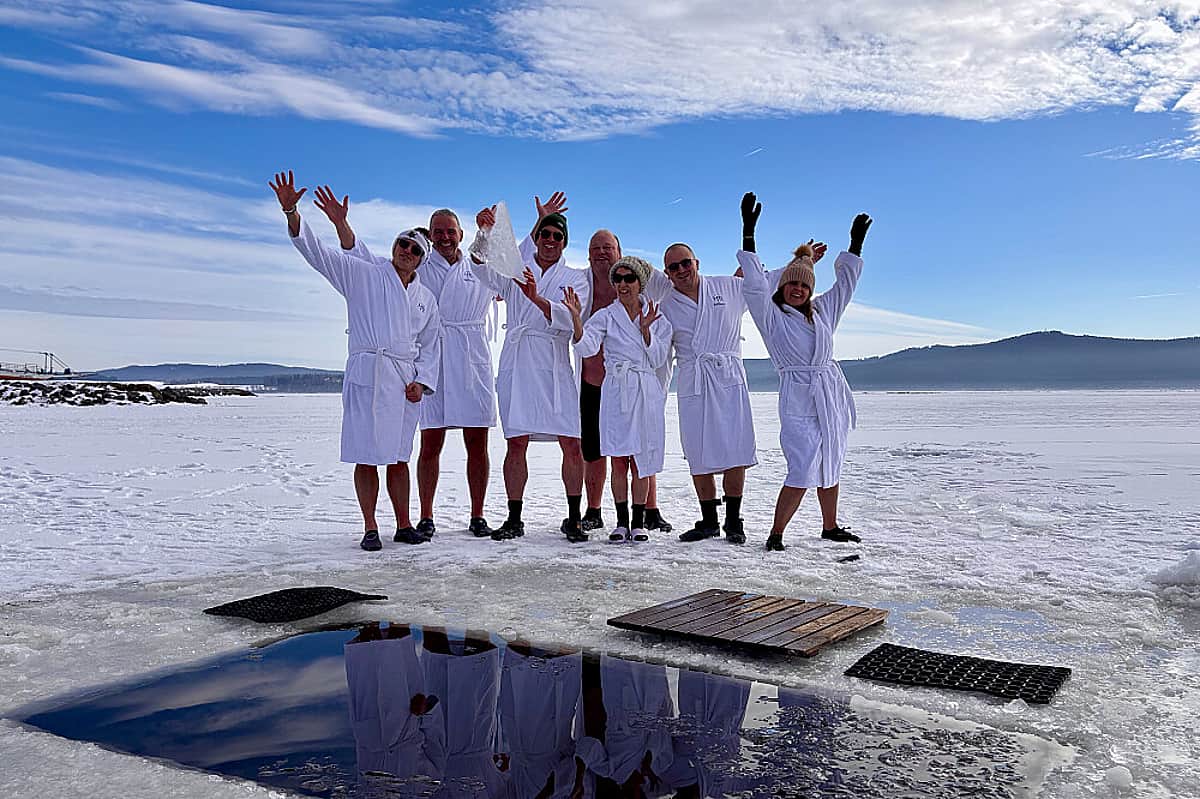
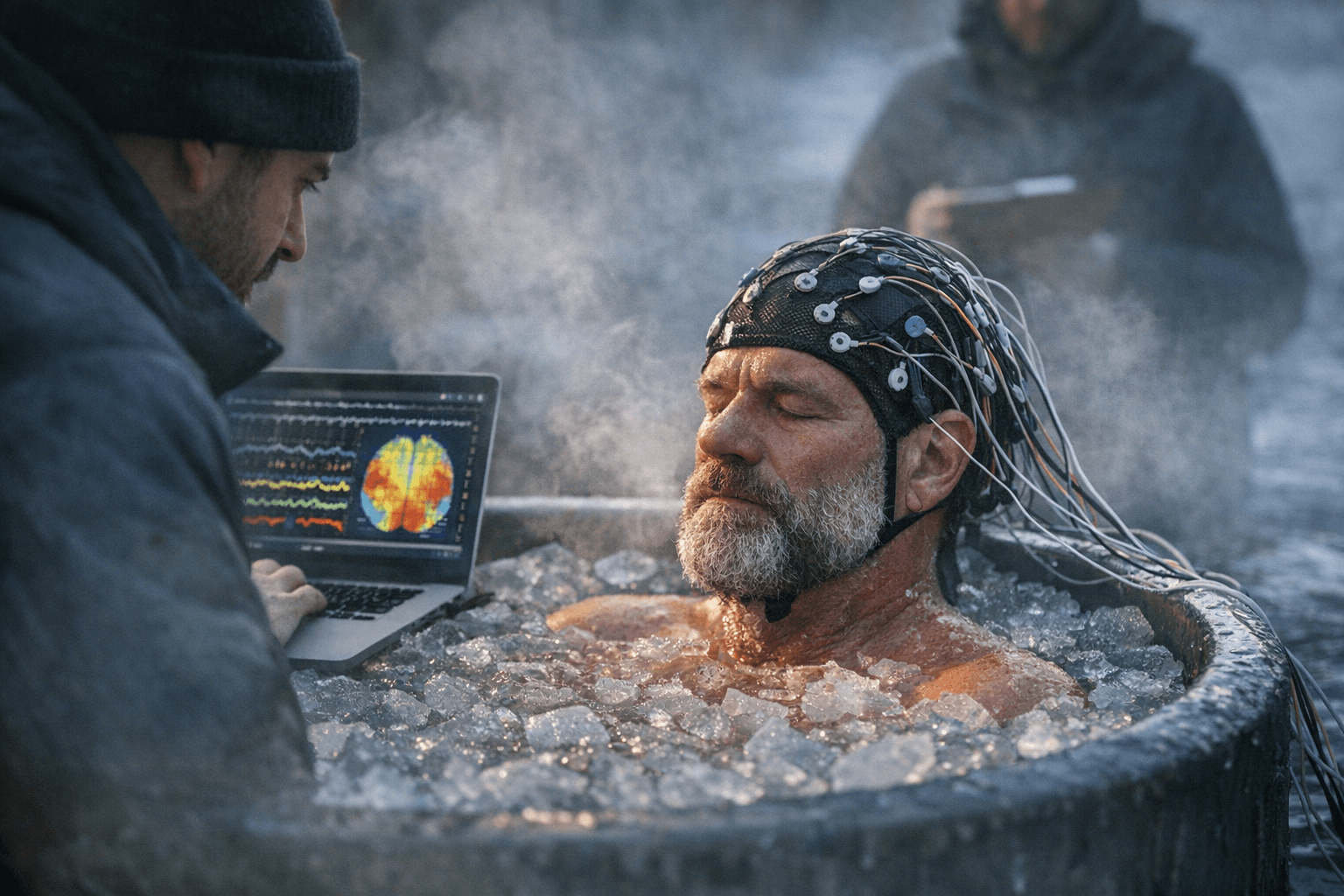
A specialized EEG headsuit and a French ice bath just gave cold-therapy science something it has been short on: a specific, frequency-level description of what years of Wim Hof Method practice actually does to the brain.
The study, titled "Hypocapnia, Autonomic Signatures, and Gamma-Band Reconfiguration During Wim Hof Breathing Method and Cold Immersion," was carried out at Leandre Omeir's Wim Hof Method Center in France under lead neurophysiologist Rodrigo Montenegro, alongside co-authors Cedric Cannard, Alexandre Batissou, Alice Guyon, Renaud Evrard, and John A. Chavez. The collaboration drew on French and British research institutions and was funded by DMT Quest. The Wim Hof Method organization published a summary of the findings on March 30.
The research compared seven novices to ten Level 2 certified practitioners, measuring neural oscillatory activity during breathwork and, for the experts, cold immersion. The contrast was stark. In the novice group, gamma-band activity clustered in the frontopolar region, a signature the authors link to higher memory load and decision uncertainty as the brain navigates an unfamiliar stressor. The experienced practitioners showed something different: posterior-dominant gamma activity paired with theta-band connections running between sensorimotor regions and the prefrontal cortex.
That theta connectivity is the finding most likely to drive conversation in the cold-therapy community. The researchers interpret it as a marker of improved interoception, the brain's capacity to read and regulate the body's internal state. In practical terms, a veteran practitioner in an ice bath is not fighting the cold signal; their brain is processing it through a more organized, bidirectional channel between regions that sense discomfort and regions that manage conscious control.
The study's framing situates these findings within a broader argument the Wim Hof community already takes seriously: that repeated pairing of breathwork and cold exposure conditions neural pathways in a measurable way, not merely a subjective one. It builds on recent work from Queensland and UCSF that the method's science team has cited as converging evidence on its stress-coping impact.
The study's limitations are impossible to overlook. The total sample was 17 participants. The novices underwent breathwork only while the experts underwent both breathwork and cold immersion, making clean attribution difficult. The findings have not cleared peer review. Until the full dataset and methodology are submitted to an independent journal, the results sit on the optimistic end of what anyone should claim.
What the study does offer is a methodological template worth repeating at scale. A wearable EEG headsuit capturing real-time frequency-band data during live cold immersion is a richer instrument than post-session surveys, and the posterior gamma and theta-connectivity signature it identified is now a testable hypothesis. Whether that signature holds across 100 subjects with blinded outcome measures is the question worth funding next.
This article was produced by Prism’s automated news system from verified source data, official records, and press releases, then run through automated quality and moderation checks before publishing. The system is built and supervised by the people who set the standards it runs under. Read our full AI policy.
Did this article answer your question?