Why Female Cycles Make Cold Plunge Timing More Complex Than You Think
Most cold plunge advice is built on male data, leaving women without a reliable roadmap. Longevity biologist Annalina's work on cycle-synced timing changes that.
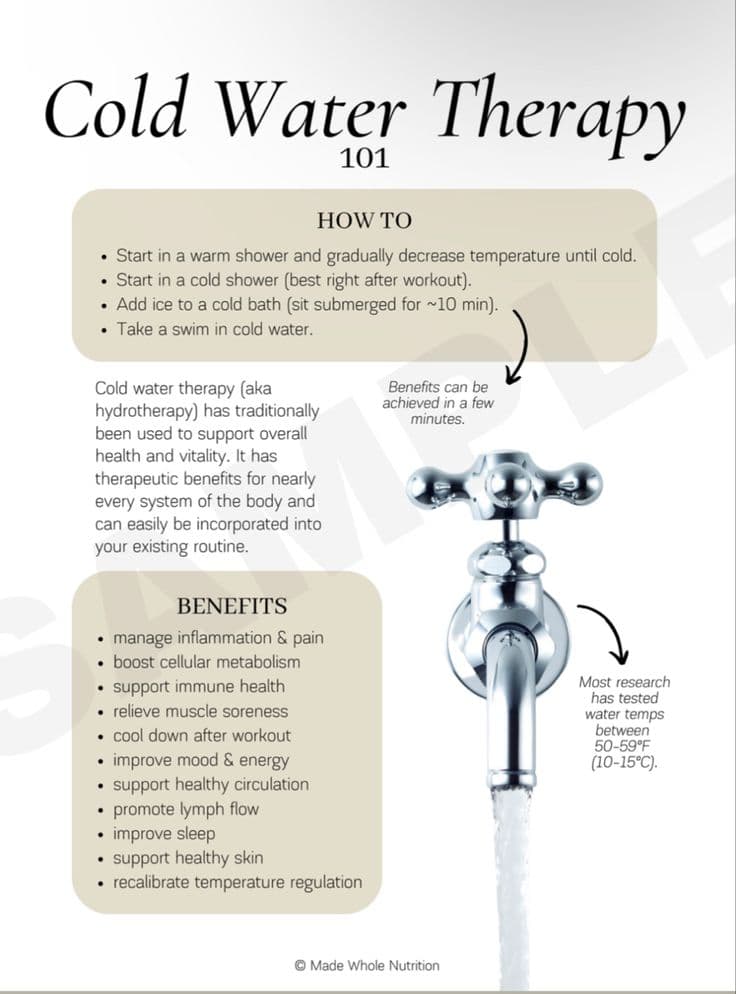
Pick up almost any cold plunge guide and you'll find the same universal prescriptions: go cold, go often, go hard. What those guides rarely mention is that the research underpinning most of those recommendations was conducted almost entirely on men. Longevity biologist Annalina has been vocal about this blind spot, pointing out that the standard cold exposure advice sidelines the hormonal reality of roughly half the population and that smarter, phase-specific timing produces far better results than blanket rules.
Most research on cold water therapy is based on male physiology. The reason that gap exists is telling: the cyclical hormonal changes in a woman's body are often viewed as too many variables in research, leaving a huge gap in tailored guidance and sidelining the unique hormonal fluctuations that shape women's responses to stressors like cold. That's not a minor omission. It means the protocols circulating on social media, inside wellness apps, and across plunge communities were essentially calibrated to a body that operates on a 24-hour hormonal clock, not a 28-day one.
The Second Clock You're Probably Ignoring
Everyone is familiar with the circadian rhythm, the body's 24-hour internal clock that governs sleep, temperature, hormone release, appetite, and more. But women also have a "second clock," the infradian rhythm, which spans around 28 days and regulates the menstrual cycle. This rhythm doesn't just affect reproductive health; it has powerful impacts across six major systems in the body, including the brain, metabolism, the immune system, microbiome, stress response, and the reproductive system.
Women's responses to cold exposure can vary significantly depending on the phase of their menstrual cycle, due to shifts in hormone levels that influence temperature sensitivity, vascular responses, and metabolic effects. Crucially, this isn't just about comfort or preference. Women's resting metabolic rate and core temperature regulation are influenced by estrogen and progesterone fluctuations across the menstrual cycle. Research shows that women generally vasoconstrict faster, reducing blood flow to the skin, and experience greater drops in core temperature during immersion, especially in the luteal phase when progesterone is high. That means the same five-minute plunge at the same temperature can hit the body in meaningfully different ways depending on where you are in your cycle.
Phase by Phase: What's Actually Happening
The menstrual cycle occurs in four phases, each characterized by hormonal changes that affect a woman's physical and emotional state. The menstrual phase (days 1-5) begins with the shedding of the uterine lining; women may experience cramps, fatigue, and mood swings due to lower levels of estrogen and progesterone. The follicular phase (days 1-14) overlaps with the menstrual phase and continues until ovulation.
During menstruation itself, cold exposure is genuinely complicated territory. For most women, sitting in an ice bath while actively menstruating carries real downsides. Menstrual cramps are the uterine muscle contracting to shed its lining. Cold makes all muscles tighten, and it constricts the blood vessels in the uterus through vasoconstriction, which can amplify rather than relieve discomfort. That said, individual experience varies. Some women find cold plunging helpful in reducing menstrual cramps due to its anti-inflammatory effects, while others may prefer to avoid it due to increased sensitivity to cold during this phase. Listening to your body is essential to determine whether cold plunging is beneficial during menstruation.
As the menstrual phase winds down, the picture brightens considerably. The follicular phase (days 6-14) sees estrogen begin to rise and energy increase. You may feel more motivated, focused, and physically strong. As the cycle progresses into the follicular and ovulation phases, rising estrogen and energy levels can make cold plunging feel more invigorating and supportive. During this time, 1-3 minutes in the plunge can help boost circulation, sharpen focus, and elevate mood, especially around ovulation when vitality tends to peak.
Ovulation, around day 14, represents peak estrogen and a short, high-energy window that is great for physical challenges and cold exposure. During follicular and ovulation phases, your pain threshold is higher, energy is elevated, and cold plunging can enhance mental clarity and performance. This is the window to push depth, duration, and temperature.
The luteal phase, which begins after ovulation and runs to the start of the next period, is where the conversation gets more nuanced. Progesterone dominates during days 15-28; mood and energy may dip as the period approaches, and sensitivity to stress and external stimuli can increase. Cold water therapy may feel harsher and benefits are less pronounced in the early luteal phase, and the cumulative effects of hormonal changes make cold exposure feel more challenging and potentially counterproductive, as the body may be less capable of handling additional stressors.
The late luteal phase, the days closest to menstruation, calls for the most restraint. During this phase, the body is more sensitive to stress, and a long, intense ice bath is a significant stressor that could make PMS symptoms worse. This is not the time to push limits. In the later luteal phase, shorter plunges of 30-90 seconds may still be helpful for managing inflammation and stabilizing energy.
The "Never" and "Always" Problem
Annalina's core argument, and the one that separates thoughtful cycle-synced practice from knee-jerk avoidance, is that the answer is almost never a blanket "don't." The biggest misconception around extreme temperatures is that women shouldn't cold plunge. The actual recommendation is more precise. Women are more stressed when in the luteal phase, so it's important to think about when to do the plunge. Being gentle to yourself during that phase, and opting for very brief plunges, waiting until after the phase, or switching to a cold shower, allows you to figure out what works individually.

For women, extreme cold responses can tip too far, elevating cortisol, suppressing thyroid activity, and blunting the very hormonal and metabolic benefits you're trying to elicit. For women, smarter, not colder, is better. Women are not small men, and physiology deserves its own protocol.
Practical Adjustments Worth Making
The broad framework, backed by emerging evidence, looks something like this:
- Menstrual phase (days 1-5): Keep plunges short (under 60-90 seconds) or skip entirely if cramping is significant. It is always best practice to have heat exposure first, either via sauna, a hot shower, or exercise before cold exposure.
- Follicular phase (days 6-14): The first week coming off a period is great for re-introducing plunges, and the second week is ideal for longer immersions.
- Ovulatory phase (around days 14-15): This is the time to challenge yourself and plunge colder.
- Early luteal phase (days 16-21): Cold water therapy may feel harsher and benefits are less pronounced; this is a good time to start tapering off.
- Late luteal phase (days 22-28): This is potentially the time to take a break from cold water therapy. Consider contrast therapy, alternating hot and cold, as a gentler alternative. Contrast therapy, simply alternating between hot and cold, acts like "push-ups" for blood vessels, forcing them to open and close, and is a gentler way to train the circulatory system.
One additional variable worth considering: hormonal contraception changes the cycle dynamics significantly. With women using hormonal contraception, working with the cycle per se becomes a case-by-case basis. If you're on the pill or another hormonal method, the four-phase framework may not map cleanly to your experience, and monitoring how you feel day-to-day matters more than following a calendar.
Why This Matters Beyond Comfort
The advice around cold exposure for women is still evolving, and research on cold exposure and women is growing with results that aren't as simple as headlines suggest. What many experts agree on is that cold water therapy isn't a cure-all, but it can still be a valuable tool.
Women can be uniquely impacted by cold plunging due to how stress interacts with the menstrual cycle and the effects of reproductive hormones on body temperature, energy expenditure, and brown fat activation. Getting the timing right isn't about being precious with your practice. It's about not working against the very biology that makes female physiology distinct. The research base that most cold plunge protocols were built on simply didn't account for that, and cycle-aware timing is the correction the community has been waiting for.
This article was produced by Prism’s automated news system from verified source data, official records, and press releases, then run through automated quality and moderation checks before publishing. The system is built and supervised by the people who set the standards it runs under. Read our full AI policy.
Did this article answer your question?