High surf advisory warns Kona ocean users of hazardous conditions
South-facing shores of Hawaii Island were under a high surf advisory at 11:19 a.m. HST, forcing Kona divers to treat shore entries and surf-zone exits as the day’s biggest risk.
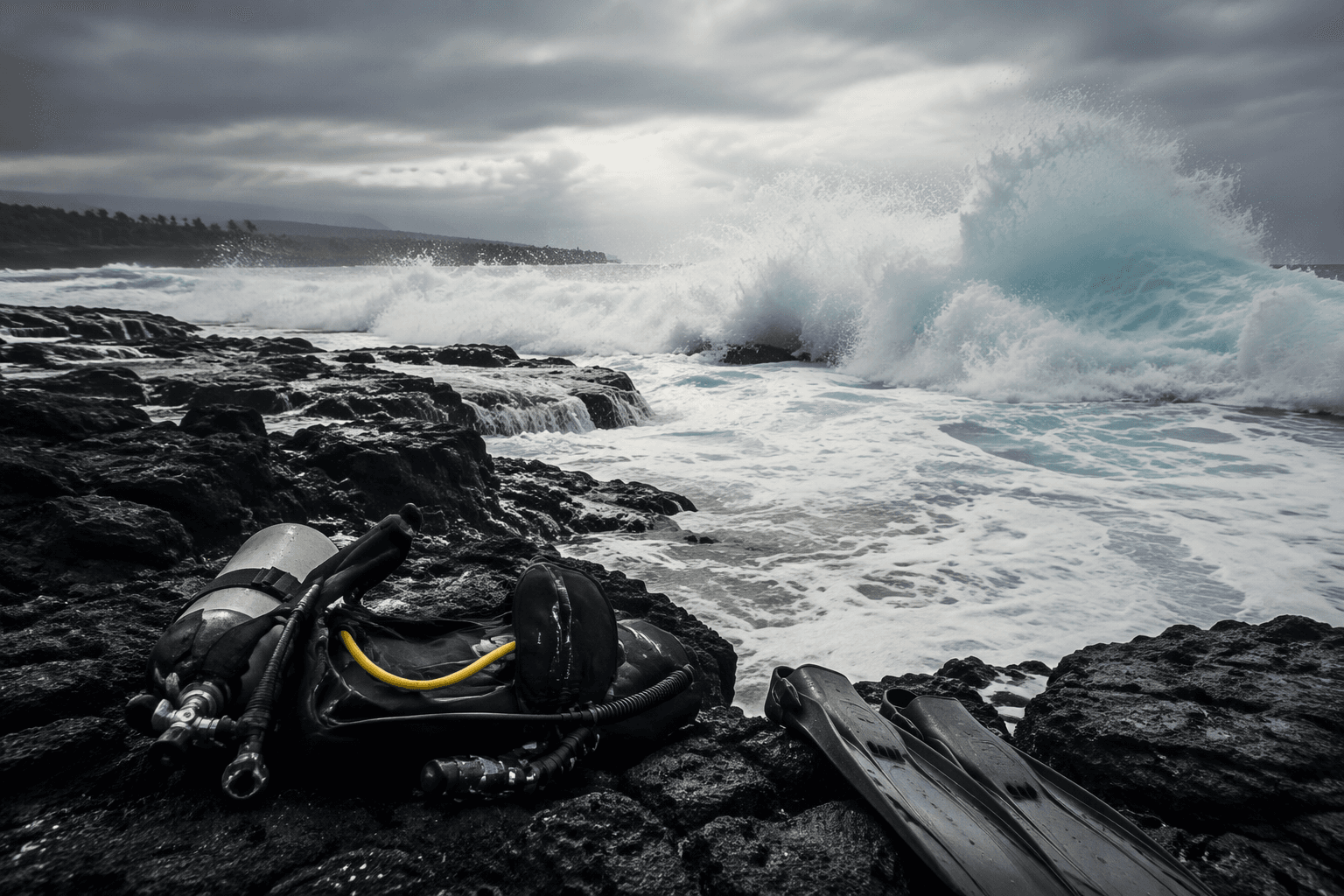
A high surf advisory went out for south-facing shores of Hawaii Island at 11:19 a.m. HST on July 20. Hawaii County Civil Defense Agency pointed people back to the warning. For Kona dive plans, it was a cue to rethink shore entries, boat access and any dive plan that depended on a clean run through the surf.
On the Kona side, the water can look manageable from the parking lot and still turn hostile at the edge. Even on the leeward side, swell wrap, shore break and strong currents can hit popular entry and exit points. That creates problems for snorkeling, freediving, shore diving and simple beach access, because larger surf can bring powerful wave sets and unpredictable surge that are hard to read until they are already on top of you.
A high surf advisory changes the dive call fast. South-facing exposures are the first places to get squeezed out, and a shore dive that seemed acceptable in the morning can become a bad bet once the surf starts stacking and the beach begins taking repeated wash. Kona operators plan around local conditions, but advisory conditions can still force site selection changes, boat-entry adjustments, pickup timing shifts or a straight cancellation of any shore-based plan if the captain decides it is not worth the risk.
The National Weather Service Honolulu Forecast Office keeps Hawaii surf forecast and surf observation products online. Its statewide surf forecast became operational on Sept. 10, 2020. On the Big Island, the coastline changes so much from one side to the next. A protected cove can still see strong surge or debris movement when conditions build, and a site that feels quiet in the morning can become dangerous by afternoon.
This article was produced by Prism’s automated news system from verified source data, official records, and press releases, then run through automated quality and moderation checks before publishing. The system is built and supervised by the people who set the standards it runs under. Read our full AI policy.
Did this article answer your question?