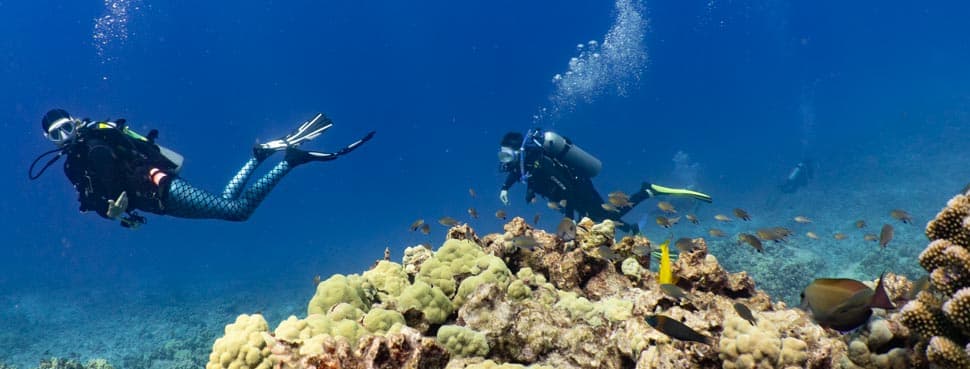
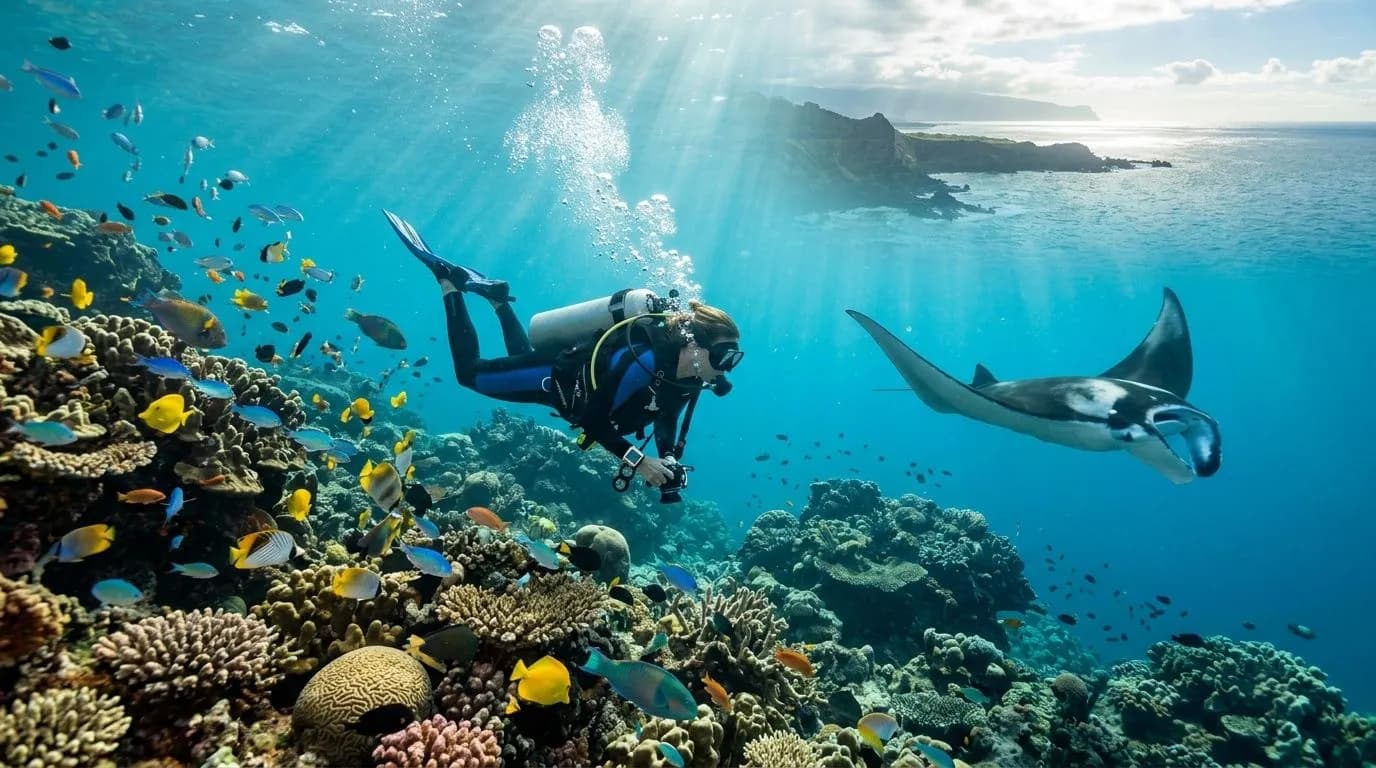
Kona coast diving guide highlights Hawaii’s best scuba experiences
Kona is the right call when you want manta night dives, lava-cut reefs, and steadier west-side conditions. Maui, Oahu, and Kauai make more sense if your trip is built around Molokini, wrecks, or Ni'ihau.
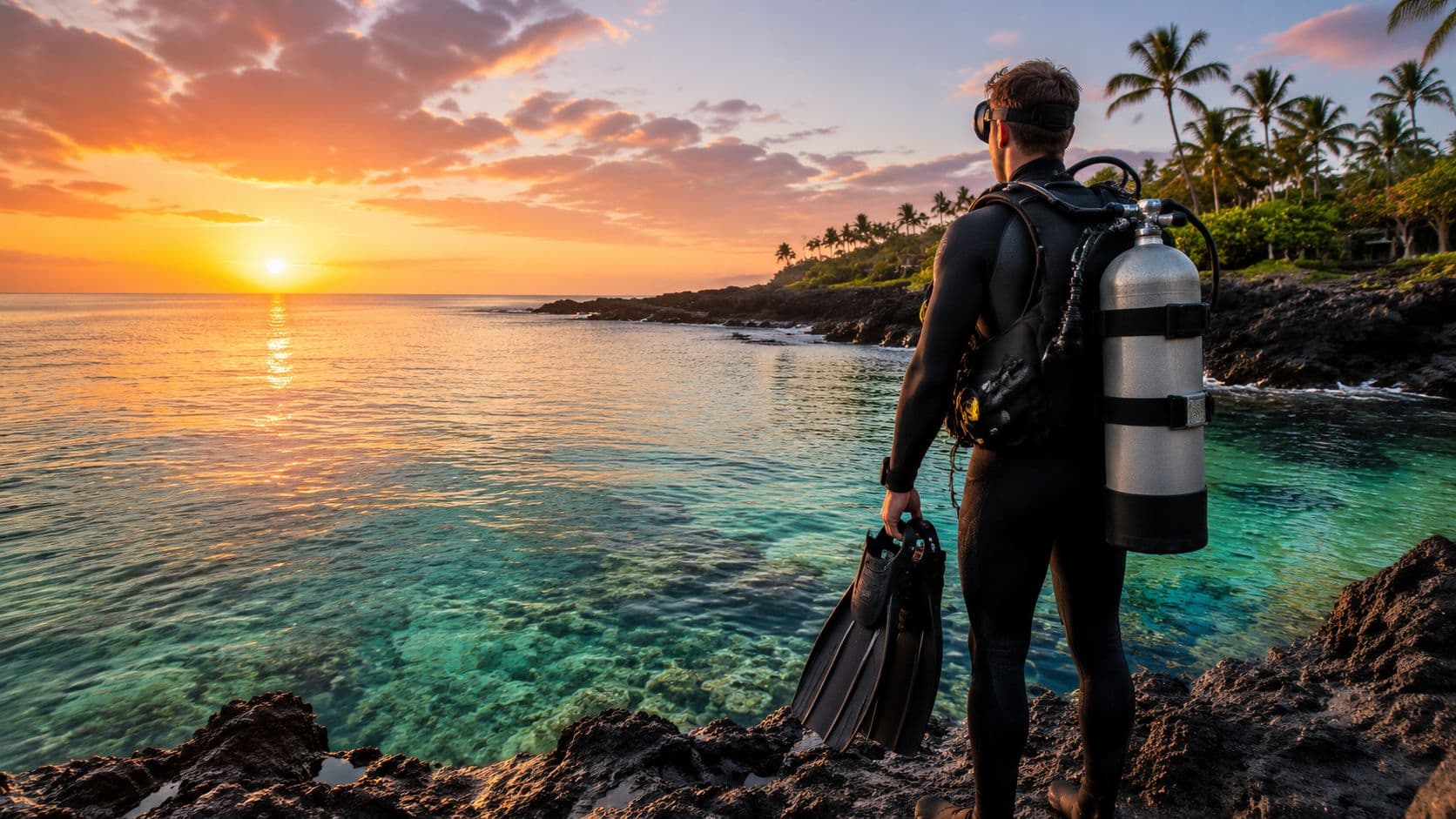
If you want manta rays after dark, lava-shaped topography, and a coast that tends to give you a cleaner shot at reliable conditions, the Big Island’s west side is hard to beat. If your goals are different, other islands can fit better, but they fit different kinds of dives.
Why Kona keeps winning for the right diver
Kona is the practical center of gravity for a Big Island dive trip because the coast lines up several things at once: sheltered boat access, lava-born scenery, and a cluster of well-known manta sites. The local dive scene is built around calm-water mornings and night trips that are easy to explain and even easier to plan around, which is exactly why so many visiting divers end up here after comparing islands.
The Big Island’s west side gives you the kind of conditions that make a two-tank day feel manageable instead of chaotic, especially when you are trying to fit in reef diving and one signature night dive on the same itinerary. Kona also gives you the volcanic look people come to Hawaii for in the first place, with reef structure and lava formations.
The manta dive is the signature reason to book Kona
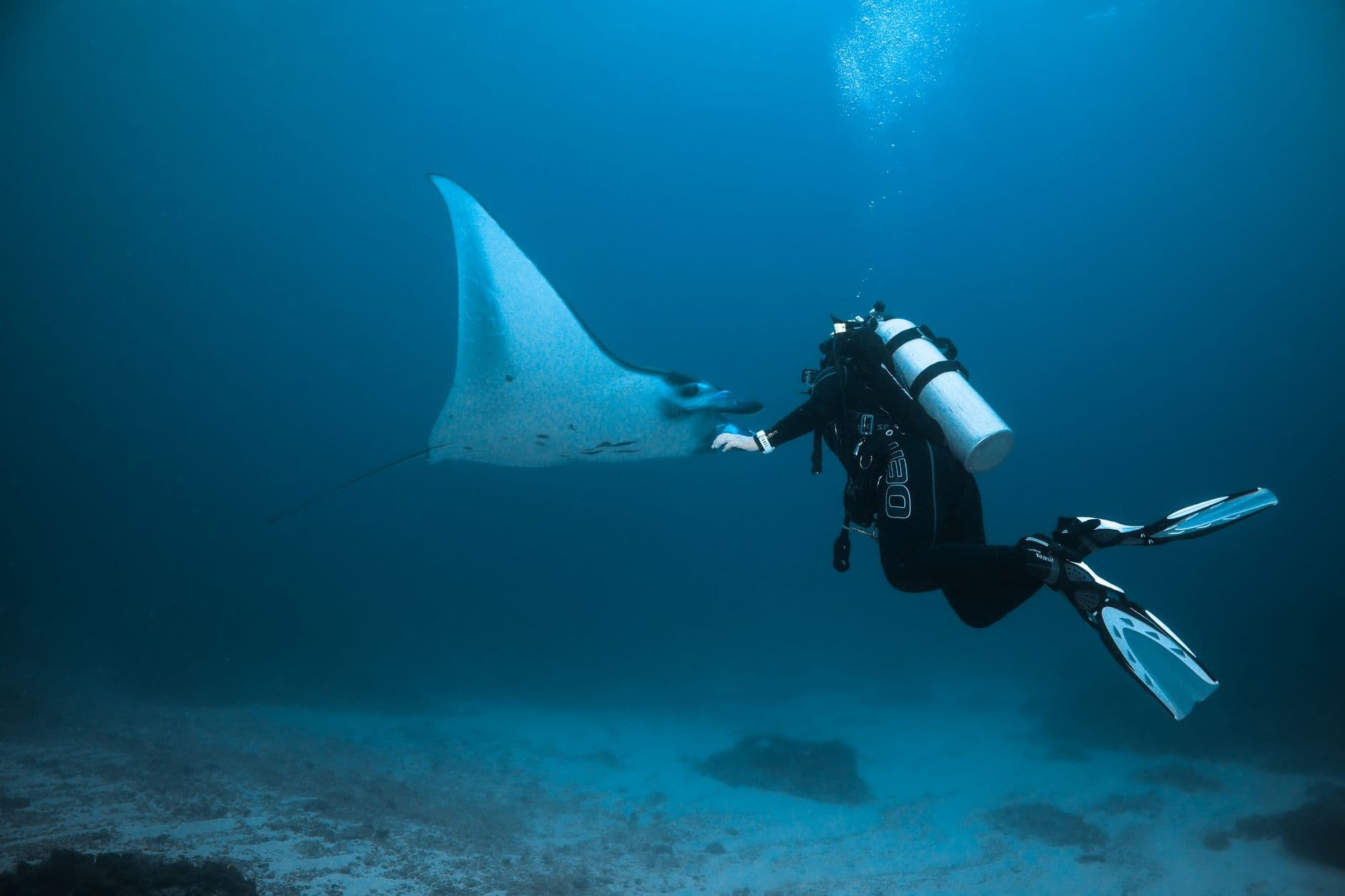
If you are coming for one underwater experience, Kona’s manta night dive is the one that justifies the flight for a lot of divers. There are three established manta ray viewing sites along the West Coast of Hawaii, with two accessible only by boat and one reachable only from a private beach owned by a hotel.
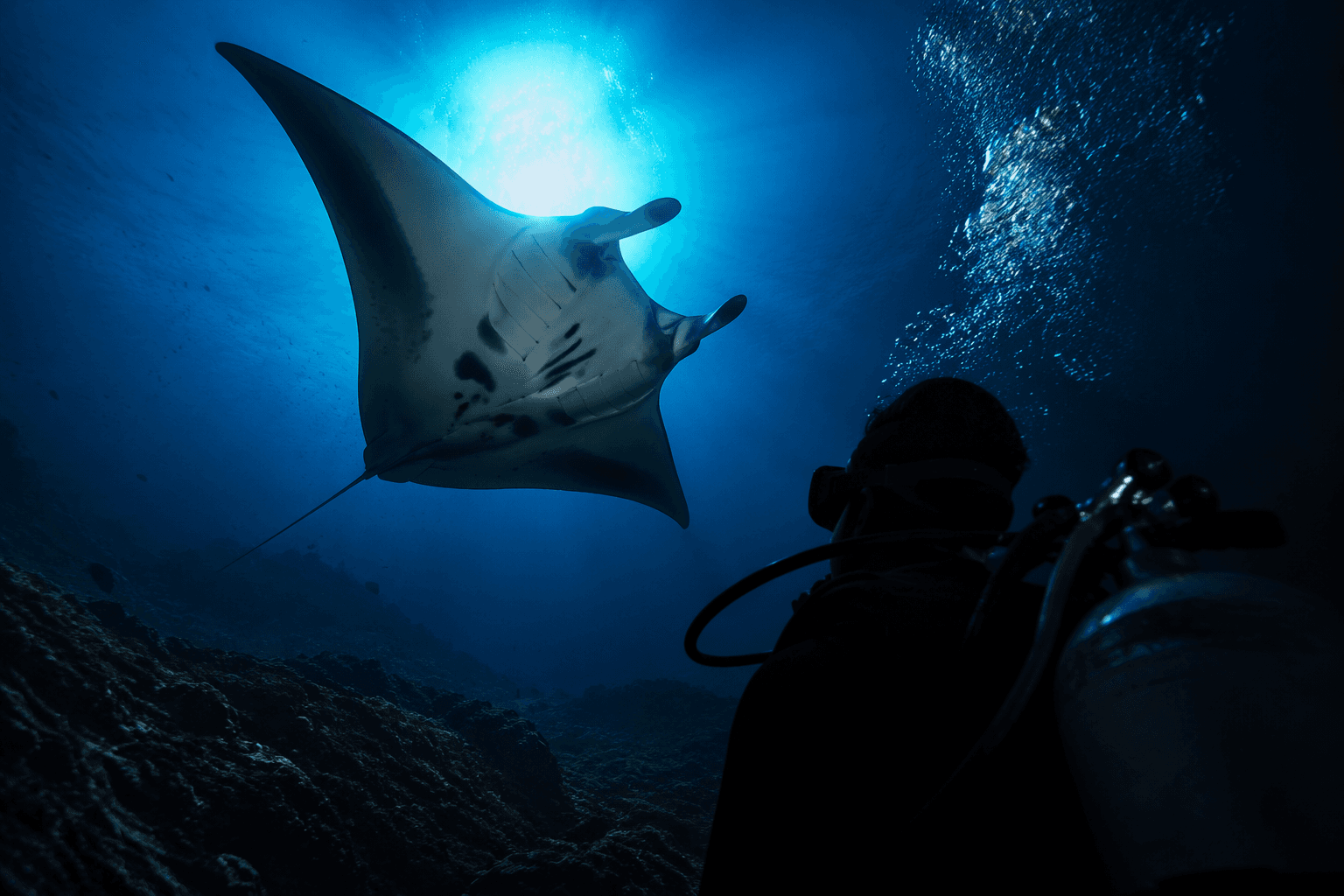
A Marine Science Consulting LLC assessment prepared for the Hawaii Coral Reef Initiative Research Program on September 6, 2015 framed manta viewing boat operations as a safety issue, and Kona Honu Divers published an open letter to the Hawaii State DLNR about manta rules on April 7, 2023.
Lava topography is the other Kona advantage
Kona’s appeal is not just the mantas. The Big Island’s underwater terrain is shaped by lava, which gives you those ridges, ledges, tubes, and dark rock gardens that make local dives feel different from the softer reef profiles you get elsewhere in the state. That volcanic structure is part of why the Kona coast works for such a broad range of divers, from newly certified guests to people who want deeper, more technical scenery.
The Hawai‘i Division of Aquatic Resources identifies the West Hawai‘i Regional Fishery Management Area on Hawai‘i Island, and DLNR regulated-area pages include Kealakekua Bay MLCD, Old Kona Airport, and Waialea Bay. Old Kona Airport sits on the western coast just west of Kailua-Kona town.
Who should choose Kona first
Kona is the best fit if your trip has any of these priorities:
- You want a manta night dive and want it built into a simple, boat-based Kona itinerary.
- You want lava formations and reef dives that feel distinctly volcanic.
- You want to keep your plans realistic and avoid overcomplicated island-hopping.
- You want a base where calm-water diving and protected-area planning matter as much as the scenery.
That said, Kona is not automatically the best Hawaiian dive choice for every trip. If you care more about a single niche style of diving than about the overall mix, another island can make more sense.
When another island may fit better
Maui makes more sense if you want a Molokini-centered trip. Molokini is the classic Maui answer for people who want a crater dive as the main event, and that works especially well if you are pairing diving with a broader Maui vacation and want a familiar, boat-forward schedule.
Oahu is the stronger fit if wreck diving is high on your list. Island Divers Hawaii lists six boats and specifically points divers toward wreck options.
Kauai is the island to look at if you want a more remote-feeling boat day. Explore Kauai Scuba offers Na Pali Coast and Ni’ihau boat tours, including the closest and fastest crossing to Ni’ihau, and it emphasizes non-rushed, family-owned trips.
The one rule you do not want to miss
In Hawaii’s navigable waters, the state’s Division of Boating and Ocean Recreation requires a dive flag for any activity where a person breaks the surface and submerges out of sight under Haw. Code R. § 13-245-9. If you are boat diving, shore diving, or setting up a drift-style profile anywhere in Hawaii, build the flag requirement into your plan.
This article was produced by Prism’s automated news system from verified source data, official records, and press releases, then run through automated quality and moderation checks before publishing. The system is built and supervised by the people who set the standards it runs under. Read our full AI policy.
Did this article answer your question?