Kona Snorkel Trips releases 2026 guide to manta ray diving in Hawaii
Kona Snorkel Trips' new manta guide puts the booking decision tree front and center: snorkel or dive, site logistics, and what actually changes the night underwater.
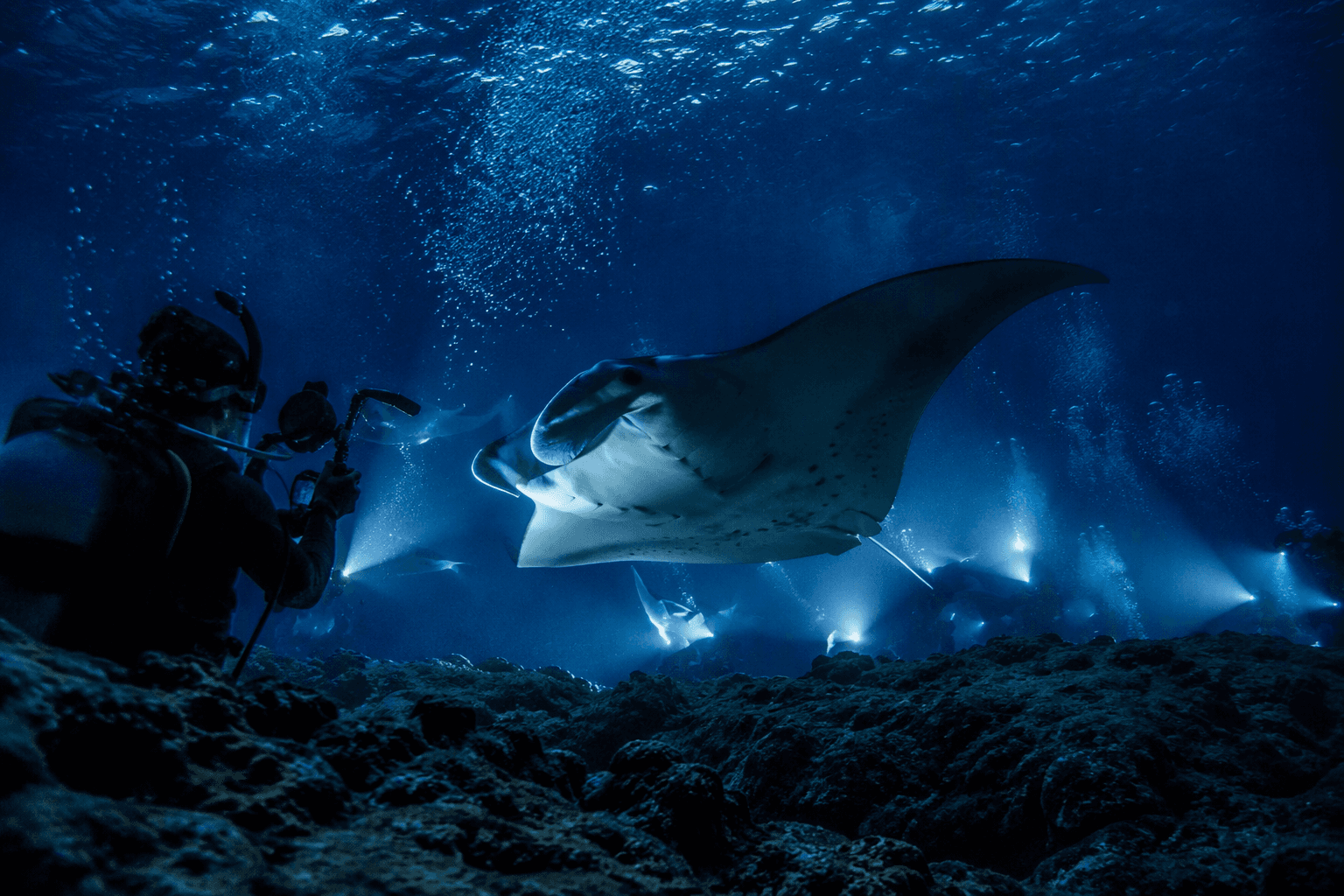
The real Kona manta decision happens before you ever slide into the dark: snorkel or dive, which boat leaves where, and how much low-light time you actually want to spend in the water. Kona Snorkel Trips put that choice set into a new guide published July 31, 2026, framed as “From Reef to Rays - Experience Hawaii Underwater.”
A guide built around the booking moment
This is not a glossy “look what you can see” post. It is built like the kind of practical explainer travelers actually use when they are lining up a Big Island itinerary and trying to decide whether a manta outing belongs on the calendar. The guide is aimed at first-time visitors and repeat Kona travelers who want to understand what the experience feels like, how to approach it safely, what to expect from an operator, and whether a manta night is the right fit for their comfort level.
That matters in Kona because manta trips are often the signature add-on in a dive week, but they are also one of the few local experiences that can change dramatically based on how you enter the water and what kind of night you want to have. For one person, that means a snorkel on the surface; for another, it means a scuba plan that has to fit the pace of a night dive and the expectations that come with it.
Why Kona keeps getting pulled back into the manta conversation
Kona’s reputation in the manta world is not accidental. Manta encounters have become one of the most recognizable reasons travelers add the Big Island to a Hawaii trip, and the region’s tourism identity has grown around that visibility. The new guide lands inside a conservation context that has been formalized for years, not improvised around one season or one operator.
NOAA Fisheries listed the giant manta ray, Mobula birostris, as threatened under the Endangered Species Act on January 22, 2018. In October 2024, NOAA Fisheries issued a Draft Recovery Plan for the species, and the agency’s recovery status review that month said the original ESA review followed a November 10, 2015 petition from Defenders of Wildlife asking that both giant and reef manta rays be listed under the law. NOAA materials also identify giant manta rays as a Pacific Islands threatened species.
That background does not turn a manta trip into a policy seminar, but it does explain why briefing language, viewing behavior, and operator standards matter so much in Kona. The encounter is a tourism draw, yet it sits inside a management conversation that has been active for years.
What actually changes the night underwater
The most useful planning advice in the Kona manta space is the simplest: there is no single best manta tour in Kona. Love Big Island says the real differences come down to harbor departure point, sail time, whether you are snorkeling or diving, and the type of boat you are booking.
That is the decision tree that changes your outcome. A shorter sail can matter if you do not want a long evening on the water. A snorkel trip can be the better fit if you want the surface view and a lighter commitment. A dive can make sense if you are already comfortable with night conditions and want the underwater perspective. Boat type changes the whole feel of the outing, from how you move around the deck to how crowded the evening feels when everyone is gearing up at once.
The market around Kona has become more comparison driven, not less. Jack’s Diving Locker maintains a Kona Manta Ray Sightings Report, which tells you how much local interest there is in tracking encounters rather than just selling tickets. Kona Honu Divers published a 2025 article on where to see manta rays in Hawaii on October 2, 2025, followed by a 2025 piece on the best time to see manta rays in Kona on August 27, 2025. Together, those kinds of guides show how planning has shifted from a basic yes-or-no question to a more precise one about timing, location, and trip style.
Where operator standards and site choices come in
The best practical guides in this niche do more than tell you that mantas are beautiful. They help you read the operator. Hawaii Ocean Watch publishes resources on manta ray viewing sites on the Kona coast and on manta tour operator standards, which makes clear that the public conversation is about more than boat seats and photo ops.
Manta Ray Advocates Hawaii has added to that conversation too. The group published a page on the three Kona viewing sites on September 30, 2020, a post and video about proposed regulations for manta ray tourism in Hawaii on February 19, 2023, and 2025 manta ray tour statistics at Kaunaoa Bay on February 25, 2026. That mix of site mapping, regulatory discussion, and tour-volume tracking shows how closely the Kona coast’s manta scene is watched by people who care about both access and stewardship.
For travelers, the takeaway is straightforward: the useful trip-planning information is concrete. Look at the harbor, the sail time, the boat, the format, and the operator’s briefing style. The marketing language may promise an unforgettable night, but the details that shape the night are the ones above the waterline and in the briefing room.
The booking choice still happens before the ladder goes down. Once you decide whether you want snorkel or dive, how far you are willing to travel by boat, and how much comfort you need in low light, the rest of the manta night in Kona starts to make sense.
This article was produced by Prism’s automated news system from verified source data, official records, and press releases, then run through automated quality and moderation checks before publishing. The system is built and supervised by the people who set the standards it runs under. Read our full AI policy.
Did this article answer your question?