White hat techniques help Labubu collectors customize safely
White hat Labubu moves can protect your figure, box, and resale value. The safest wins are reversible tweaks, legit sellers, and a full-package check before you pay.
The Consumer Product Safety Commission has warned collectors not to buy counterfeit Labubu dolls because fake plush figures and keychains can pose choking hazards. If you protect the finish, verify the box before money changes hands, and choose changes you can reverse later, you keep the figure display-ready without feeding the counterfeit mess that has already pushed federal safety warnings into the hobby.
Start with provenance, not a deal
White hat behavior begins at the checkout. A cheap listing is not a bargain if it comes with safety risk, bad paint, no resale value, or copies that break apart easily and release small pieces.
Use legitimate sellers and verify every claim the seller makes. Pop Mart points collectors to its app and the security code on the packaging box, while authentic sealed blind boxes should have a QR code, a scratch-off security field, and a holographic security label. Do not trust a seller who only offers a cropped photo of the front of the box. Ask for clear shots of the code area, the tag, and the unopened packaging before you commit.
The counterfeit side is getting more sophisticated, not less. Pop Mart has also been pursuing fake Labubu cases in court, including a Chinese ruling that awarded RMB 10,000, about USD 1,380, over unauthorized 3D-printed replicas. The same ecosystem pushes copies into resale channels and puts pressure on legitimate drops, so the easiest way to stay out of trouble is to buy from the cleanest supply chain you can find.
Customize without wrecking the original
The big white hat rule is simple: anything you do should be reversible if possible. Once you start sanding, repainting, or using strong solvents on a Labubu face sculpt, you are not customizing so much as betting against future resale. In this market, untouched blind-box figures sit in the same orbit as heavily customized pieces, and the wrong material can permanently damage paint, fabric, joints, or packaging value.
Low-risk care starts with gentle cleaning, not aggressive restoration. Use a soft, damp cloth for plush areas and a slightly damp microfiber cloth for vinyl parts. For dirtier figures, the most conservative route is hand soap and water with a tiny amount of detergent, followed by a thorough rinse, then towel-squeezing out excess moisture and letting the piece hang dry.
Keep a hard line between cleaning and restoration. Goo Off, Oxy 10, baking soda paste, and even clear nail polish are exactly the kinds of products that can change the surface permanently if you overdo them. If the goal is to preserve condition, the safest move is to stop at surface cleaning and leave paint correction, whitening, and sealing to pieces you are willing to sacrifice.
- Spot-clean plush sections with minimal moisture.
- Use microfiber on vinyl instead of abrasive cloths.
- Test any cleaner on a hidden area first.
- Keep anything reversible, like removable accessories, separate from the figure itself.
- Never treat the original box like disposable packaging if you may trade or sell later.
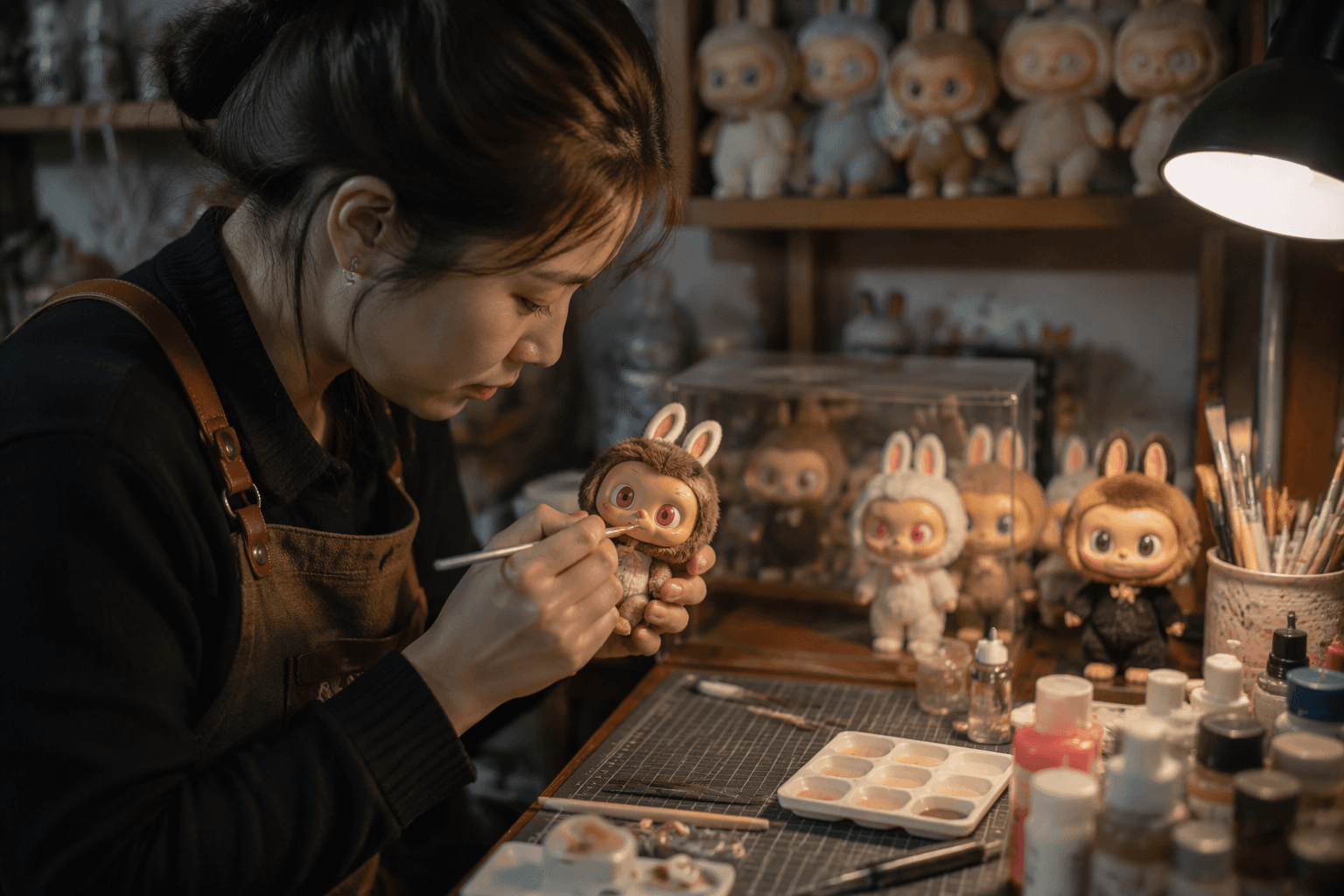
A practical white hat customization setup looks more like this:
Trade honestly and proxy cleanly
Trading is where a lot of Labubu drama starts, because people get sloppy about condition. If you are moving a figure, say exactly what it is: sealed, opened, cleaned, customized, missing inserts, or still in original packaging. The community backlash usually starts when a repaint gets described like a stock piece, or when a seller hides a restoration job behind good lighting and a cute caption.
Proxying works the same way. If you are helping friends secure a drop, stick to legitimate sellers, keep receipts, and pass along the exact condition of what you bought. If the packaging has changed, note it. Collectors have been tracking packaging shifts closely, including newer setups that use drawstring bags instead of foil in some cases, so an old checklist is not enough if you are proxying recent stock.
A buyer who knows a Labubu was opened, cleaned, or accessorized can price it correctly; a buyer who learns that after the fact will assume the worst, and that hurts trust in the whole scene.
Verify listings before you touch the figure
The safest verification habit is to treat the box, tag, and code as a package, not isolated clues. Scan the QR code with the Pop Mart app, check the scratch-off security field, and look for the holographic label instead of assuming the first code you see proves anything. If you are buying secondhand, ask for photos taken in daylight and compare the figure, packaging, and accessories together rather than cherry-picking one good angle.
This article was produced by Prism’s automated news system from verified source data, official records, and press releases, then run through automated quality and moderation checks before publishing. The system is built and supervised by the people who set the standards it runs under. Read our full AI policy.
Did this article answer your question?