Henan Prosper & Colomer Moda acquires French raw-material supplier LCO
Henan Prosper & Colomer Moda closed its April deal for LCO, adding a 1927 French raw-hide specialist to its Europe-Asia leather pipeline.
Henan Prosper & Colomer Moda closed its April 2026 acquisition of Les Cuirs de l’Ouest, or LCO, through its Italian arm Ausonia, adding a French raw-material business whose roots go back to 1927. For leather workers, that matters at the earliest point in the chain: who gets first pick of European-origin hides and skins, and how much control one group has over the quality, availability, and price of premium bovine leather before it ever reaches a tannery drum.
LCO’s role sits right where the market gets tightest. The company specialized in the collection and selection of raw hides and skins of European origin, the part of the business where consistency is won or lost long before a side of leather is split, retanned, or finished. Henan Prosper said the deal strengthened its position in premium bovine leather and in Europe’s high-end supply network, which is exactly where sourcing leverage starts to ripple outward to small makers, brands, and hobby buyers watching grade, temper, and defect rates.
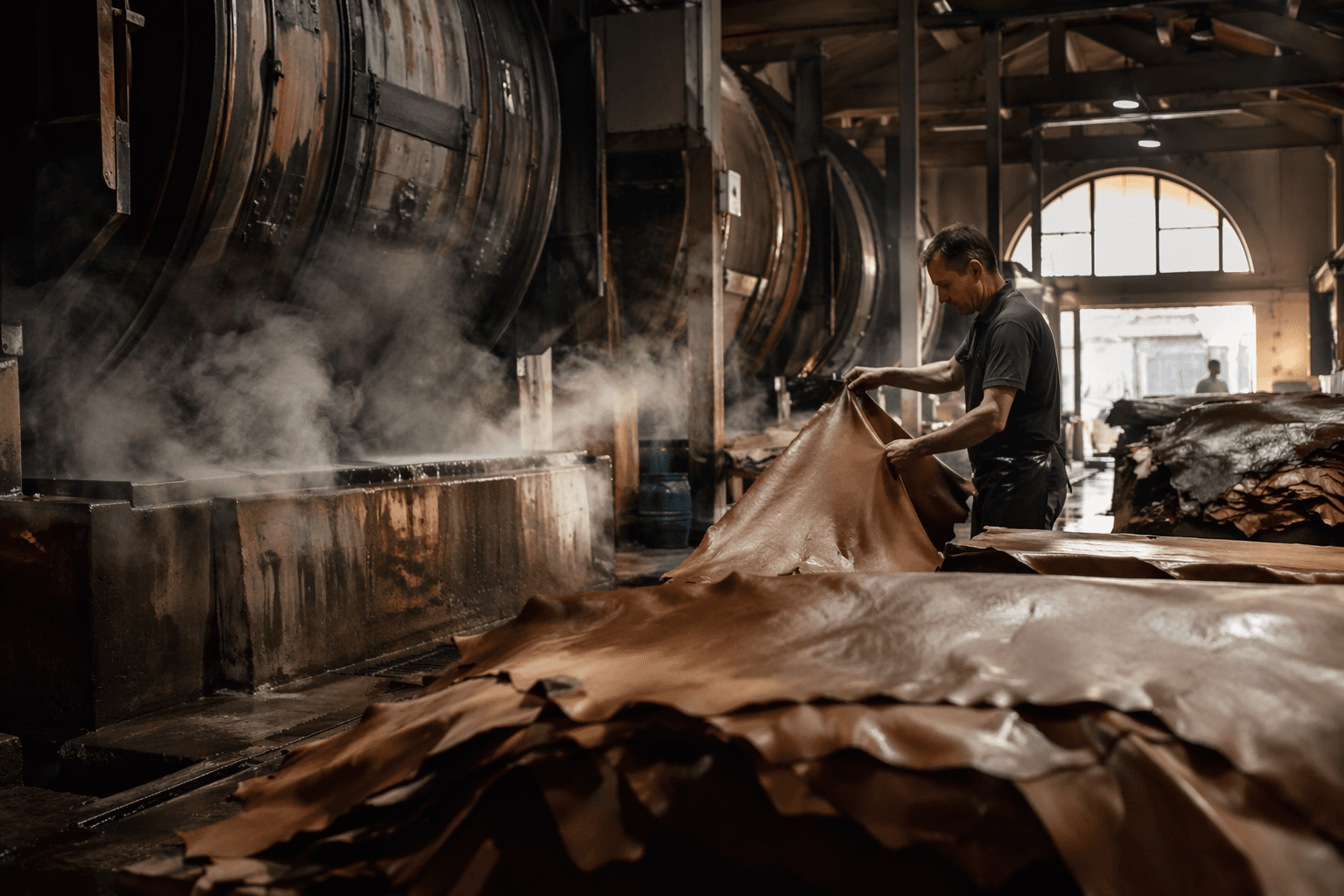
The acquisition also deepened the group’s tie to Ausonia, which Henan Prosper bought in 2024 and has since pushed as its strategic platform for premium vegetable-tanned leather. Ausonia is based in Santa Croce sull’Arno, Tuscany, and holds silver-level Leather Working Group certification. Since the takeover, the Tuscany site has added facility expansion, sustainability improvements, and a research and development center, while the group has also been building a new vegetable-tanning leather manufacturing plant in China. That mix points to a company trying to control both the upstream hide selection and the downstream tanning capacity.
Henan Prosper has done this sort of thing before. In 2017, one of its subsidiaries bought New Zealand’s G L Bowron & Co for NZ$17.6 million, or about $13 million, and earlier reporting on the group mapped a footprint stretching from Henan and Mengzhou to Vic, Barcelona, and Les Masies de Voltregà. The LCO purchase fits that same pattern of stitching together regional supply bases rather than relying on a single source.
The timing also lands against a volatile French export backdrop. France exported raw hides and skins worth €38.3 million in January and February 2026, up 10% year on year, but the January-April total reached €59.7 million, down 13% from the same months in 2025. In that four-month stretch, adult bovine hides were worth €40.3 million and calfskins €9.7 million. In 2025, French hide exports to China rose to €29.8 million, up 30% year on year, while French tanners invested €232.7 million in bovine hides and produced finished leather worth €424 million.
That is the practical angle behind this deal. When one group pulls in a 1927-era French hide selector, upgrades a Tuscan tannery, and keeps building in China, it changes how much premium leather can be gathered, sorted, and turned into finished stock that holds up to stricter sourcing rules. Kering’s 2026 raw-material standards, which emphasized traceable origins and regenerative farms for leather, show the market is still rewarding the kind of control over raw materials that LCO was built to provide.
This article was produced by Prism’s automated news system from verified source data, official records, and press releases, then run through automated quality and moderation checks before publishing. The system is built and supervised by the people who set the standards it runs under. Read our full AI policy.
Did this article answer your question?