Leathercraft stitching guide explains hand stitching and saddle stitch strength
Hand stitching is the seam that makes leather goods last, and the saddle stitch earns its keep when you care about repairability, clean holes, and strength.
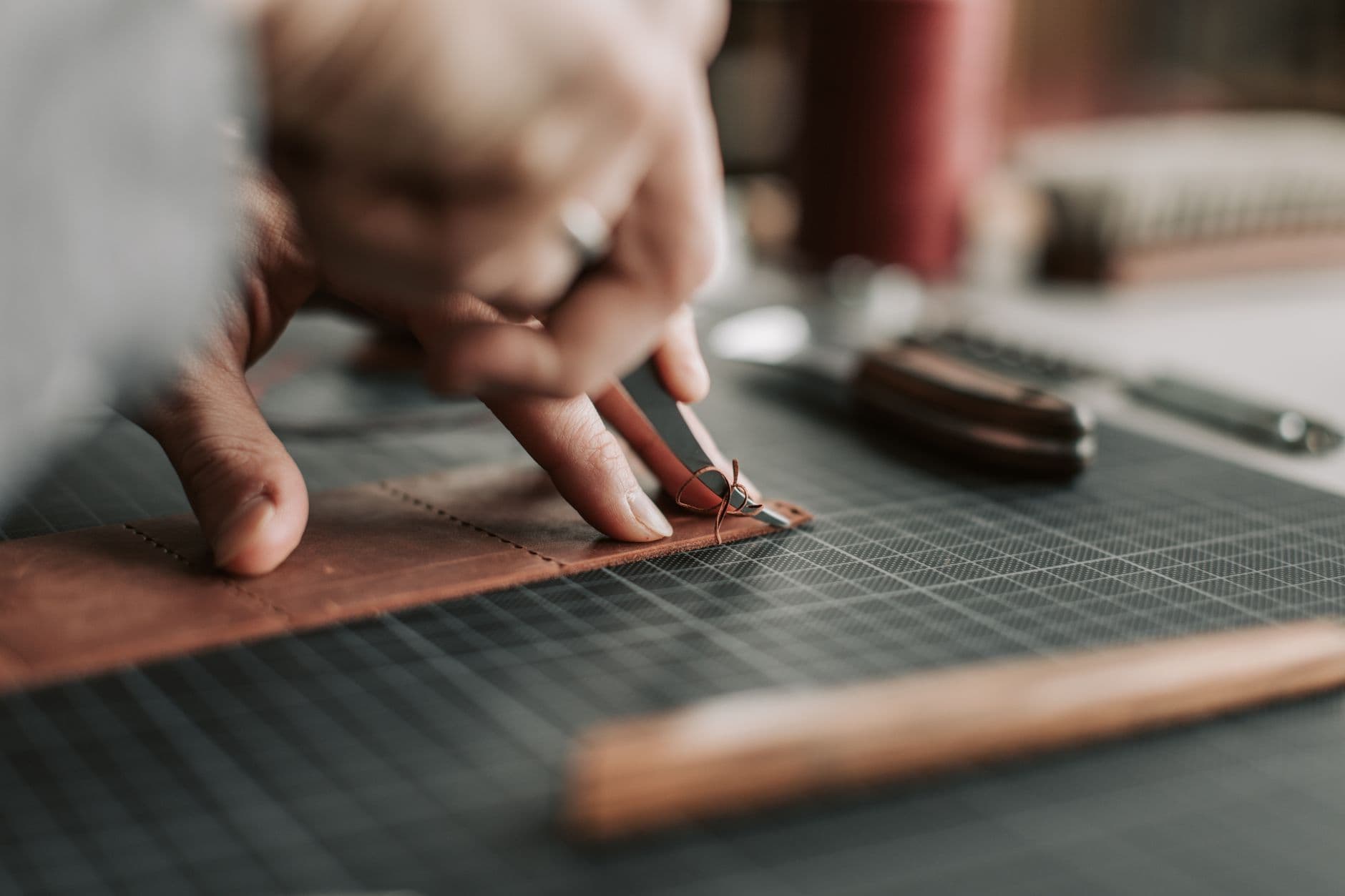
Leather stitching is where a piece stops looking assembled and starts acting like leathercraft. You can glue a wallet, run it through a machine, and call it done, but hand stitching is the gateway skill that separates a pretty object from one that can take years of use and still hold together. The real trick is that leather does not forgive sloppy work the way fabric often does: every hole stays visible, every misstep stays put, and every tension mistake shows up in the finished seam.
Why hand stitching still matters
Hand stitching is not just about tradition, even if the tradition runs deep. Leather has been used for clothing, footwear, handbags, furniture, tools, and sports equipment, and the craft has always relied on methods that preserve strength as much as appearance. Britannica notes that bone and horn needles have been used for at least 20,000 years, and iron needles date back to the 14th century, which tells you this is a tool-and-technique problem makers have been solving for a very long time.
The appeal today is the control. When you stitch by hand, you decide where every puncture lands, how tight each pass pulls, and how the seam sits against the edge. That control matters on wallets, sheaths, repairs, and heirloom pieces, where the seam is part of the structure and the character of the object, not just a way to join two layers.
The saddle stitch is the workhorse
The stitch most leatherworkers reach for is the saddle stitch, also called hand stitching or two-needle stitching. Tandy Leather describes it as two independent stitches that lock together, which is why it is stronger than a machine stitch in the one way that matters most in the field: if one side is cut, the other side can still hold the seam. That is a huge advantage on items that get flexed, scraped, or repaired over and over.
It is also a very good-looking stitch. Tandy Leather’s hand-stitching instruction treats it as a core leathersewing method for both thinner and heavier leather, and that fits the way most makers actually use it. You are not just fastening layers together; you are building a clean, even line that becomes part of the design.
Where beginners usually go wrong
The first failure point is spacing. If your holes wander, the seam looks hurried even if the leather itself is excellent. Leatherwork rewards planning because the hole layout is permanent, so your stitch line needs to be marked before you start punching.
The second failure point is tension. Pull too hard and the seam can distort the leather or make the edge ripple. Pull too softly and the stitches sit loose, which looks sloppy and wears poorly over time. The goal is consistent tension from start to finish, not brute force on the last few holes.
The third failure point is hole alignment. If the front and back holes do not meet cleanly, the stitch can twist or bite into the edge at odd angles. That is one reason leatherworkers spend so much time on layout, grooving, and punching before a single stitch is made. The fourth failure point is thread choice, because the thread has to suit the leather, the project, and the amount of flex the seam will see. The wrong thread makes even careful stitching harder to keep even.

Pick the right leather for the job
Material choice changes everything before you ever touch a needle. Tandy Leather describes vegetable-tanned leather as firm and easy to shape, while chrome-tanned leather is softer, more flexible, and better for garments and accessories where drape matters. For beginners trying to learn clean hand stitching, that difference is not academic. Firm veg-tan is easier to control, which helps when you are trying to keep stitch spacing and tension consistent.
The use cases line up with those properties. Tandy Leather points to veg-tan for tooling, stamping, carving, belts, wallets, and decorative projects, and notes that it develops a rich patina over time. Chrome-tan resists water better than veg-tan and often comes pre-dyed in vibrant colors, but it cannot be tooled. If you want a seam that is easy to learn on and looks crisp, veg-tan usually gives you the better training ground.
Tools that make the seam last
Leather stitching asks for its own toolset. Tandy Leather’s instruction includes laying out stitching lines, grooving, punching holes, and saddle stitching, and that sequence matters. A diamond awl, stitching chisels, and pricking irons all exist to help you pierce leather cleanly and consistently rather than forcing a sewing tool meant for cloth to do a job it was never built for.
The stitching groove is worth taking seriously. Leatherworker.net contributors note that a groove can help protect thread from abrasion and make the work last longer, which is exactly the kind of detail that separates durable gear from handsome gear that frays too soon. If the thread sits proud and exposed, it is more vulnerable to wear. If it sits in a controlled groove, the seam gets a measure of protection without sacrificing appearance.
When hand stitching earns the extra time
Machine seams are faster, no question. But speed is not the reason people buy handmade leather goods, and it is not the reason they come back to repair them. Hand stitching is worth the extra time when you want a seam that can survive damage better, look more deliberate, and be opened and reworked without wrecking the whole piece.
That is why hand stitching makes so much sense for wallets, sheaths, repairs, and heirloom items. A damaged section can often be reworked without compromising the entire project, which is a practical advantage when you are building something meant to live for years. If you are making a belt or a wallet that will be carried every day, or a sheath that will see friction and handling, the saddle stitch pays for its time in durability.
There is a deeper reason it still matters: the seam itself becomes part of the object’s identity. A machine can assemble leather. Hand stitching can define it. That is the difference you feel the first time a well-made piece outlasts the shortcut, stitch by stitch, hole by hole.
This article was produced by Prism’s automated news system from verified source data, official records, and press releases, then run through automated quality and moderation checks before publishing. The system is built and supervised by the people who set the standards it runs under. Read our full AI policy.
Did this article answer your question?