Lost Dutchman Leather’s Drop Zone turns wallets into weekly craft drops
Lost Dutchman Leather has made scarcity part of the craft: weekly Thursday wallet drops sell out fast, then vanish in a ritual that rewards patience as much as stitching.

Lost Dutchman Leather has turned a wallet release into a weekly appointment. The Drop Zone is not built like a normal storefront where the same SKU sits there waiting; it is built like a craft drop, with new pieces landing every Thursday at 8 p.m. Eastern and disappearing once the batch is gone. That rhythm gives each wallet the feel of a one-off bench piece, even though the business is now large enough to run with a team of eight.
The drop model is the product
The smartest thing about the Drop Zone is that it treats release timing as part of the value, not just a marketing trick. Each batch is small, each leather-and-thread pairing is limited, and once that combination sells out it is usually gone for good. That means the wallet you buy is tied to a particular run at a particular moment, which is exactly the kind of constraint that makes handmade work feel scarce in the best way.
For leatherworkers, this is the useful lesson: pacing production can matter as much as volume. A weekly release keeps the work moving without flooding the market, and it gives buyers a reason to check back instead of scrolling past. The brand is not winning on bargain pricing. It is winning on anticipation, on the sense that the next batch might be the one you want, and on the knowledge that if you miss it, you missed it.
That kind of cadence also protects the handmade appeal. When a shop grows, the temptation is to flatten everything into a catalog of permanent stock. The Drop Zone does the opposite. It turns constrained output into a branding tool, which is a more believable fit for leathercraft than pretending every run is endless.
Nate Walker built it from a teenage hobby
Founder Nate Walker started working with leather at 12, turned the hobby into an Etsy shop in 2016, and had enough momentum by 2020 to go full-time. That arc matters because it explains why the business still feels anchored in maker culture instead of e-commerce theater. The company has grown, but the story still reads like a craft business that scaled by keeping its identity tight.
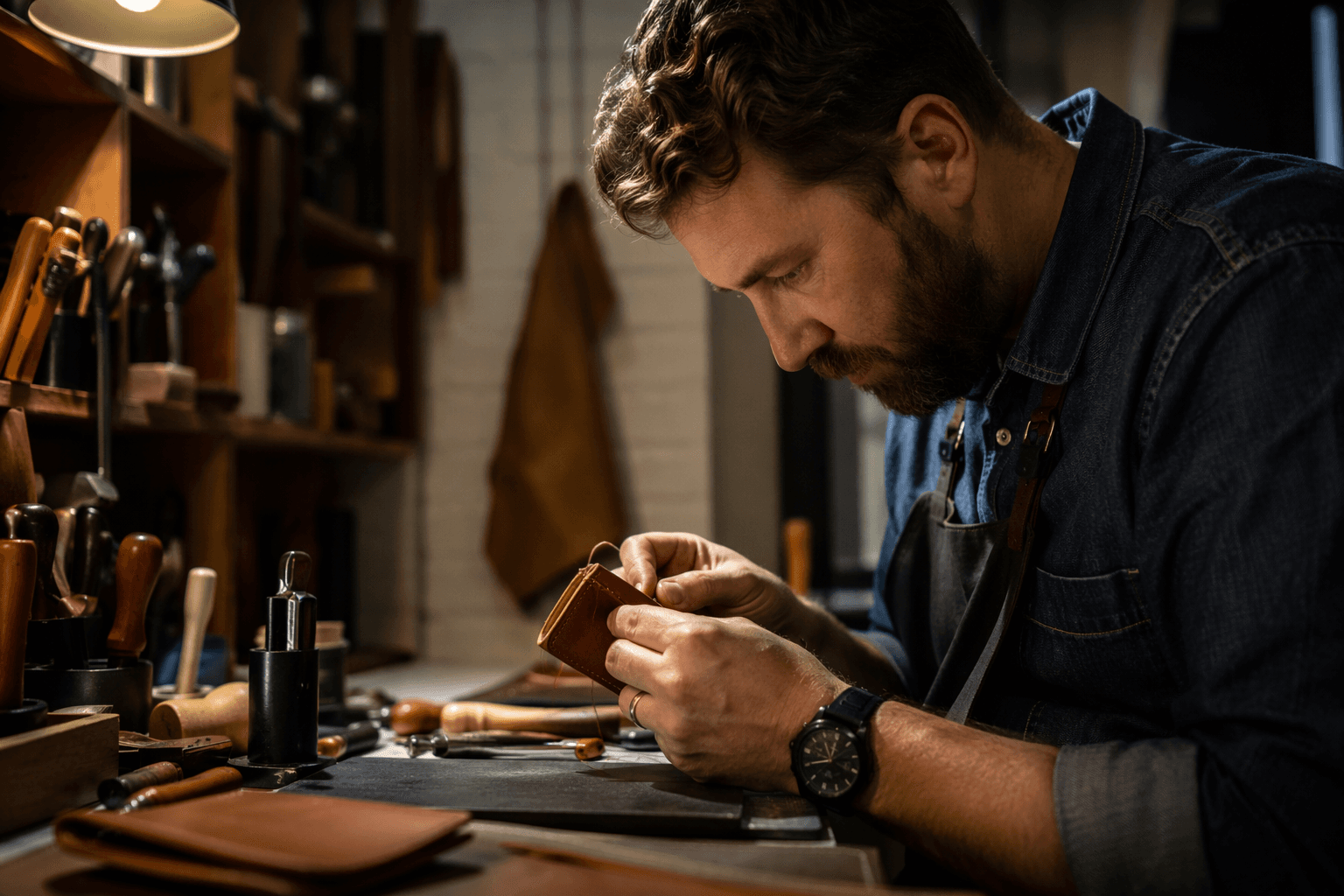
Today the operation runs with eight people, yet the wallets are still made by hand in the USA. That is the part that keeps the drop model from feeling like empty hype. The brand’s value proposition is not mass production, and it is not chasing the lowest price on the internet. It is promising workmanship, consistency, and durability, backed by a lifetime guarantee and a build spec that stays close to the leathercraft fundamentals: full-grain vegetable-tanned leather and hand-stitching.
That combination matters to anyone who spends time at the bench. Full-grain veg-tan tells you the maker is betting on material quality and long wear, not a quick cosmetic finish. Hand-stitching signals labor, and a lifetime guarantee signals confidence that the construction can survive the kind of use wallets actually get. Put together, those details make the limited drops feel credible rather than manufactured.
Why the finishes hit with leathercraft fans
The example drops explain why the format works so well in this niche. One highlighted version is the Big Finn wallet in a Margot Fog leather variant. Another uses a white-wax finish that behaves like a ghost leather, revealing more character as it wears. That is a very leathercraft kind of appeal: the object is not only finished when it leaves the shop, it keeps finishing itself through use.
Patina is the hook here, and the best makers know that patina is not just color change. It is evidence of carry, handling, friction, sun, and time. A wallet that starts with a controlled surface and then changes in the pocket feels alive to the people who care about this stuff. The Drop Zone leans into that instinct by selling not just a pattern or a format, but a specific material moment.
This is where the brand lands especially well with hobbyists. In the craft world, a project is often judged long after the last stitch is pulled tight. Edges burnish differently, wax softens, dye shifts, and leather develops personality in use. Lost Dutchman Leather is packaging that truth into a product schedule. The wallet is the object, but the story is the aging.
What makers can take from it
If you build goods by hand, the Drop Zone points to three practical moves that do not require a giant operation.
- Pick a release rhythm you can actually sustain. Weekly works here because the business has enough structure to handle it, but the real lesson is consistency.
- Make scarcity specific. Limiting the exact leather-and-thread combination is more powerful than vague “limited edition” language because it gives buyers a concrete reason to act.
- Let the material tell the story. Margot Fog, white-wax, and veg-tan are not just descriptors. They are part of the identity, and they give customers something to recognize and remember.
The bigger lesson is that constrained output can be a brand asset when the work is genuinely handmade. A wallet does not need to be rare to be good, but rarity can sharpen attention when the maker has the chops to support it. Lost Dutchman Leather’s Drop Zone makes that case cleanly: keep the schedule tight, keep the builds real, and let the sold-out batches create the pull that a permanent catalog never could.
In the end, the Thursday drop is doing more than moving wallets. It is turning handmade leatherwork into a recurring event, one that rewards timing, punishes hesitation, and keeps the craft visible long after the batch is gone.
This article was produced by Prism’s automated news system from verified source data, official records, and press releases, then run through automated quality and moderation checks before publishing. The system is built and supervised by the people who set the standards it runs under. Read our full AI policy.
Did this article answer your question?