Maputo Park trials local leather boots for rangers and communities
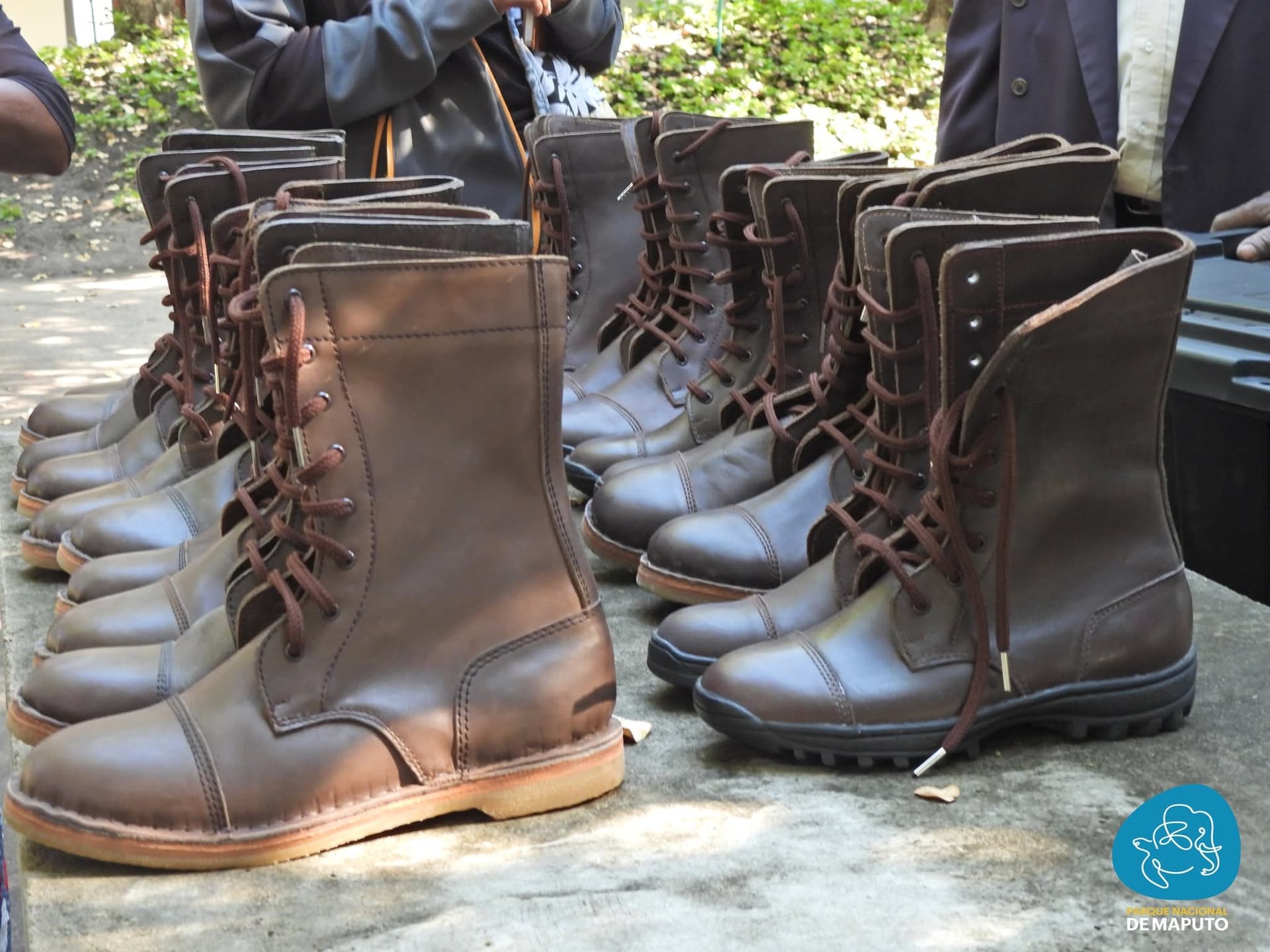
Maputo National Park put the first 10 cattle-leather ranger boots into field trials, turning a footwear test into a hard-use check on local manufacturing and materials.

Maputo National Park put its first 10 pairs of cattle-leather boots to work this month, issuing them to forest and wildlife rangers for a trial that will judge how a locally made product holds up in real field conditions. The boots came from a local association, and the park is testing them in both land and marine operations, where weak stitching, soft soles, or poor leather selection would show fast.
That makes this more than a small procurement experiment. The boots were produced under the Herding for Health Programme, with support from Maputo National Park, Conservation International, and Peace Parks Foundation, tying a piece of leather footwear directly to conservation work and rural income. The project is built around cattle farmers, technical support from park professionals, and the idea that hides from locally available livestock can become footwear and other leather goods instead of being shipped out of the country as raw material.

For leathercraft eyes, the appeal is in the conditions. Maputo National Park is not a neat inland reserve; it sits inside a mixed coastal conservation landscape that includes tourism pressure, coastline, and fieldwork that can punish bad pattern design and bargain-bin leather. Peace Parks Foundation says the park spans 1,794 km², and it was proclaimed in 2021 after the merger of Maputo Special Reserve and Ponta do Ouro Partial Marine Reserve. Since rehabilitation began in 2006, 14 species have been reintroduced, wildlife numbers have been reported at roughly 32,000 animals, and 20% of park revenue has been shared with surrounding communities.
The conservation backdrop is unusually dense. UNESCO added the park to the iSimangaliso Wetland Park-Maputo National Park World Heritage property on July 14, 2025, describing a transboundary site with coral reefs, sandy beaches, coastal dunes, freshwater lakes, swamps, mangroves, seagrass beds, and savannahs, and nearly 5,000 species. In that setting, a ranger boot has to do more than look good on a bench. It has to survive wet ground, rough walking, and long hours in the field.

The bigger play is industrial as much as environmental. Herding for Health is meant to restore rangelands, reduce livestock-wildlife conflict, and improve livelihoods through herding and collective governance, while Conservation International and Peace Parks Foundation have said they are scaling the model with a USD 150 million commitment across Africa. A SADC-backed workshop in Maputo on February 5, 2026, pushed for faster growth in Mozambique’s leather value chain, and these boots now read like a concrete test of that ambition: if local hides, local labor, and local know-how can keep rangers on their feet here, the pattern could scale far beyond the park boundary.
This article was produced by Prism’s automated news system from verified source data, official records, and press releases, then run through automated quality and moderation checks before publishing. The system is built and supervised by the people who set the standards it runs under. Read our full AI policy.
Did this article answer your question?