Tandy urges leatherworkers to prototype before cutting final hides
A cheap mockup can save a costly hide: Tandy says prototypes catch bad dimensions, awkward closures, and stack-up problems before the final cut.

Prototype first, and you stop treating the final hide like a draft pad. Tandy’s point is blunt and useful: leather remembers every bad decision, so the cheapest upgrade you can make is a test build that shows you what fits, what folds, and what fails before you punch the real piece.
Why the mockup earns its keep
Leather is not fabric. Once the holes are in and the edges are cut, the material records the mistake, which is why Tandy frames prototyping as a safeguard against expensive rework and wasted leather. The value is not just saving material. It is getting a clearer plan for how a project will actually go together, especially on wallets, cases, bags, and other structured builds where one measurement error can throw off the rest of the pattern.
That is also why the company treats prototyping as part of the core skill set rather than a fancy extra. A good mockup lets you test fit, thickness, construction order, and functionality before the final hide ever comes off the bench. In practice, that means you are not guessing whether the flap clears the body, whether the closure lands where it should, or whether a stacked build turns awkward once layers are added.
What to build the test piece from
Tandy is refreshingly practical here: you do not need premium leather for a prototype. Scrap leather, lower-grade hides, heavy paper, cardboard, bag stiffener, and other inexpensive substitutes all work, as long as the mockup is accurate enough to answer the right questions.
That matters because a prototype is about dimensions and relationships, not presentation. If you are checking edge alignment, seam placement, or the order in which panels need to be assembled, a rough material is often enough to expose the problem. The goal is to spend as little as possible on the test so the final hide goes toward the piece that has already been proven.
What the prototype should tell you
The most useful mockups catch the boring mistakes that become expensive later. Tandy specifically recommends testing overall dimensions, seam placement, edge alignment, and assembly order. That is where the real failures hide: a wallet that closes too tight, a seam allowance that bulks up a corner, a fold line that lands in the wrong place, or hardware that looks fine on paper but crowds the finished build.
This is especially true once layers stack up and hardware is installed. A bag body can look perfect flat on the bench and still change shape once the straps, snaps, buckles, rivets, or closures are in place. That is why a prototype is so useful for checking awkward closures and uncomfortable carry positions before you commit to the final hide. It shows you whether the piece sits the way you intended, not the way you hoped.
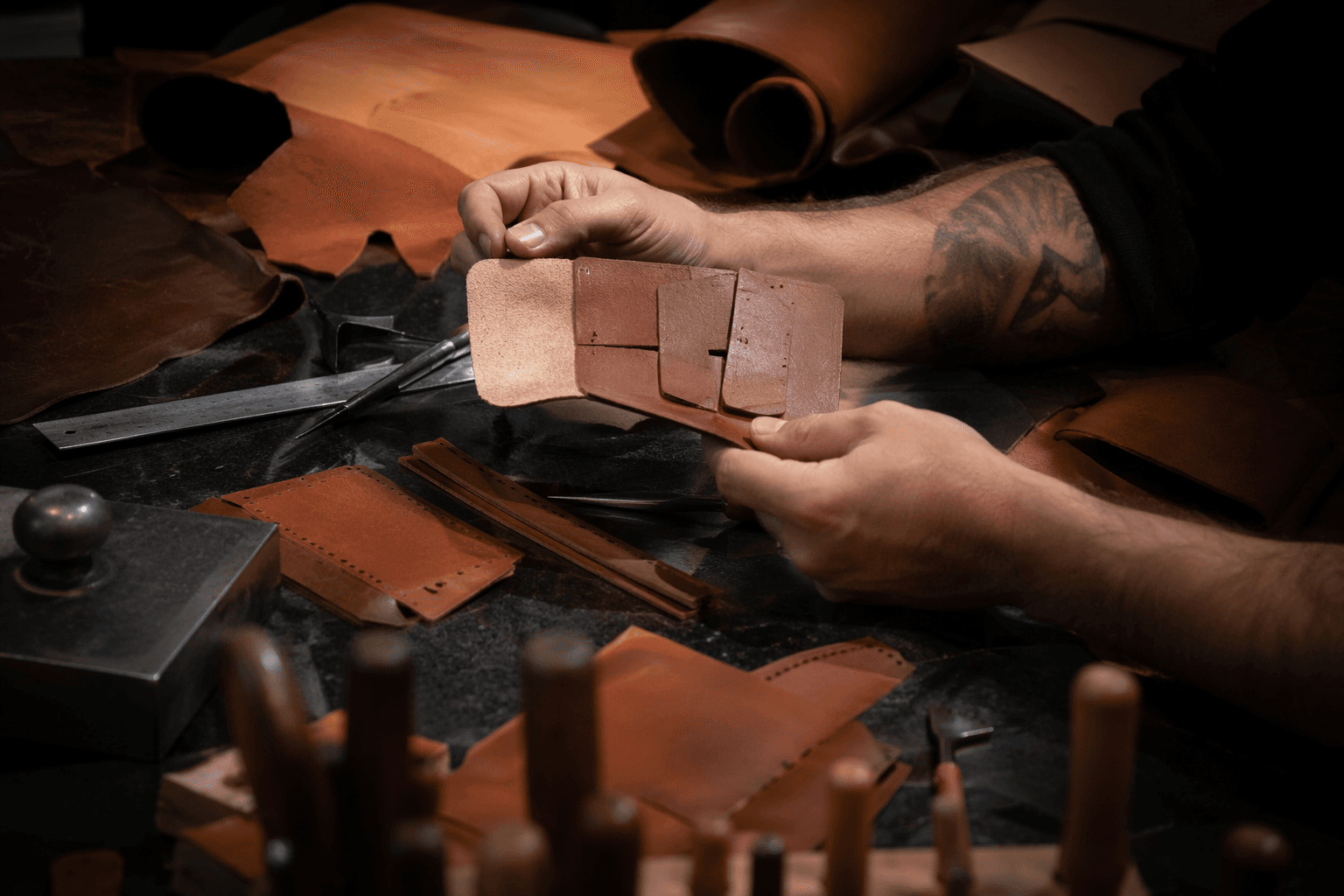
Tandy’s own guidance says most leather projects benefit from at least one test build. For anything with multiple layers, a closure, or a fitted profile, one mockup is usually the minimum if you want repeatable quality instead of one-off luck.
Patterns, hardware, and the rest of the system
Tandy’s pattern-making guidance backs up the same idea from another angle: patterns are your blueprint. They help you visualize the project, test the design, and avoid wasting materials. In other words, the prototype does not replace the pattern. It proves whether the pattern works in the real world, where leather thickness, fold behavior, and hardware placement all matter.
Hardware gets the same practical treatment. Tandy’s hardware guide ties the right choice to durability, function, and style, which is exactly why a prototype is useful before you commit to the final build. A buckle, snap, or rivet is not just decoration. It changes how the project closes, wears, and ages, so testing it in context is the smart move, not the cautious one.
That broader approach lines up with other leatherworking guidance as well. Industry sampling advice from sources including MakeSupply, Montana Leather, Fine Leatherworking, and Saccent treats leather as organic, irregular, and expensive, which makes prototyping a stress test for design, materials, construction, costs, and lead times. Fine Leatherworking pushes the same logic further, noting that a prototype can show how a piece will wear and is especially important if you plan to sell it. Another of its guides says test builds are where the design kinks get worked out before you cut into the final material. Sampling itself often takes multiple revisions before final approval, and leathercraft is no different.
The habit that turns guesswork into repeatable work
The best thing about prototyping is that it makes improvement cheap. A scrap-leather mockup can catch the bad dimensions, the bulky seam allowance, the closure that lands off-center, and the carry position that feels wrong the second it leaves the bench. Once those problems are solved in the test build, the final hide stops being a gamble and starts being a controlled cut.
That is the real lesson in Tandy’s guidance: the prototype is not wasted time, it is the cheapest insurance a leathercrafter can buy. Cut the mockup first, and the final piece becomes the easy part.
This article was produced by Prism’s automated news system from verified source data, official records, and press releases, then run through automated quality and moderation checks before publishing. The system is built and supervised by the people who set the standards it runs under. Read our full AI policy.
Did this article answer your question?