UNIDO releases new guidelines to measure leather’s environmental footprint
UNIDO’s new leather footprint rules target the industry’s fuzzy math, giving tanneries a common yardstick for emissions, raw hides and product lifespan.
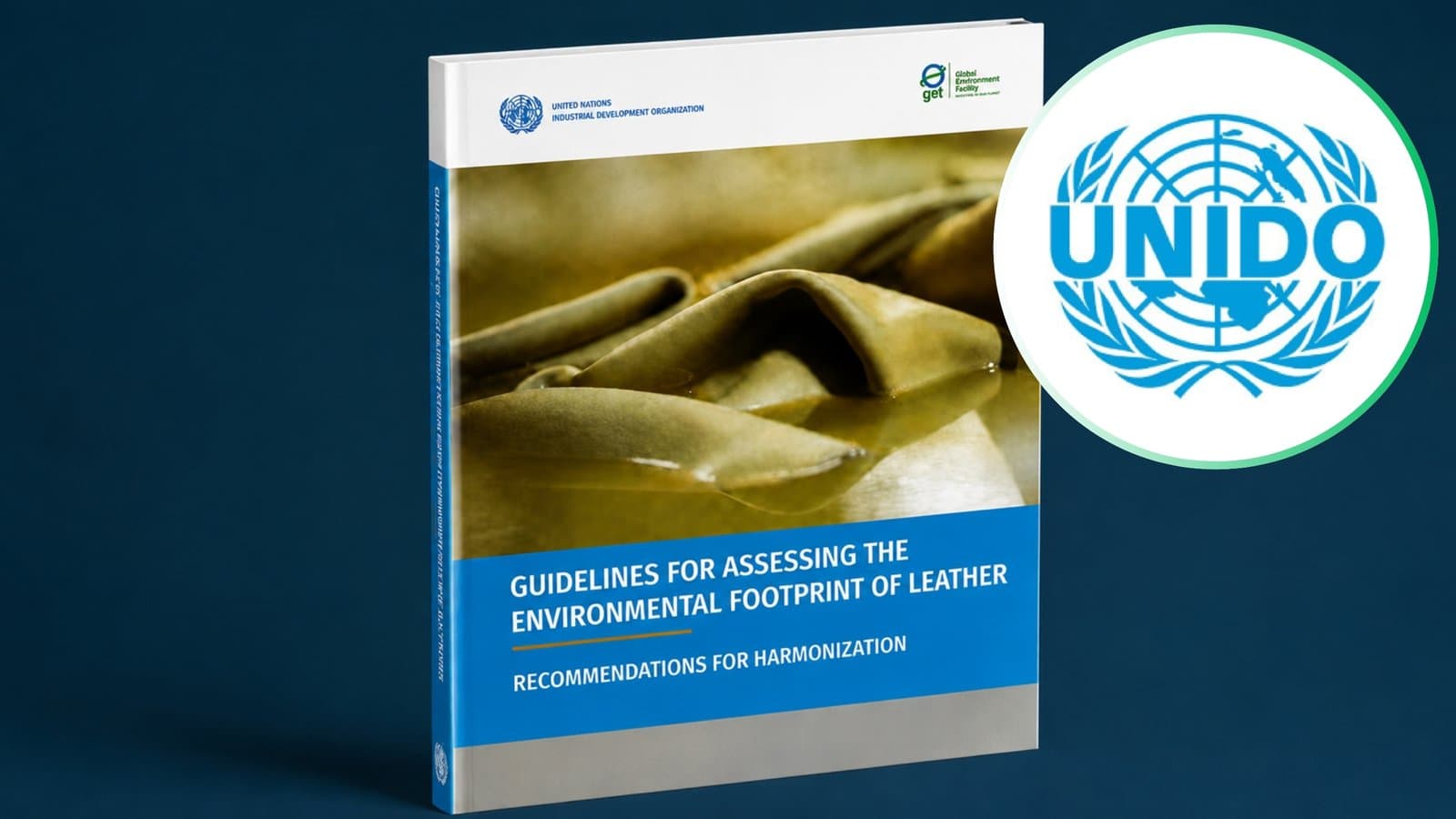
UNIDO has put a new measuring stick into a sector that has spent years arguing over what, exactly, gets counted. The organization’s Guidelines for Assessing the Environmental Footprint of Leather were prepared under the guidance and coordination of Ivan Kral, with work from SPIN360 and review by a technical advisory group of leather experts.
The point of the framework is simple enough: leather has not had one harmonized way to measure its environmental footprint across the value chain. UNIDO says that has led to misleading comparisons because life-cycle studies used different methods. The new guidance is meant to give tanneries, brands, policymakers and auditors a more structured way to assess raw materials, processing and downstream use, while tying leather more closely to international best practice. UNIDO’s broader Product Environmental Footprint approach, introduced under the European Commission’s 2013 Single Market for Green Products initiative, was built to produce more consistent, reliable and reproducible results than looser life-cycle assessment methods.

For leathercraft, that matters more than it first sounds. A supplier can say a hide is “eco” all day long, but if the math behind that claim is loose, the label is doing more marketing than work. The new guidance gives the market a clearer basis for judging where a hide came from, how it was processed and how long the finished article is likely to last. COTANCE, the European leather industry body, welcomed the guidelines and called them the most thorough and credible assessment of leather’s environmental performance to date. Leatherbiz reported that the framework classifies hides and skins from animals slaughtered for human food consumption as non-determining animal by-products and assigns raw hides 1.5 percent of the upstream carbon footprint allocation, which COTANCE described as a significant correction. The guidelines also add a methodology for measuring durability and product lifespan, two things leather makers care about every time they choose between a cheap import side and a better-finished hide.
UNIDO’s work on the project stretches back to May 2024, when Spin360 was commissioned to write harmonized leather life-cycle assessment guidelines. By August 2024, UNIDO said the final carbon-footprint guidelines would be formally presented in Milan, Italy, and Kral said the goal was to give companies principles they could all use in their calculations.
The release landed alongside another major leather development in Pakistan, where UNIDO said on June 9, 2026 that the country’s first fully integrated Common Effluent Treatment Plant had been completed at the Sialkot Tannery Zone. The public-private project is designed to relocate 250 tanneries from the city center into a dedicated industrial zone and includes pre-treatment, primary, secondary and sludge treatment stages, along with segregated drainage, a 21 MW grid station, progress on a chrome recovery plant and an engineered landfill site. UNIDO said the project could raise leather exports by 18 to 23 percent in the short term, potentially double them in the long run, and create 25 to 30 percent more new jobs, including positions for women.
That is the real shift here. Leather is no longer being judged only by output and finish quality. If you buy leather for a wallet, a notebook cover or a bag, the claims attached to it now have to survive a harder kind of scrutiny, and the era of vague eco language just got a lot less comfortable.
This article was produced by Prism’s automated news system from verified source data, official records, and press releases, then run through automated quality and moderation checks before publishing. The system is built and supervised by the people who set the standards it runs under. Read our full AI policy.
Did this article answer your question?