Weaver Leather Supply highlights six budget tools for better leathercraft
Weaver’s latest Leather Element trims the beginner wish list to six cheap tools that lift accuracy, cut waste and make first projects look much cleaner.

A 9-minute, 27-second Weaver Leather Supply lesson makes a familiar leathercraft question feel refreshingly concrete: what do you buy first when you want better results without blowing the budget? Chuck Dorsett’s answer is built around six inexpensive tools that can improve accuracy, save material, simplify assembly and make projects look more professional.
Start with the tools that fix beginner mistakes
Weaver posted the video on June 18, 2026, under the Leather Element banner, and the framing is classic Chuck Dorsett: practical, shop-ready, and aimed at makers who need their money to work twice as hard. Weaver describes him as the host of its popular Leather Element series and says he brings a teacher’s mindset to both beginner and advanced leathercrafters. That matters because leathercraft gets expensive fast once you start buying every punch, cutter, edge tool and hardware accessory that looks useful.
The smarter move is to spend first on tools that solve the pain points you actually hit in your first few projects. Weaver’s pitch is not about chasing a perfect bench setup. It is about making the next cut straighter, the next stitch line cleaner and the next assembly less frustrating.
The stitching pony and stitch groover do quiet but important work
Weaver’s beginner kits page calls out a stitching pony and a precision stitching groover among the tools it considers worth keeping long after the first project. That is not flashy advice, but it is the kind that pays off every time you sit down to hand stitch. A stitching pony gives you control and steadiness while the groover helps keep a stitch line where it belongs instead of wandering across the face of the leather.
The company’s own language is blunt about the value here: the tools in its starter kits are the “real deal.” That is the right standard for a first purchase, because a cheap tool is only a bargain if you keep using it after the learning curve ends. In leathercraft, the gear that helps you hold, mark and stitch consistently is rarely wasted money.
Needles are cheap, but the wrong ones can slow you down
Weaver names John James needles on its beginner kits page, and its Beginner’s Leathercrafting Tool Kit also includes hand stitching needles. That tells you something about the company’s priorities: hand stitching is not treated as a niche skill, it is treated as a core craft habit worth setting up properly from the start. If the needle is awkward, bent or inconsistent, every stitch starts to feel like more work than it should.
This is where budget buying gets smart. A beginner does not need a drawer full of specialty needles, but the right set keeps the thread moving cleanly and helps build muscle memory faster. Weaver’s approach is to recommend dependable basics first, then let the maker grow into more specialized gear as projects get more demanding.
The art knife and chisel set make cleaner cuts feel attainable
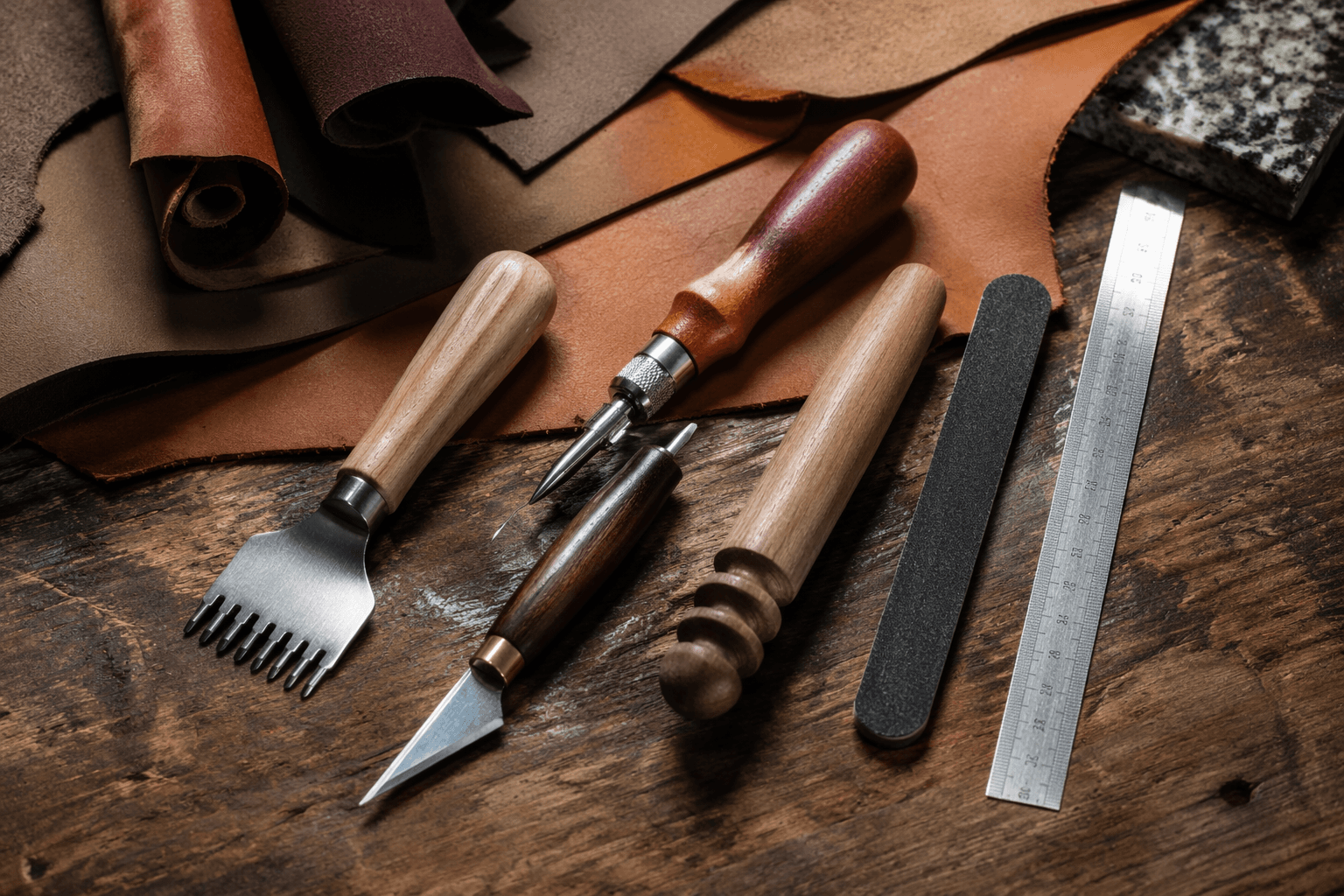
An art knife and chisel set show up on Weaver’s beginner kits page, and they are also part of the company’s $95 Beginner’s Leathercrafting Tool Kit. Those two tools speak directly to the parts of leatherwork where beginners most often lose confidence: cutting straight and punching clean, repeatable openings. If the knife chatters or the chisel drifts, the whole project can look rough even when the pattern is fine.
This is one of those places where Weaver’s budget-first logic really works. A beginner does not need a massive cutter collection to get good results, just a small set of tools that makes precise work feel possible instead of intimidating. That is also why Weaver’s starter-kit philosophy is useful: it favors tools you can keep on the bench and keep trusting.
An awl and Ritza Tiger Thread turn loose pieces into a finished project
Weaver’s Beginner’s Leathercrafting Tool Kit includes both an awl and Ritza Tiger Thread, along with the stitching pony, stitch groover, art knife, chisel set and hand stitching needles. That combination is less about gadget shopping than about making assembly feel manageable. Once the leather is cut and marked, the awl and thread are what turn separate pieces into a project that actually closes cleanly and holds together.
The value here is speed and confidence, not glamour. A beginner who has the right awl and thread is less likely to stall halfway through a hand-stitched build, which is often where frustration creeps in and a half-finished project ends up in a drawer. Weaver’s larger point is simple: a few well-chosen basics can keep momentum alive.
Weaver’s $95 starter kit shows the hierarchy in one place
The cleanest expression of Weaver’s advice is its Beginner’s Leathercrafting Tool Kit, listed at $95 and packed with a stitching pony, Ritza Tiger Thread, stitch groover, awl, art knife, chisel set and hand stitching needles. That is the company’s budget-upgrade argument in one bundle: buy the essentials that will actually move your work forward, not the flashy extras that only look impressive on a shelf. It is also consistent with Weaver’s getting-started page, which points new makers to Chuck Dorsett’s tool and leather recommendations and explains how single shoulders and double shoulders can help balance quality and affordability.
Weaver’s recent YouTube uploads back up that same teaching style, with beginner projects, shop tricks, hardware tutorials, belt making, dyeing and bag making all part of the mix. The message is steady and practical: build the shop around tools that earn their keep. That is how leathercraft stops feeling expensive first and starts feeling doable first.
This article was produced by Prism’s automated news system from verified source data, official records, and press releases, then run through automated quality and moderation checks before publishing. The system is built and supervised by the people who set the standards it runs under. Read our full AI policy.
Did this article answer your question?