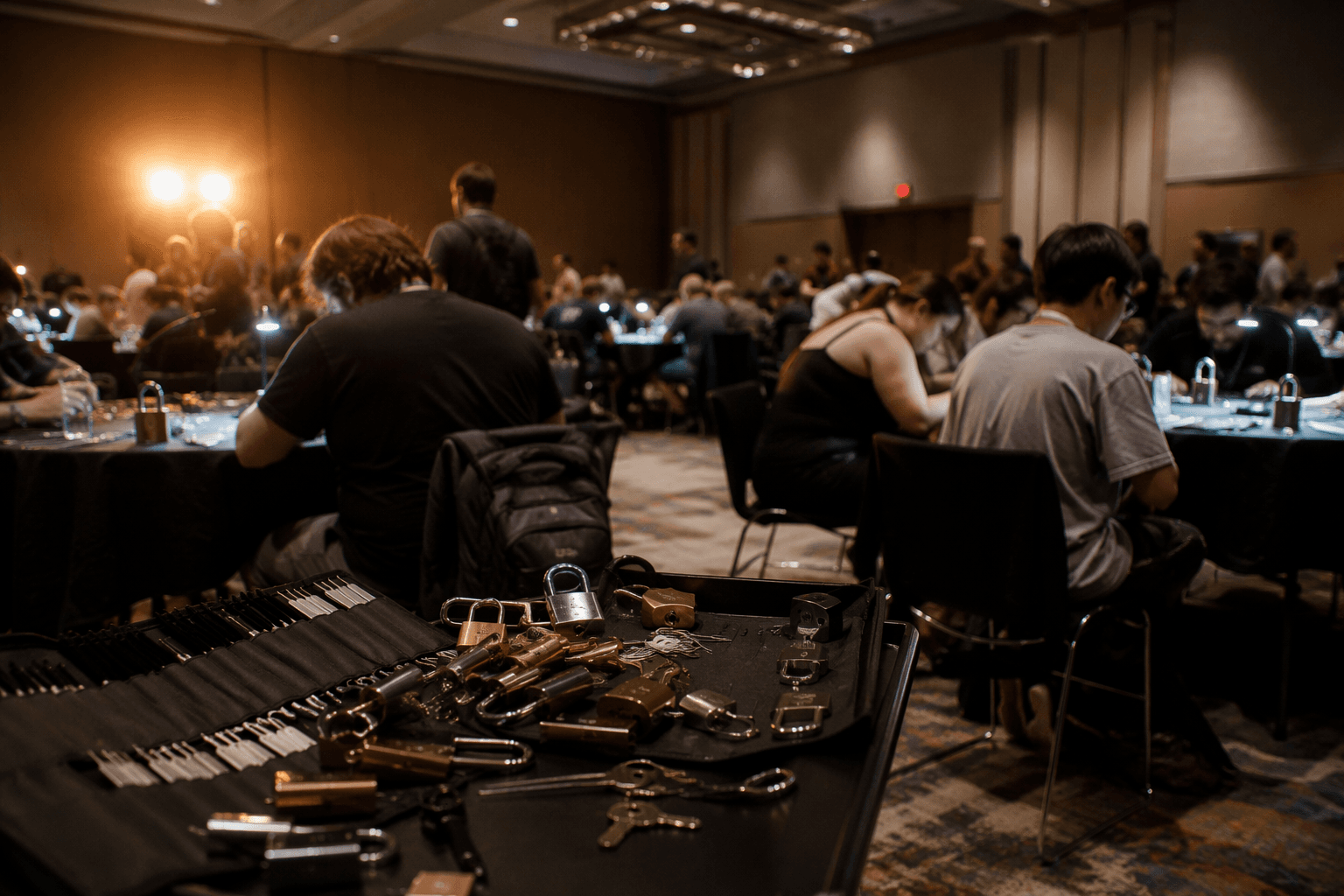
Clear practice padlock or cutaway, which helps white belts learn faster?
Clear acrylic teaches white belts to see pin motion; a cutaway teaches the feel that carries over. If you buy only one trainer, start with acrylic, then graduate.

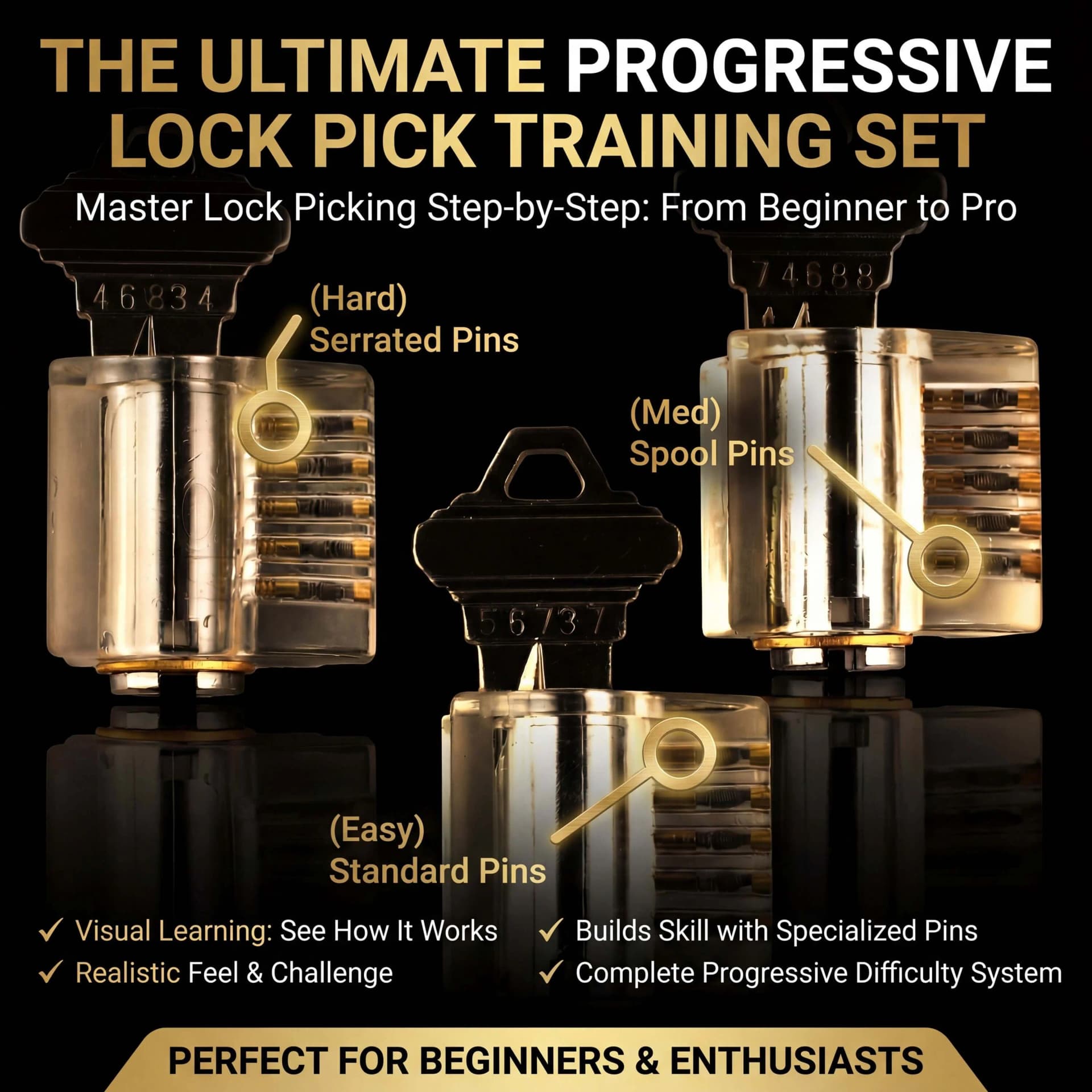
The clear acrylic padlock lets you watch the pins and springs move. A white belt does not need a pile of gear; it needs fast, honest feedback, and that is the real split between a clear practice padlock and a cutaway. The acrylic shell shows you what is happening inside the lock; the cutaway gets you closer to the way a real cylinder talks back in the hand.
What the clear trainer teaches
The clear acrylic padlock makes the invisible visible. Lock Pickers United places an “Any Acrylic Padlock” in White Belt, which fits the stage’s simple rule: this is the beginning of the journey, and you can prove it with “any lock with any tool.” For a first-timer, that matters because you can watch pin motion, binding, and alignment instead of guessing what happened after each lift.
That is why clear locks are so popular at the start. Practice locks are purpose-crafted or modified real locks that give controlled, repeatable feedback, and most pickers begin with clear locks because the sight of the pin-tumbler mechanism shortens the learning curve. Sparrows says a clear acrylic shell is the only way to see all the movement of the pins and springs.
The trap is just as obvious. A clear padlock can train your eyes to do too much of the work. If you keep watching the pins instead of learning what a bind feels like through the pick and wrench, you can end up reading the lock like a display case instead of learning to drive it by touch.
What the cutaway teaches
A cutaway lock is the better tutor when the question becomes less “what just happened?” and more “how do I make this happen again on a real lock?” Cutaways are real metal locks machined open so the tension feel and pin feedback transfer directly to real locks. That is the part beginners eventually need, because the hand has to learn what a binding pin feels like before the eyes can be trusted less.
Sparrows says its brass cutaways are meant to produce sharper feedback and more natural clicks than clear acrylic, and those clicks become more noticeable as experience grows. It also machines its cutaway locks from a solid brass block and keeps the core enclosed within the frame, which lets the lock sit properly in a vise instead of skittering around on the desk.
The cutaway’s downside is not subtle either. You lose the giant training wheel of seeing every pin move, so if you are still at the stage where every false set feels the same, the cutaway can feel less explanatory than the clear shell. It teaches the right lesson faster once your fingers know what they are listening for, but it is a less forgiving teacher when you are still building that baseline.

Where White Belt fits in the ladder
Lock Pickers United’s belt explorer treats White Belt as the start of the road, and its list includes both “Any Acrylic Padlock” and “Any Cutaway Lock” in that same tier. The explorer carries detailed information for nearly 900 locks.
The belt system acknowledges achievement in lockpicking and related skills, but the White Belt rule is deliberately loose. You are not being tested on collection size; you are being tested on whether you can make sense of a lock at all.
Which one builds transferable pin feedback fastest
If the goal is transferable feel, the cutaway wins. The clear lock is faster for raw comprehension because it removes the mystery, but the brass cutaway is faster at teaching the hand what real lock feedback feels like.
So here is the clean answer for a beginner who wants the shortest path to real skill: the clear padlock helps you learn what is happening, and the cutaway helps you learn how it feels when it happens. If you are only buying one trainer for White Belt and your budget is tight, start with clear acrylic first, because it teaches the feedback loop with the least confusion. Once you can recognize binding without staring at the core, move to the cutaway as soon as you can.
Why the hobby still argues about this
This debate is older than the current batch of trainers. LockWiki traces locksport back to the 1850s. Alfred C. Hobbs opened a Bramah lock at the Great Exhibition in London in 1851 after 24 days of work. Modern locksport re-emerged through security conferences in the 1990s.
This article was produced by Prism’s automated news system from verified source data, official records, and press releases, then run through automated quality and moderation checks before publishing. The system is built and supervised by the people who set the standards it runs under. Read our full AI policy.
Did this article answer your question?