Gothic 1 remake turns lockpicking into a punishing logic puzzle
Gothic 1 Remake makes lockpicking feel less like a minigame and more like decoding a stubborn mechanism, with real penalty for every wrong move.
Lockpicking in Gothic 1 Remake is not a quick flick-and-forget puzzle. It is built like a patience test, and that is exactly why it lands with lockpickers who care about sequencing and control more than spectacle. The game drops you into a world where locked chests are everywhere, and those chests often hide useful rewards, rare items, or resources that actually matter to progression. That is the right instinct for a loot system: if the box is worth opening, the opening should feel like work.
What the system asks you to do
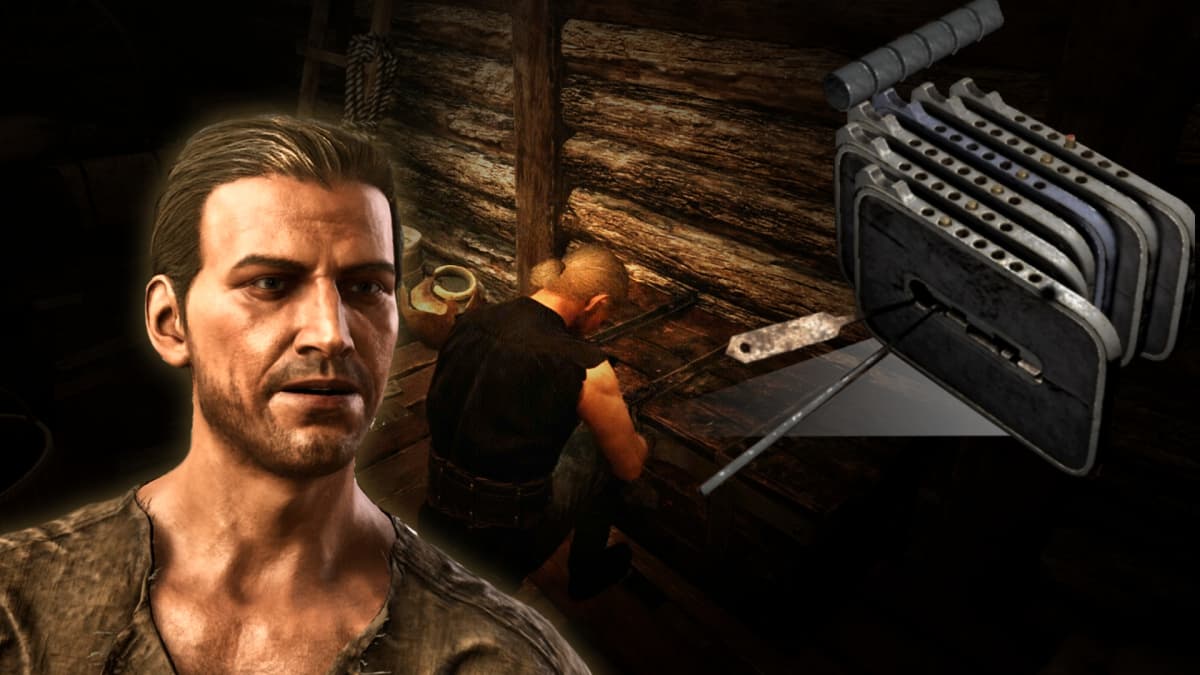
The core setup is simple on paper and nasty in practice. Depending on lock difficulty, you get five or six sliders, and each one has a pin that shifts as the slider moves. Your job is to park every pin in the center position, which the game marks with a bronze color when you hit it. That bronze cue is the closest thing the system gives you to clean feedback, and it matters because the whole puzzle is built around watching how the mechanism reacts instead of brute-forcing your way through it.
The catch is that the sliders are interconnected. Moving one can move the others too, sometimes in the same direction and sometimes in the opposite direction. That is where the logic-puzzle framing starts to feel more like actual mechanical reading than a standard RPG lockpick check. You are not just lining up one pin at a time, you are learning a relationship map, and every adjustment risks shifting something you already solved.
What feels authentic to lockpickers
The part that rings true is the sequencing. Real picking, especially when you are learning, is always about understanding how one action changes the rest of the lock. Gothic 1 Remake translates that into slider dependencies instead of pins and springs, but the mental loop is familiar: identify what moves, predict what it will drag with it, then commit only when you understand the interaction. That is the real win here, because the game rewards observation before motion.
The bronze center cue also gives the puzzle a form of tactile feedback, even if it is obviously game-ified. In a real lock, you are listening and feeling for state changes, tension, and binding. Here, the game turns that sensory work into visual confirmation, and while that is not realistic in a literal sense, it does preserve the discipline of reading a system carefully. The lock is not solved by luck, at least not for long.
Where the game departs from reality
This is still a game system first, and it shows. No real lock is going to hand you a neat five- or six-slider grid with color-coded success states, and no actual mechanism behaves with that kind of transparent, puzzle-box logic. The game is exaggerating the structure of lock manipulation to make it legible, and that is fine, because the point is not to simulate a cylinder faithfully. The point is to create pressure around uncertainty.
The most obvious fiction is the way the system compresses discovery into a repeatable mini-logic sequence. Real picking depends on feedback that is often subtle, inconsistent, and heavily influenced by skill, tool choice, and the specific lock in front of you. Gothic 1 Remake abstracts all of that into a clean puzzle language. That makes it readable, but it also means the game is never pretending to be a simulator. It is borrowing the mood of lock work, not the full mechanics.
Why the early game feels punishing
The early game is where the design gets mean. Some locks can take 10 to 15 minutes to solve, and the game expects you to learn by experimentation rather than by leaning on a tutorial. That matters because it makes every chest feel like a small exam instead of a routine pickup. If you are used to fast RPG lockpicking, this will feel deliberately slow, almost stubborn.
The limit on lockpick availability sharpens that pressure. You are not just solving a puzzle, you are managing a scarce tool while you do it. That changes the emotional tone completely. Every failed attempt costs more than time, because the game can break the lockpick after repeated mistakes, and that turns guesswork into a real risk rather than a harmless reset.
How to approach it without wasting picks
The practical move is to treat the first few attempts as reconnaissance, not progress. Learn how the sliders are linked before you start chasing the center on every pin, because the game punishes random nudging far more than slow pattern reading. If one slider pushes another in the same direction, that relationship becomes part of your route. If it pushes the others in the opposite direction, you need to think one step ahead and stop treating each slider as independent.
A few habits help a lot:
- Watch for which sliders shift together before you commit to a correction.
- Use the bronze center cue as your stop signal, not as permission to keep testing.
- Save before opening valuable chests, because a failed attempt can burn the tool and force a restart.
- Expect the hardest locks to take time, especially early on when the system is still teaching you through pain.
That last point is the design’s real thesis. The game wants you to slow down, not speed through loot.
Why the reward structure works
The reason this system lands is that the effort matches the payoff. Because locked chests often hold useful rewards, rare items, or progression resources, the time you spend on a lock is not empty busywork. The chest feels earned because the game has made you invest attention, not just press a button. That is a better fit for exploration than a throwaway minigame, especially in a classic RPG structure where scavenging is part of the loop.
For lockpickers, that creates a strange but satisfying middle ground. The mechanic is not a faithful model of a real lock, yet it respects the mindset behind picking: careful observation, controlled movement, and the acceptance that a bad decision can wreck your setup. Gothic 1 Remake turns that mindset into a punishing puzzle, and because it does not hand out success cheaply, the final click feels like you solved something instead of merely triggered it.
In the end, that is why the system works. It takes the tension of lock manipulation, strips away the realism it cannot support, and still leaves you with the part that matters most: the sense that one sloppy move can cost you the whole job.
This article was produced by Prism’s automated news system from verified source data, official records, and press releases, then run through automated quality and moderation checks before publishing. The system is built and supervised by the people who set the standards it runs under. Read our full AI policy.
Know something we missed? Have a correction or additional information?
Submit a Tip