LockPick Pros guide maps the path to a white-belt start in locksport
White belt gives a beginner a real first win in locksport, with nearly 900 ranked locks, starter picks like the Master Lock #1, and meetups that welcome new hands.
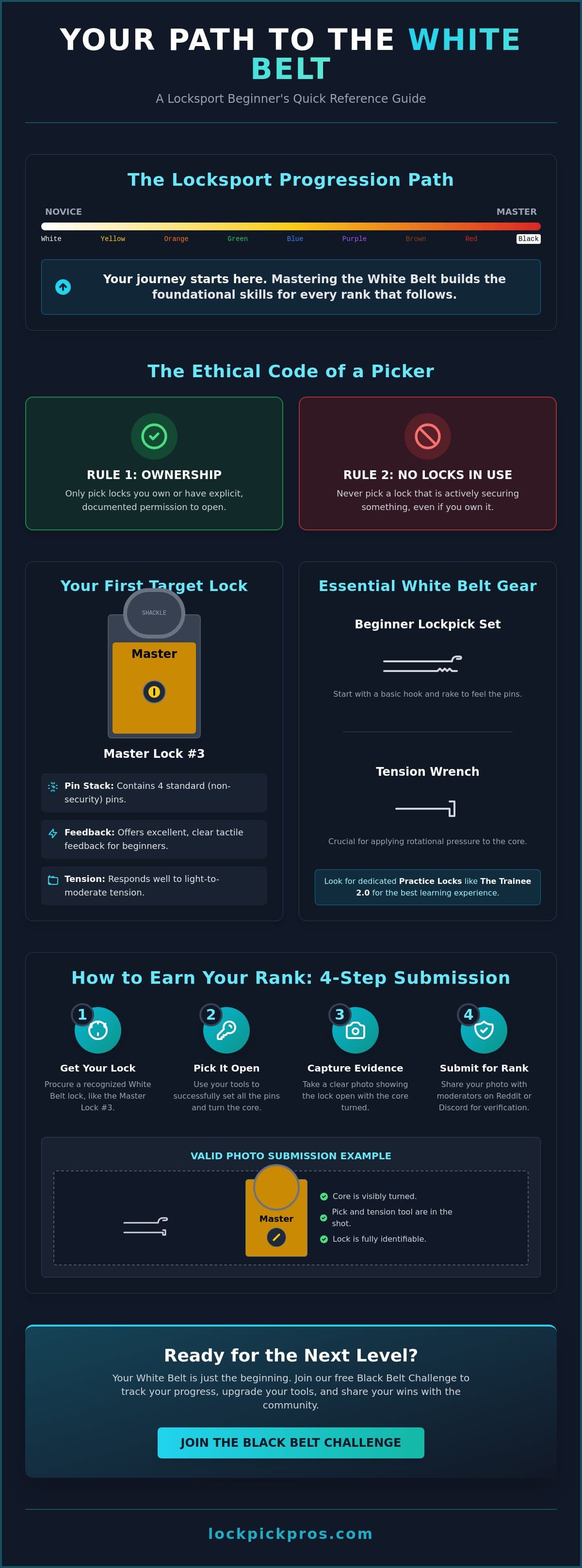
The fastest way from curious outsider to recognized participant in locksport is a white belt, not a drawer full of exotic tools. LockPick Pros’ white-belt guide gives beginners a concrete first target, the starter locks to use, and a lane the wider community already understands. That matters in a hobby where progress is often visible, public, and shared in front of other pickers.
White belt is the first real win
The point of a white-belt start is not to skip the learning curve, it is to make the first step legible. Lock Pickers United’s belt system gives locksport a shared progression path, and white belt sits at the entry point, where the goal is core skill-building rather than advanced hardware. The guide turns that into something practical: pick a rank-appropriate lock, work the basics, document your progress, and arrive at the next meetup with a result the community will recognize.
That structure is what removes the guesswork. New pickers can waste a lot of time wondering whether they bought the wrong practice lock, whether their tension is off, or whether they are even training on something that belongs in the beginner lane. A white-belt framework cuts through that noise and says, in effect, start here, prove the fundamentals, then move on.
What belongs in the starter lane
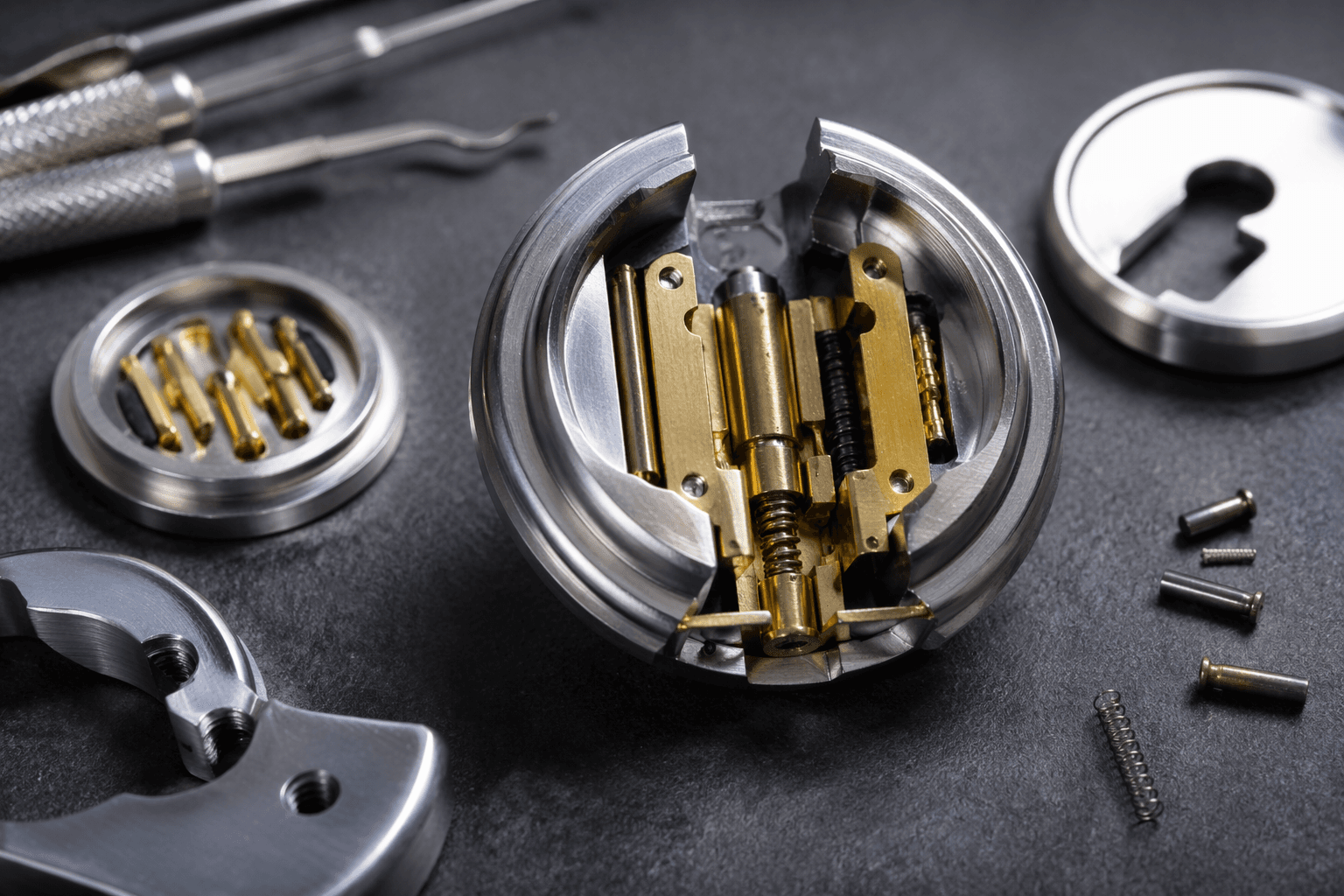
The LPU Belt Explorer is built for exactly this kind of progression, with detailed information for nearly 900 ranked locks. Its white-belt tier includes beginner-friendly options such as the Master Lock #1, the ABUS 45, and cutaway or acrylic practice locks. That matters because the point is not to buy the hardest lock you can find, but to choose one that rewards feedback and builds repeatable control.
For a first win, the right lock should do three things: 1. Give clear feedback when tension is right. 2. Let you feel pin behavior instead of fighting a bunch of unnecessary security features. 3. Be easy enough that success comes from technique, not luck.
That is why the belt ladder runs from white into yellow, orange, green, blue, red, brown, and black. The progression gives you a vocabulary for where you are, and it keeps beginners from treating random hardware as a training plan.

The first steps that actually matter
A white-belt start works best when you treat it like a skill loop, not a shopping spree. First, pick one lock that belongs at the bottom of the ladder, ideally one of the locks already listed in the white-belt tier. Then spend your practice time on tension control, pin feedback, and repeatable opening rather than on chasing a bigger challenge too soon.
The most common beginner mistake is overreaching. People often want to jump straight to a lock that looks impressive, but locksport rewards consistency more than bravado. Another mistake is ignoring the value of a practice lock, especially a cutaway or acrylic body that makes the internal behavior easier to read while you are still learning what your hand should feel.
- Learn how much tension the lock wants.
- Notice how each pin reacts.
- Open the same lock more than once, on purpose.
- Keep moving only after the feedback starts to make sense.
A simple way to think about the first phase is:
That is the real appeal of the white-belt path. It does not just teach you to open a lock once, it teaches you enough about feedback, tension, and pin behavior to keep improving.
Why the community keeps this public
Locksport has long depended on shared instruction, and the modern scene has made that easier to see. TOOOL, The Open Organisation Of Lockpickers, publishes U.S. lockpicking-law guidance and maintains a meetings page, and its law page makes clear that the assumption that lock picks are illegal is often a misconception. That kind of public guidance matters because the hobby works better when newcomers understand the difference between lawful practice and bad assumptions.
Seattle Locksport’s 2026 meetup page pushes the same open-door message. It is aimed at brand-new lock pickers as well as people already deep in the hobby, and beginners can borrow tools there. NYC Resistor’s Locksport Workshop on March 13, 2026 followed the same model, framing the activity around ethics, theory, and hands-on practice of lockpicking. The pattern is obvious: the hobby is easier to enter when the first experience is social, legal, and practical.
How the belt system fits the history
The belt culture did not appear out of nowhere. SSDeV, short for Sportsfreunde der Sperrtechnik-Deutschland e.V., was founded on February 9, 1997 and is described as the oldest official lockpicking sport group. Locksport International followed in 2005, which helps explain why today’s hobby already has a shared language for rank, progression, and community standards.
That history is why a guide like LockPick Pros’ white-belt roadmap lands so cleanly. It is not inventing an audience; it is speaking to a hobby that already knows how to organize itself around practice, milestones, and peer recognition. When a beginner walks in with a white-belt goal, they are not just learning a lock, they are stepping into a system the community has been building for decades.
Who gets seen in the hobby
The other important shift is who gets included in the story. Lockpick Extreme has launched an interview series highlighting women in locksport, and it identified Christina Palmer as a long-time picker and pick designer. That kind of visibility matters because newcomers look for proof that the hobby has room for different skill paths, different styles, and different people.
A white-belt start helps with that too, because it lowers the barrier to entry without lowering the standard. It says the first milestone is real, the first tools can be simple, and the first community recognition does not require advanced gear. In a hobby that lives on open practice and shared progress, that is often the difference between dabbling and becoming part of the room.
This article was produced by Prism’s automated news system from verified source data, official records, and press releases, then run through automated quality and moderation checks before publishing. The system is built and supervised by the people who set the standards it runs under. Read our full AI policy.
Did this article answer your question?