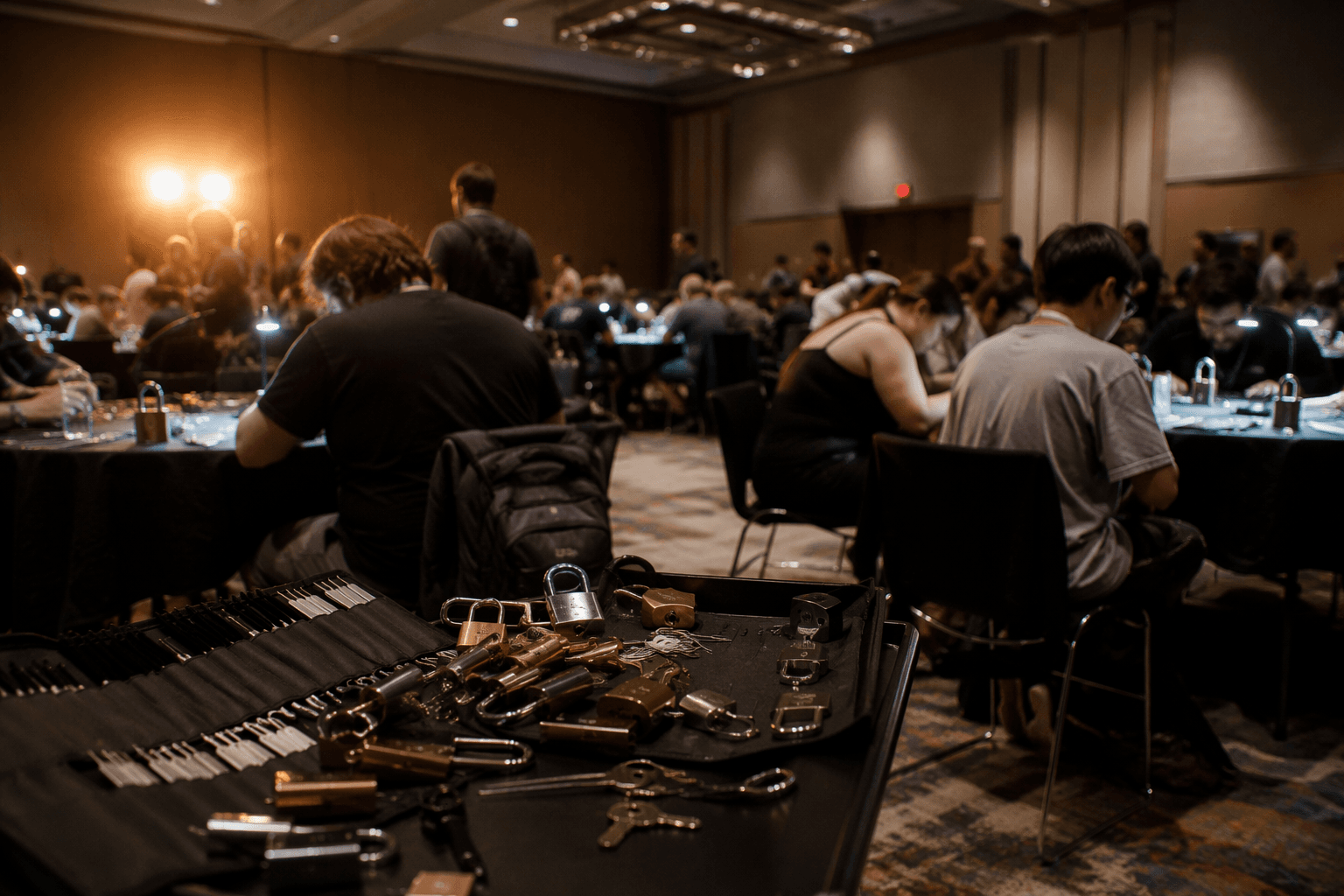
MIT guide to lock picking still explains the binding defect clearly
The MIT guide still beats fast lockpicking videos because it explains the binding defect, feedback, and pin columns with rare clarity.
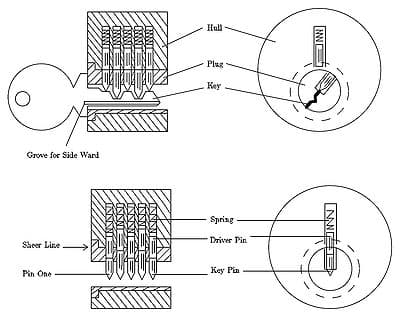
Ted the Tool’s 40-page booklet, dated September 1, 1991 with an August 1991 revision, still explains the part most video tutorials rush past: why a lock binds in the first place. It reads like a compact lab manual for pin-tumbler mechanics.
Why the booklet still lands
It was built as educational, non-profit material, not a stunt piece or a tool catalog. The copyright line reads “Copyright 1987, 1991 Theodore T. Tool,” and the document grants permission to reproduce it on a non-profit basis if the copyright and distribution notice stay intact.
The table of contents is still a better roadmap than most modern quick-hit tutorials. “It’s Easy,” “How a Key Opens a Lock,” “The Flatland Model,” “Basic Picking and the Binding Defect,” “The Pin Column Model,” “Basic Scrubbing,” and “Advanced Lock Picking” lay out a progression that makes sense to anyone who has actually felt a plug move under tension. A lot of newer video content shows the hand positions first and the theory later, if at all. This booklet does the opposite.
The binding defect is the core lesson
The best thing in the guide is the simplest: no lock is manufactured with perfect tolerances, so when torsion is applied, one pin tends to bind before the others. It turns picking from vague fiddling into a physical process with causes, effects, and feedback you can feel.
Once you understand the binding defect, single-pin picking stops looking like magic. You are not trying to “beat” the lock all at once, you are identifying the pin stack that has become the tightest under tension and learning how the plug reacts as individual pins reach the shear line.
The old booklet does not just say “apply tension.” It shows why tension creates order inside the lock, and why the first pin to bind is the one that matters.
Why the pin column model still matters
The pin column model is where the guide becomes genuinely useful as a teaching tool. It breaks the lock into stacked parts, so you can understand how driver pins and key pins interact with the shell and plug. Once that picture clicks, the shear line stops being an abstract term and starts being the place where a stack either blocks rotation or lets the plug turn.
The guide’s “The Flatland Model” section helps with that too. It simplifies a three-dimensional mechanism into something easier to visualize, which is exactly the kind of explanation many short videos skip in favor of faster payoff. When you know the model, you understand why lifting one pin at a time matters, why the plug’s movement changes as a stack sets, and why feedback from the lock matters more than guessing.
“Basic Scrubbing” is another section that has aged well because it treats scrubbing as part of the learning curve, not a cheat code or a throwaway technique. Even if you never make scrubbing your main approach, the guide is honest about how people learn contact, motion, and feedback.
How the text moved through the hobby
The guide did not stay trapped in MIT folklore. It circulated widely online through mirrors such as Lysator and the Internet Archive, which is how a 1991 text kept landing on workbenches and forums decades later. A 1994-1995 MIT stock-answers page shows people inside MIT were already asking for it and discussing it, and Andre DeHon wrote that “we had flamed about this in the past with some other hacker-types.”
Its staying power showed up again in a 2019 Reddit thread that asked whether the 1991 guide was still useful.
MIT’s later civic-media discussion “Locks as Social Contract” pushed that continuity even further. It featured Schuyler Towne, a competitive picker who won the American Open and competed internationally. It now lives alongside a thriving online community of hobbyist lockpickers.
What to add from modern guidance
The one thing the old booklet cannot do for today’s reader is cover every current norm around legality and ethics. It says the material is for educational purposes only, and that spirit is still the right frame, but modern practice needs current legal boundaries, club norms, and common-sense rules about where and why you practice. It also helps to supplement the booklet with newer guidance on recent lock designs, because the basics of the pin-tumbler stack have not changed even if the hardware around them has.
This article was produced by Prism’s automated news system from verified source data, official records, and press releases, then run through automated quality and moderation checks before publishing. The system is built and supervised by the people who set the standards it runs under. Read our full AI policy.
Did this article answer your question?