PASS version 7 pushes school security toward unified life safety systems
PASS version 7 treats school security like a coordinated operating system, not a parts list, and that changes what gets bought, planned, and trained every day.
From standalone hardware to a live system
PASS version 7 makes one thing hard to ignore: school security is no longer a matter of bolting on a few stronger devices and calling it done. The real shift is from isolated hardware to a coordinated life safety environment, where the door, the network, the visitor desk, the panic button, and the response plan all have to behave like one system.
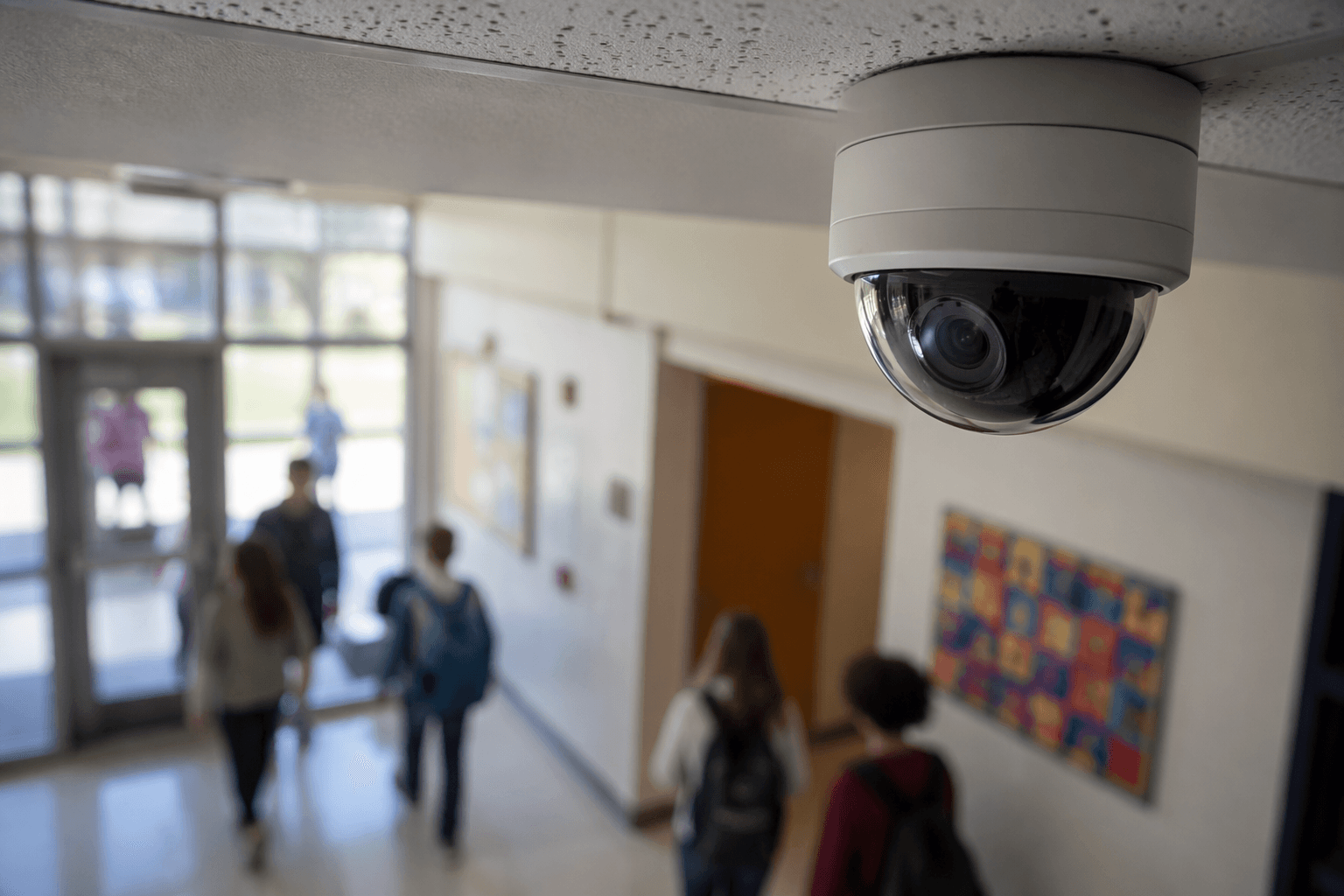
That is the point Guy Grace keeps pushing. In the Locksmith Ledger interview, the long-time school safety and security veteran ties what he saw at ISC West to the newest PASS updates and argues for convergence, not silos. Cameras, locks, alarms, software, and cyber systems cannot live in separate lanes anymore if a campus expects identity, access control, communications, detection, and response to work in real time.
What version 7 actually changes
PASS released the seventh edition of its Safety and Security Guidelines for K-12 Schools on July 30, 2025, and says the framework has already been downloaded by thousands of stakeholders. That matters because these guidelines are not treated as a shelf document. Many districts use them to evaluate security infrastructure and tighten procedures, which is exactly why version 7 leans harder into integration.
The biggest structural change is the new Digital Infrastructure Layer. PASS also folds the old Property Perimeter and Parking Lot layers into a single Campus Perimeter Layer, which is a good sign that the organization is thinking less like a hardware catalog and more like an operating map. The five-layer structure now runs through district-wide digital infrastructure, campus perimeter, building perimeter, classroom and interior spaces, with policies and procedures, people, architecture, communication, access control, video surveillance, and detection and alarms addressed across those layers.
That is a very different mindset from the older "buy a device and install it" model. In the old model, a school could treat a card reader, a camera, or a lock upgrade as a finish line. In the new model, each purchase has to answer a practical question: what happens to daily access, visitor management, emergency lockdown, and recovery when this piece is added to the system?
Five layers, one operating picture
PASS version 7 is useful because it forces campuses to stop thinking in single products and start thinking in workflows. The Digital Infrastructure Layer puts the network on the same map as the doors. The Campus Perimeter Layer makes the outside approach, parking flow, and entry sequence part of the same security conversation. The building perimeter, the classroom and interior, and the policies that govern people and procedures all connect back to the same response chain.
That is also where Unified Life Safety Systems, or ULSS, comes in. Grace uses that term to describe a coordinated operating environment that brings people, policy, procedures, communications, access control, and digital infrastructure together. In plain English, ULSS says the emergency plan is not separate from the hardware, and the hardware is not useful unless the people and procedures are ready to use it.
For locksmiths and school security teams, that means a door is no longer just a door. It is one piece of a layered safety architecture that has to support normal traffic, visitor screening, lockdown, and emergency decision-making without turning the campus into a maze for staff. Strong door hardware still matters, but it has to fit a larger system that includes panic alarms, visitor entry, and the digital backbone carrying the alerts.
Why the daily workflow matters more than the spec sheet
This is where the new model gets practical. A school that buys hardware in isolation can end up with decent parts and a weak outcome. A school that plans around coordinated operations asks different questions from the start:
- Can front-office staff verify a visitor, control access, and trigger a response without juggling three different systems?
- Can a panic alarm, door hardware, and communications workflow work together fast enough for real lockdown decisions?
- Does the digital infrastructure support the access control, video, and alerting load the building actually needs?
- Do staff know what to do with the system during a normal day, not just during a drill?
That is the hard-earned lesson in the PASS update. Security is not just about what is on the door. It is about whether the school can make fast, clean decisions with the tools it already has. If the workflow is clumsy, the most expensive hardware in the world will not save the response.

The pressure driving the shift
The move toward integrated systems is happening under ugly pressure, not theory. The American Academy of Pediatrics found 1,453 school shootings in the United States from the 1997–1998 through 2021–2022 school years, and it found that the most recent five school years had substantially more shootings than the prior 20 years. Security.org reported 233 K-12 school shooting incidents in 2025, down from 352 in 2023, and said the average from 1999 to 2025 was about six active shooter events in K-12 schools per year.
That backdrop helps explain why schools have steadily hardened. NCES reported that between 2009–10 and 2019–20, public schools increased their use of security cameras, ID badges, and access control. It also found that the share of public schools with security staff present at least once a week rose from 43% to 65%, then settled at 61% in 2021–22.
The problem is that more gear is not the same as better security. The next step is coordination. That is why PASS, CISA, and other school-safety players keep leaning into layered planning instead of one-device fixes. CISA’s K-12 School Security Guide uses a systems-based method for vulnerability assessment, planning, and implementation of layered physical security elements, which lines up cleanly with the direction PASS is taking.
What school security pros should take from it
PASS says the seventh edition was shaped by input across education, public safety, and the security industry, and that broad buy-in is part of the point. This is no longer a niche hardware conversation. It is a school operations conversation that includes administrators, school boards, public safety, and security professionals who have to make the pieces work together.
The practical takeaway is simple: if you are still treating school security as a shopping list, you are already behind. The real work is in integration, testing, and training, because the campus now depends on how well the system behaves under pressure, not just on how stout the lock looks in a cut sheet.
PASS version 7 lands exactly where the industry needs it to land. It says the door still matters, but only as part of something larger, and that larger system is what decides whether a school can keep moving when normal routines break.
This article was produced by Prism’s automated news system from verified source data, official records, and press releases, then run through automated quality and moderation checks before publishing. The system is built and supervised by the people who set the standards it runs under. Read our full AI policy.
Know something we missed? Have a correction or additional information?
Submit a Tip