TOOOL shows how open lockpicking can strengthen security
TOOOL turned lockpicking from a hacker-side skill into a public security practice, and that openness is what made the hobby legitimate.
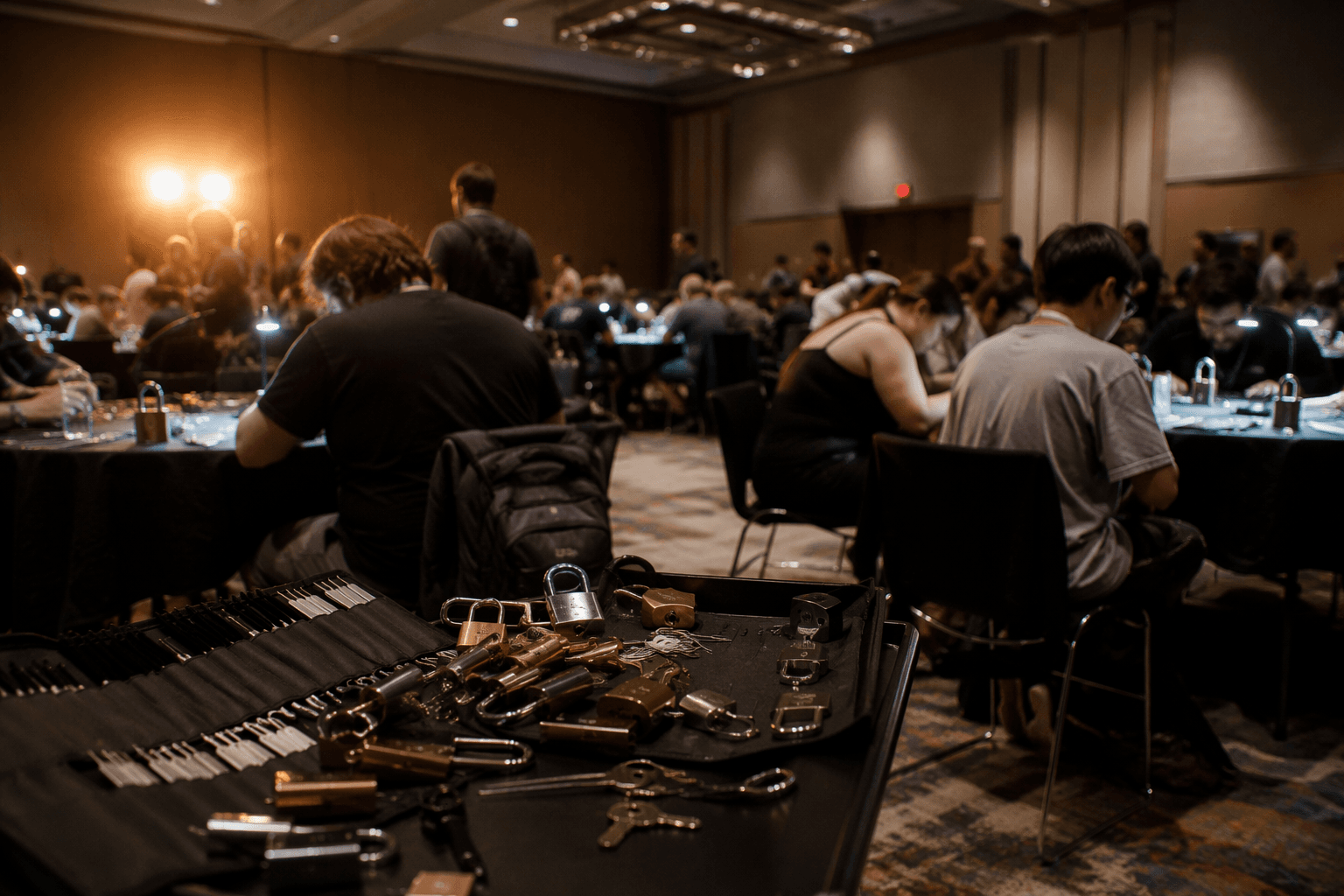
The cleanest way to make a lock stronger is often to put it in front of people who know how to pick it. TOOOL, the Open Organisation of Lockpickers, built its reputation on that idea: teach the skill, test the hardware, and make the whole thing public. What began as hacker-gathering side work in the 1990s hardened into an international locksport culture where education, ethics, and competition do the heavy lifting.
From hacker nights to a real discipline
The early European story splits in two and comes back together. In Germany, Steffen Wernéry, a founding Chaos Computer Club member, was already teaching lockpicking at hacker gatherings before he formalized that work into Sportsfreunde der Sperrtechnik in 1997. The Chaos Computer Club, which describes itself as Europe’s largest hacker association and says it has been active for more than forty years, already treated the topic as part of a broader mission around information freedom and technical and social analysis. By the time its 1998 congress program listed both a lockpicking workshop and the German championships, the idea was clear: this was not a parlour trick, it was part of hacker culture.
Amsterdam developed along a parallel track. A small group of enthusiasts met at a place called the Hippie Hangout, reorganized into NVHS, and then evolved into TOOOL in 2002 under Barry Wels. TOOOL Netherlands says the Dutch club was founded in Amsterdam in 2002 as the successor to the first Dutch lockpicking group founded in 1997, and that it is the oldest lockpicking sports club in the world after Germany’s SSDeV. That matters because it puts the hobby on the same kind of institutional footing as any serious skill community: a lineage, a venue, a calendar, and a shared set of rules.
Barry Wels is a big reason the Dutch branch never drifted into pure cosplay. His own biography says he started picking locks around 1985 and later moved into the security industry, mostly on lock-related topics. That combination shows up in TOOOL’s tone to this day. It treats lockpicking as a way to understand how pin stacks, tolerances, and warding actually behave, not as a party stunt or a shortcut to mischief.
Why openness changed the game
TOOOL’s philosophy is the part that made the movement stick. The U.S. branch says its mission is to advance public knowledge about locks and lock picking through teaching, research, and competition. Its bylaws make the structure even clearer: TOOOL in the United States is a legally separate 501(c)(3) nonprofit, affiliated with but distinct from the Dutch founding organization. That legal clarity matters because it gives the hobby a public face that is separate from the underground mythology people usually attach to lockpicking.
The meetings structure is just as intentional. TOOOL says a chapter becomes official through an open process, and that the organization is committed to being above-board and avoiding an underground mentality. That is the opposite of the secret-society posture people often assume when they hear the word lockpicking. In practice, it means the culture rewards people who show up, learn the ethics, and build technique in the open instead of hoarding tricks.
TOOOL’s education and research pages push that idea into real-world security. The organization sponsors public talks, lectures, and hands-on workshops around the world, and it frames research as a way to help consumers, manufacturers, and society become safer by understanding physical-security products. That is the core shift here: once lockpicking is treated as a method of evaluation, it stops being a fringe pursuit and starts looking like a legitimate way to test whether a lock deserves trust.
How the club spread without losing the plot
The expansion tells you the model was repeatable. TOOOL US was founded in 2005 as a 501(c)(3) nonprofit, Eindhoven followed in 2006, TOOOL UK arrived in 2014, Belgium operated briefly in 2015, and Australia came online in 2018. The worldwide TOOOL overview confirms the 2002 Netherlands founding, the 2005 U.S. follow-on, the 2014 U.K. formation, and Belgium’s 2015 to 2017 run. That kind of spread is what you get when a community has a simple enough structure for volunteers to reproduce, but enough discipline to stay recognizable from chapter to chapter.
The Dutch branch also gives the hobby a useful sense of continuity. Its annual lockpicking competition has been held yearly from 2004 onward, which means the competitive side of locksport has been normalized for more than two decades. Amsterdam and Eindhoven gatherings are held every two weeks in public venues, which is about as far from the “back room with a flashlight” stereotype as you can get. If you want to understand why the scene has legitimacy, start there: recurring meetings, public space, and a competition calendar that never needed to pretend it was something else.
What modern locksport actually looks like
The modern field is bigger than one technique and bigger than one crowd. A recent IEEE Security review places locksport competitions at conferences such as DEF CON, ShmooCon, and BSides, and it describes the hobby as including lockpicking, impressioning, and safe-lock manipulation. That is the useful distinction for anyone coming at this from the gear side: locksport is not just about opening a pin tumbler fast. It is a broader mechanical skill set, one that overlaps with security research, maker culture, and the kind of hands-on learning that conference villages have always loved.
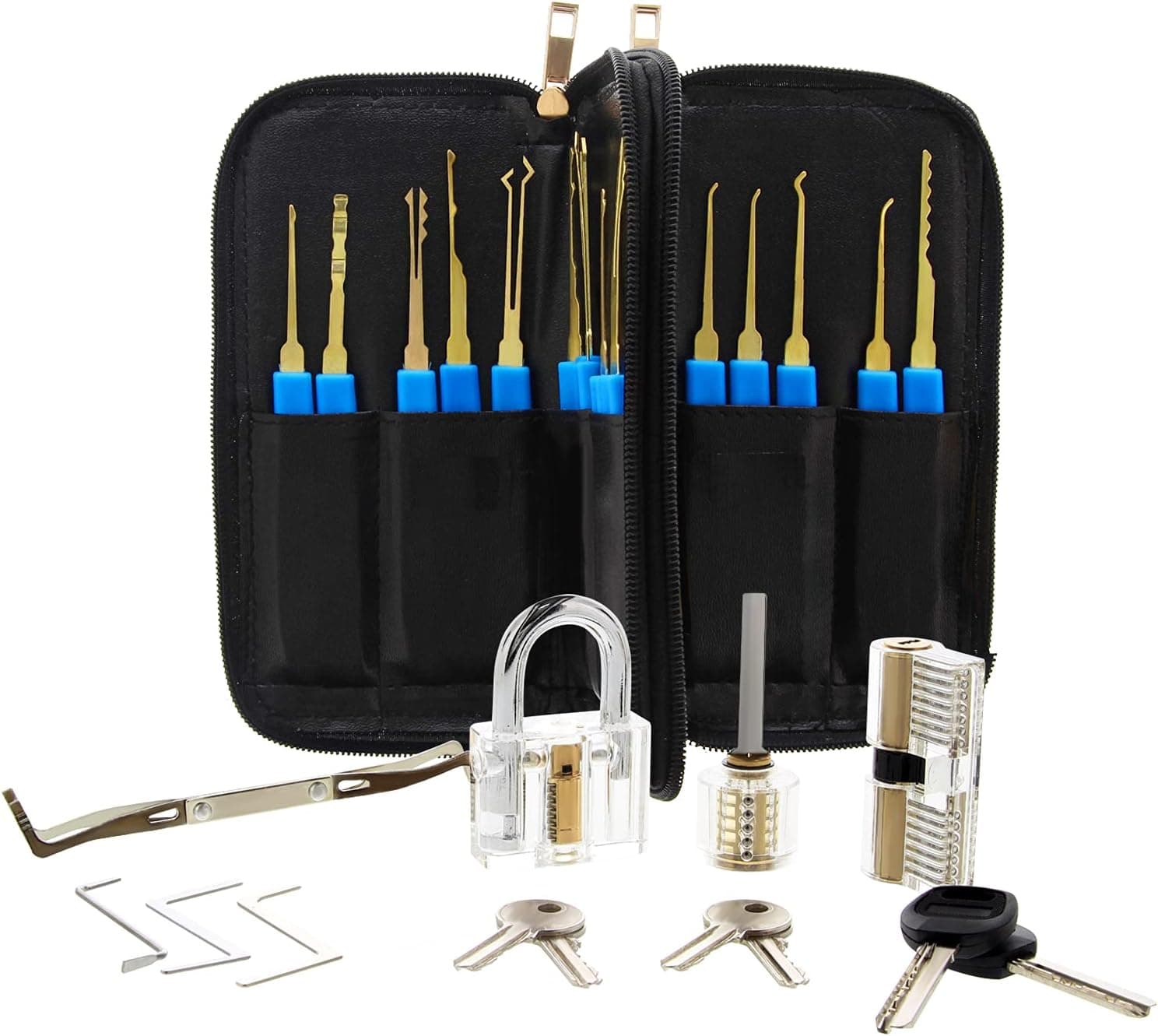
That wider ecosystem is exactly why the community feels more like a technical discipline than a subculture. Competitions, workshops, and public demos let people compare tools, hear failure analysis, and see how different cylinders and tolerances behave under real hands. The result is a feedback loop that rewards precision. If a lock gives up too easily in front of a room full of pickers, the problem is the hardware, not the audience.
Why the history still matters at the bench
The through line from Wernéry’s hacker gatherings to Wels’s public chapters is not nostalgia. It is the idea that security gets better when knowledgeable people are allowed to stress-test it in daylight. That is why TOOOL’s mix of openness, ethics, education, and responsible disclosure feels so important to the scene: it gives lockpicking a way to be social without being vague, technical without being sneaky, and competitive without being reckless.
That is also why the movement survived its own stereotype. The clubs that lasted were the ones that made the practice visible, built chapter structures that anyone could join, and treated public learning as a strength instead of a liability. TOOOL did not make lockpicking respectable by hiding it. It made it harder to dismiss by putting the tools, the failures, and the fixes right out in the open.
This article was produced by Prism’s automated news system from verified source data, official records, and press releases, then run through automated quality and moderation checks before publishing. The system is built and supervised by the people who set the standards it runs under. Read our full AI policy.
Did this article answer your question?