What belongs in a beginner lock pick set, essentials for new pickers
Skip the oversized kit: the real beginner essentials are a few hooks, a couple of tensioners, and a practice lock that teaches feedback fast.
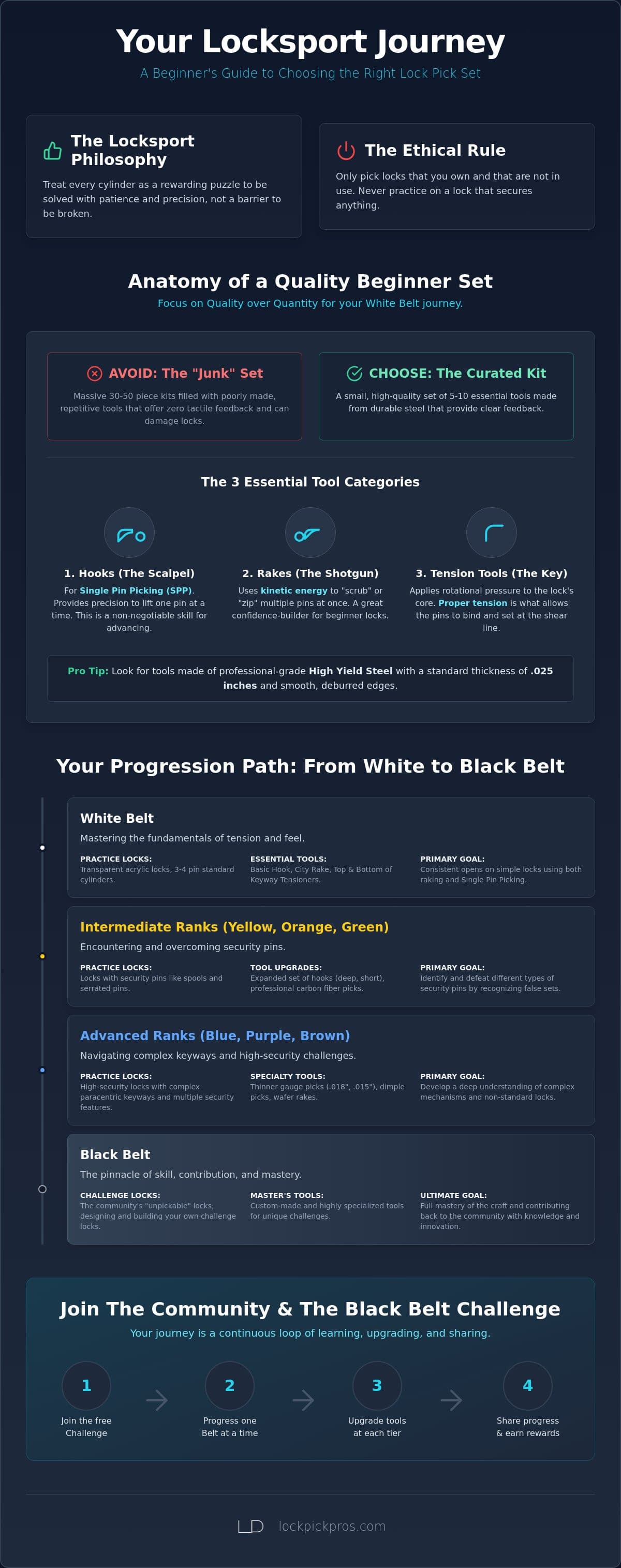
A sensible starter kit has 3 to 5 picks, 2 to 3 tension wrenches, a clear practice lock, and an instruction guide. The best starter kits are usually small, purposeful, and built around the tools that actually develop hand control, feedback recognition, and patience: hooks, rakes, and tensioners.
What actually belongs in the set
That mix gives you enough variety to learn without dumping a dozen near-duplicate profiles into your lap. A set packed with extra shapes can look like value, but if you are still learning how a pin stack reacts under tension, those extras do little more than fill a pouch.
The useful split is simple. Hooks are for precision single-pin picking, which is where you learn to isolate one binding pin at a time. Rakes are for faster, less precise opening attempts, which makes them useful for feeling the difference between deliberate manipulation and broad motion. Tension wrenches matter just as much as the picks themselves because they supply the rotational force that tells the lock what you are trying to do.
Why the short hook matters first
If you are buying your first tools, a short hook belongs near the top of the list. It is the cleanest teaching tool in the bunch because it forces you to listen to the lock instead of flailing at it. In the first month of practice, that matters more than collecting exotic profiles you will not understand yet.
A short hook is the tool that teaches why tension is the real game. You set rotational pressure with the wrench, then use the hook to feel for movement, resistance, and tiny changes in the pin stack.
Where the rake fits, and where it does not
A rake earns its place too, but for a different reason. It is useful for fast, less precise opening attempts, so it helps you understand what broad manipulation feels like before you become obsessed with perfect single-pin control.
Some starter sets load up on rakes because they look dramatic and help a product page feel fuller. In practice, one or two rake profiles are enough for a beginner to understand the concept, especially when they are paired with a short hook and a couple of tension tools. Anything beyond that often becomes duplication.
Tension tools are not an afterthought
Too many new pickers treat tension wrenches like accessories. They are the part of the kit that makes the rest of the kit work, because lockpicking lives or dies on rotational control.
A beginner set with 2 to 3 tension wrenches gives you enough room to learn what different fits and thicknesses feel like without cluttering the case. The point is not to own every bend and width under the sun. The point is to find a wrench that gives you stable tension and then learn how small changes in pressure affect the pins.
Why a practice lock belongs in the box
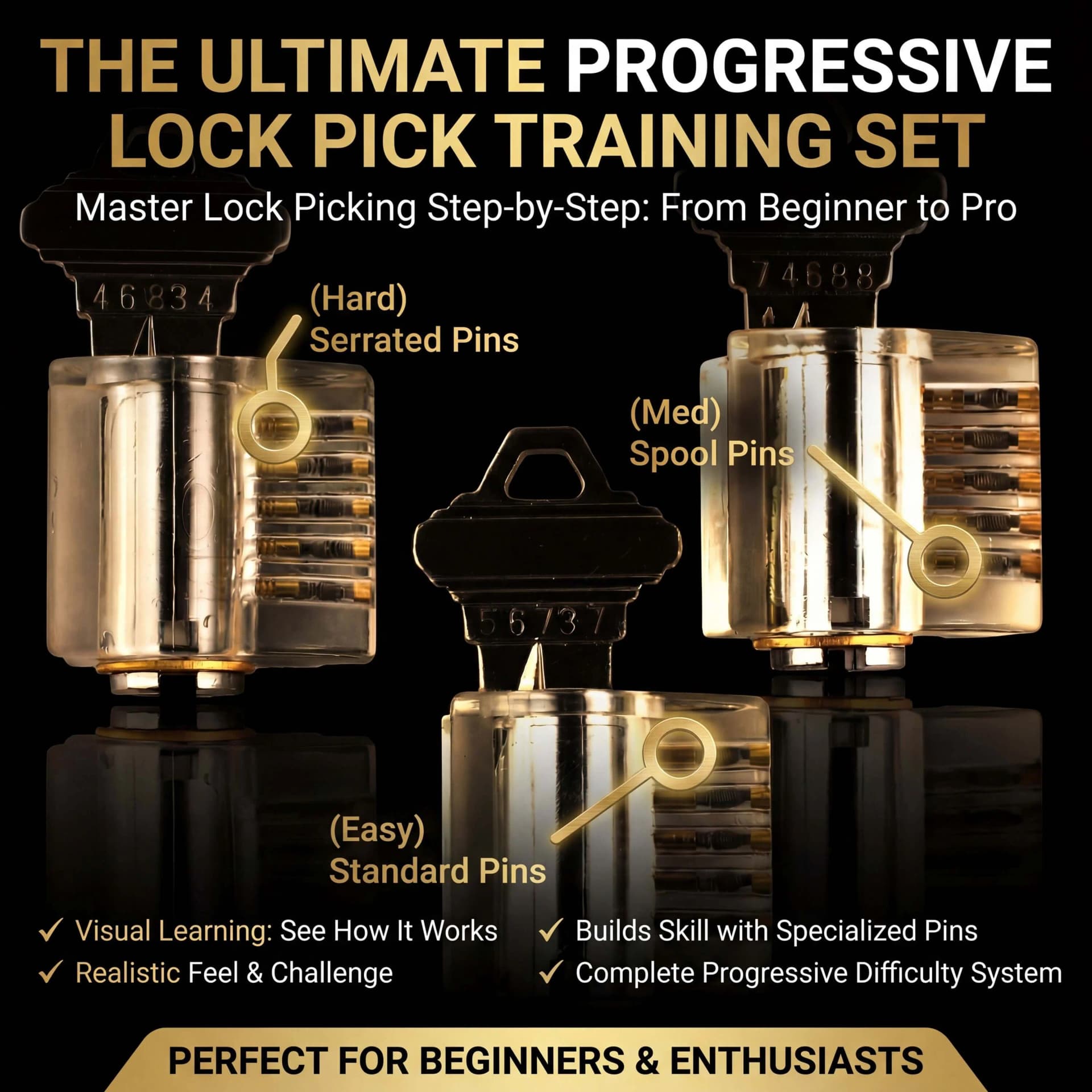
A clear practice lock is one of the few beginner extras worth paying for. It gives you something you can see, which makes the learning curve much less mysterious when you are trying to understand binding, set pins, and over-lifting. That visual feedback saves time in the first stretch of practice.
An instruction guide also earns its space. A good beginner guide can keep you from treating every lock like the same puzzle and from blaming your picks when the real problem is tension or technique. If the set does not include one, you will end up piecing together advice from scattered videos and forum posts anyway.
How not to get sold a drawer of filler
A lot of beginner kits are padded with duplicate profiles, oversized carrying cases, and tools you will not touch for months. If the case is bigger than the learning value, you are probably paying for packaging.
A better rule is to buy for the first month of practice, not for some imaginary future skill level. The useful set is the one that lets you work with a short hook, a rake, and a couple of tensioners until your hands understand what the lock is telling you.
The price range tells you a lot
Typical beginner kits land around $25 to $70. Under that range, you often run into bargain-bin steel, sloppy finishing, or tools that bend before they teach you anything. Well above it, you start paying for breadth and branding, not necessarily for better learning.
The question is whether the kit gives you enough quality to practice seriously without buying a pile of extra profiles that mostly gather dust.
Locksport is education now, not just a shopping niche
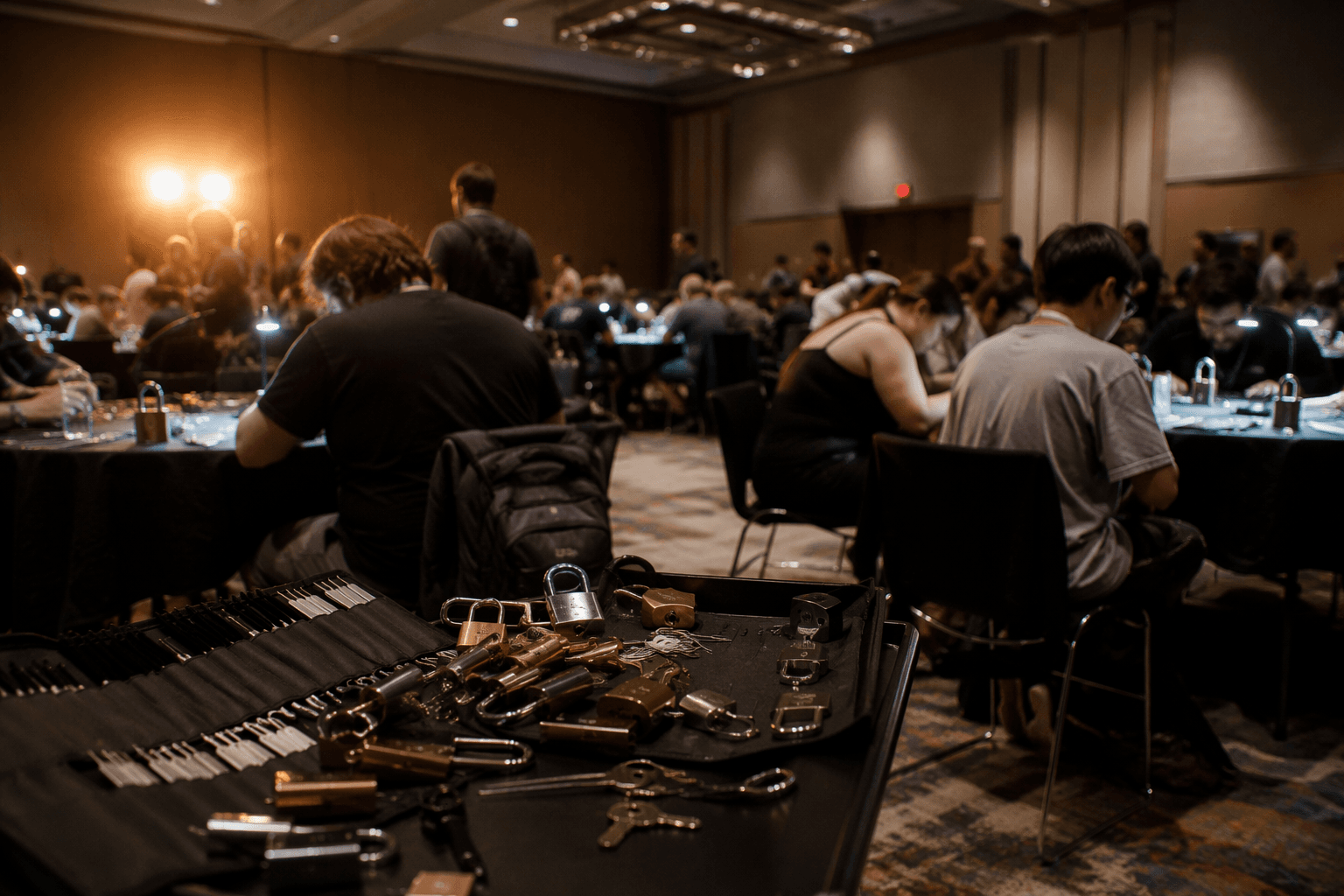
The Open Organisation Of Lockpickers, or TOOOL, is a 501(c)(3) nonprofit dedicated to advancing public knowledge about locks and lock picking through teaching, research, and competition.
No Starch Press put out a 416-page book titled *Locksport* in January 2024, covering how to work with picks, rakes, and tension wrenches, along with security pins, wards, dimple locks, keyways, and antique locks.
What the best beginner kit is trying to teach you
The July 6, 2026 LockPick Pros piece recommends keeping the kit focused and practical and learning the fundamentals before chasing quantity. A beginner set should teach you how to tension, how to read feedback, and how to move from a broad rake to a precise hook without guessing at what the lock is doing.
This article was produced by Prism’s automated news system from verified source data, official records, and press releases, then run through automated quality and moderation checks before publishing. The system is built and supervised by the people who set the standards it runs under. Read our full AI policy.
Did this article answer your question?