Bulk up: Marvel Super Heroes hides Commander role-player gems
Marvel Super Heroes is hiding the cards Commander decks actually want: cheap role-players that fix turns, smooth engines, and keep budget builds humming.
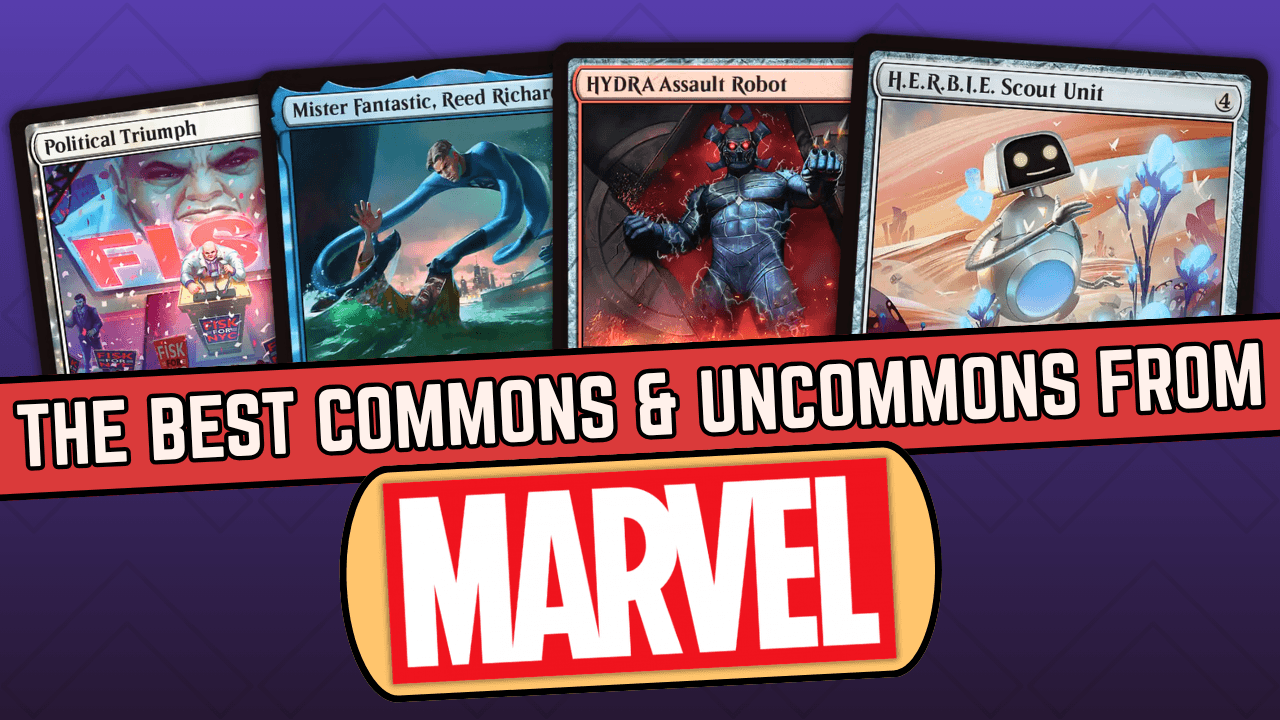
Commander decks are usually won by the cards nobody gets excited about in a spoiler season. That is exactly why the commons and uncommons in Marvel Super Heroes deserve a closer look: they solve real problems, especially when your list needs ramp-like smoothing, removal-adjacent utility, or a clean way to turn spare mana into board presence. Tyler Bucks’ Bulk Up pass through the set lands on the same truth budget players learn fast, the flashy legend gets the headline, but the low-rarity glue is what keeps the deck from stalling out.
Look past the chase cards
The useful way to read this set is not by asking which mythic will make the biggest splash. It is by asking which cards let a deck function on turns one through five without spending premium slots on narrow tech. Marvel Super Heroes appears to be packed with those kinds of pieces, and Tyler’s sweep of every new card produced a shortlist that looks like a practical Commander shopping list rather than a novelty parade.
That matters because Commander does not reward ornamental cards for long. A budget deck needs cards that do more than look clever in a reveal thread. It needs bodies that advance a plan, enchantments that keep scaling, and cheap artifacts that patch up awkward turns. The cards below do that work without pretending to be all-purpose staples.
Political Triumph turns a one-drop into a real engine
Political Triumph is the kind of card that gets ignored because it reads small at first glance. It is a one-mana enchantment, but the key text is how it rewards creatures entering your board by scrying, then cashes itself in later for a card draw and a team-wide boost. That is exactly the kind of low-cost smoothing Commander decks love, because it makes your first turns matter without asking you to hold up extra mana.
Tyler’s read on it is blunt: this is a strong turn-one play that keeps paying off as the board develops. That combination is rare in the budget space, where cheap cards often force you to choose between setup and payoff. Here, you get both, and the card even looks attractive next to Alela, Artful Provocateur, which tells you it is not just a generic enchantment but a real fit for decks already built to turn small permanents into pressure.
Captain Mar-Vell, Space-Born gives you flexibility instead of dead mana
If you have ever passed with mana open and wished your deck could do something cleaner than just “represent interaction,” Captain Mar-Vell, Space-Born is the sort of card that makes that posture playable. Tyler highlights it for enabling flash-style play when opponents have already cast spells, which means you can keep your options open and still affect the table on the end step or in response to a developing board.
That role is huge in Commander, especially for budget lists that cannot lean on premium instant-speed suites in every color. The value here is not just surprise, it is permission to use your mana efficiently while staying reactive. When a card lets you develop without tapping out like a goldfish, it buys you time, and time is often the most expensive resource in a four-player game.
Okoye, Dora Milaje Leader is board presence in a single card
Okoye, Dora Milaje Leader is the cleanest example of what “role compression” looks like in this set. For four mana, it creates two Soldiers and gives first strike to attacking tokens, which is the sort of text that reads like several different cards stapled together. Tyler calls it effectively a board in a can, and that is the right shorthand for the way it solves more than one problem at once.
Token decks want bodies, but they also want those bodies to matter immediately. First strike on attacking tokens changes combat math fast, and the two Soldiers mean you are not spending a whole turn just to set up. This is the card you want when a deck needs to rebuild after a sweeper, apply pressure without overcommitting, or turn a token theme into something that actually closes games.
White Widow, Free Agent and S.H.I.E.L.D. Spy Kit fill narrower but important jobs
White Widow, Free Agent is slower than the biggest headline cards in the set, but Tyler still treats it as a meaningful recursion tool for artifact or enchantress shells. That slower pace is not a knock in Commander, because recursion cards are often judged by whether they keep a deck from running out of gas. In the right shell, bringing back the right permanent is worth more than drawing a flashy card you cannot immediately use.
S.H.I.E.L.D. Spy Kit is the more specific tool, and that specificity is the point. Tyler frames it as a cheap Equipment for Voltron decks that smooths library manipulation and untaps the attacker for pseudo-vigilance. That gives you two jobs from one slot: it helps the deck function with top-of-library play patterns, and it keeps your suited-up attacker relevant after combat instead of stranded.
Why these commons and uncommons matter more than the headlines
The strongest thing about Marvel Super Heroes for Commander is not that it has a single format-warping cheap card. It is that the set quietly supplies a handful of commons and uncommons that each solve a different deckbuilding headache. Political Triumph supports creature-centric starts, Captain Mar-Vell, Space-Born preserves flexibility, Okoye, Dora Milaje Leader compresses board setup into one cast, White Widow, Free Agent feeds recursion shells, and S.H.I.E.L.D. Spy Kit does double duty for Voltron and top-of-library lines.
That spread tells you where the real value is. These are not filler cards you toss in because they are available at bulk prices. They are the kind of cards that make token decks smoother, equipment decks less clunky, artifact recursion more resilient, and board-building strategies more consistent over a long game. The chase cards may get the attention, but the commons and uncommons are the ones most likely to still be in your 99 after the preview season noise has faded.
This article was produced by Prism’s automated news system from verified source data, official records, and press releases, then run through automated quality and moderation checks before publishing. The system is built and supervised by the people who set the standards it runs under. Read our full AI policy.
Know something we missed? Have a correction or additional information?
Submit a Tip
%2Fcontent%2Fopengraph%2FMTG-Wakanda-Forever-Marvel-Super-Heroes-Commander-Upgrade-Guide-MSC.jpg&w=1920&q=75)