Which Commander precon release groups have aged best over time?
The best Commander precon waves age when the whole box still works, not just the face commander. Bloomburrow and Commander 2017 show the gap between cohesion and hype.
The line between a great Commander precon wave and a pile of famous legends is thinner than it looks. The release groups that age best are the ones that still teach a plan, still upgrade cleanly, and still feel worth shuffling years after release night.
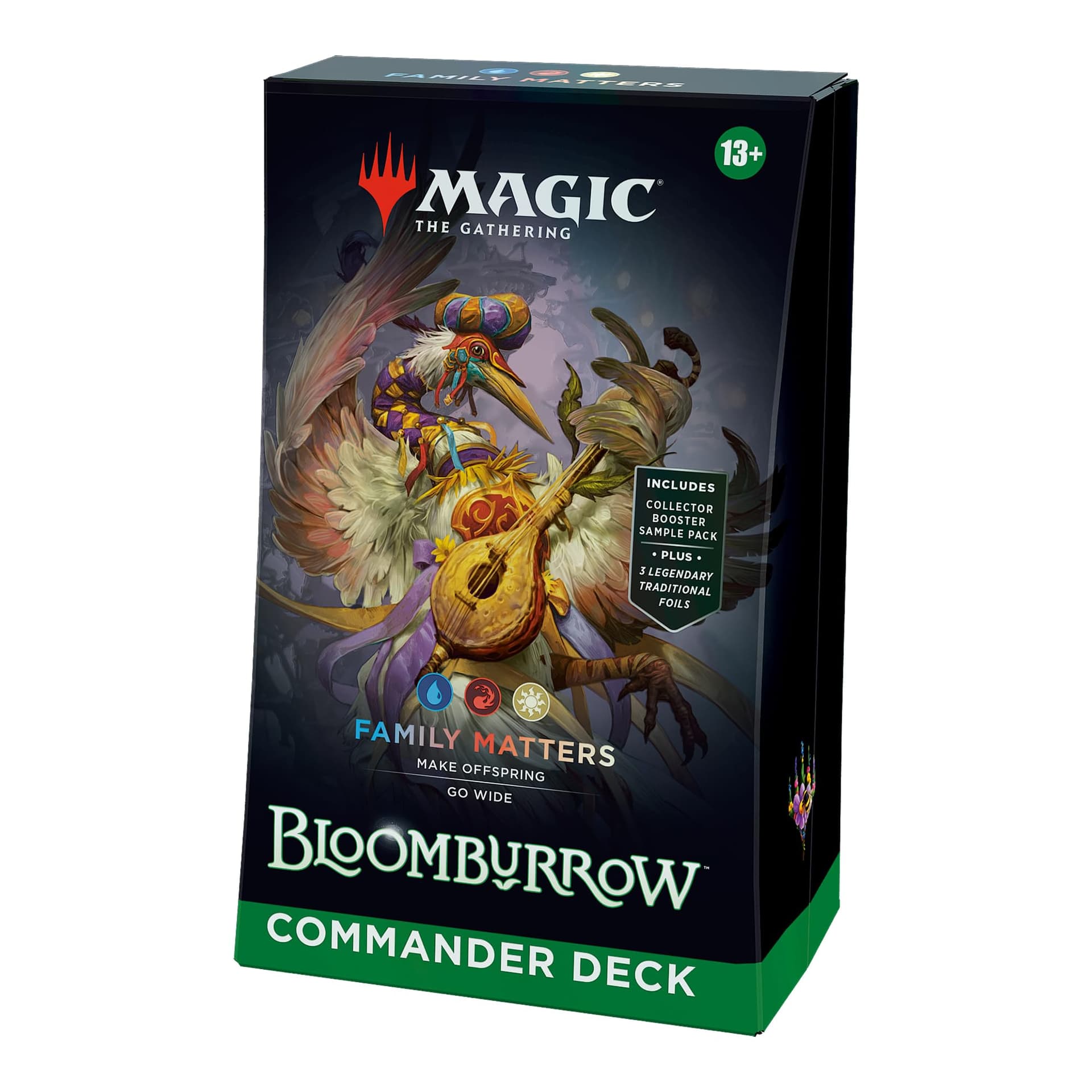
1. Bloomburrow Commander

Bloomburrow stands out because every deck in the release sells a different game plan without feeling scattered. Bello pushes aggressive enchantment and artifact synergies in Gruul, Zinnia turns creature-centric lines into steady value, Ms. Bumbleflower reworks group hug into something with real edge, and Hazel gives squirrel players an actual option that matters rather than a joke commander slot. That kind of spread is exactly what keeps a precon wave useful over time: one release, multiple entry points, and enough identity in each list that the decks still make sense when you sit down with them years later.
What makes Bloomburrow especially strong is the upgrade runway built into that structure. You are not fighting a pile of unrelated filler cards just to make the deck function, because the themes are already pointed in the same direction as the commander. That means the first round of upgrades can sharpen what is already there instead of trying to rescue a shaky shell, which is the difference between a precon you buy once and a precon line you keep revisiting as your taste and collection change.
2. Commander 2017
Commander 2017 still earns an honorable mention because the commander line-up is outrageous even by today’s standards. Inalla, Edgar Markov, Arahbo, and The Ur-Dragon are the sort of face legends that instantly changed how players talked about precons, and they still carry enormous table presence on their own. The problem is that the product’s reputation is doing a lot of the lifting, because the supporting decks do not match the same level of polish.
The 99s are where the age shows. Weak ramp packages, awkward mana bases, and some baffling card choices keep the release from climbing higher, even though the commanders themselves are iconic. That split matters for long-term buyer value: a precon wave can look legendary on the box and still fall short if the actual deck experience is clunky, and Commander 2017 is the clearest example of that gap.
The broader lesson from the ranking is simple: raw commander power is not the same thing as a great release group. A wave ages best when multiple decks from it still hold relevance, when the themes are cohesive enough to teach a plan, and when upgrading the list feels like sharpening a blade instead of rebuilding the handle.
That is why the strongest precon waves are the ones you still want to open, play, and tune after the novelty wears off. Bloomburrow shows how a release can stay coherent across several decks, while Commander 2017 proves that a roster of famous names is not enough if the cards underneath them do not hold up.
This article was produced by Prism’s automated news system from verified source data, official records, and press releases, then run through automated quality and moderation checks before publishing. The system is built and supervised by the people who set the standards it runs under. Read our full AI policy.
Know something we missed? Have a correction or additional information?
Submit a Tip
%2Fcontent%2Fopengraph%2FMTG-Wakanda-Forever-Marvel-Super-Heroes-Commander-Upgrade-Guide-MSC.jpg&w=1920&q=75)