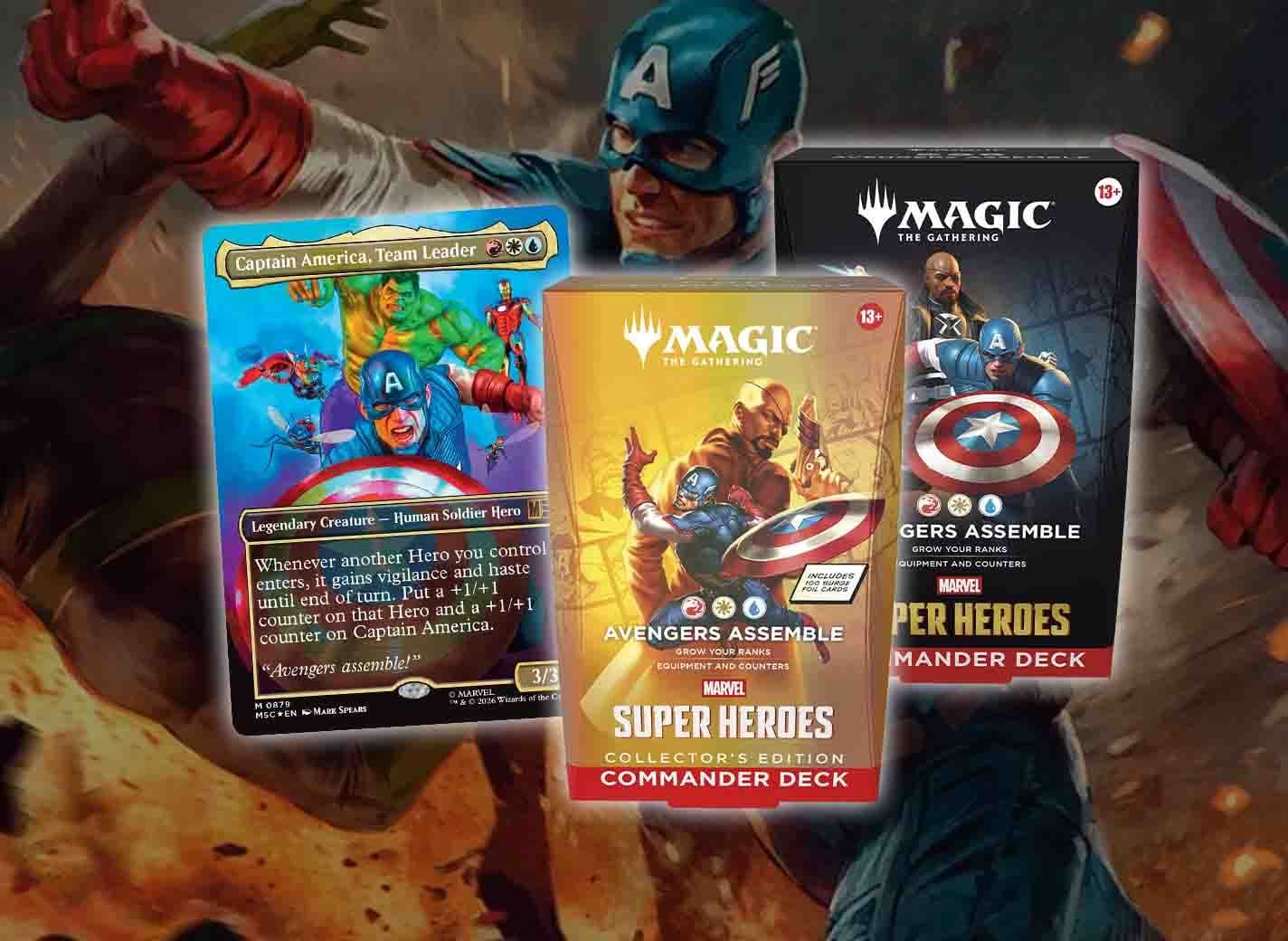
Commander review spotlights Marvel Super Heroes instants and sorceries
Ultimate Nullification and Dismissive Denial show why Marvel Super Heroes spells matter in Commander: the best ones solve board control, graveyard hate, and mana consistency at once.

Marvel Super Heroes is the kind of set that tempts you to look straight past the spell slots and chase the splashy theme deck cards instead. That is the mistake to avoid here. The instants and sorceries that matter most for Commander are the ones that keep doing real work after the Marvel novelty fades, especially the cards that answer a board, smooth a draw, or stay live in more than one archetype.
Why this slice of the set matters
The timing helps explain the attention. Marvel Super Heroes releases on June 26, 2026, with prerelease events running June 19 through June 25, and Wizards has already said the set is meant for Standard, Pioneer, Modern, Commander, Legacy, and Vintage. That is a wide spread, which means Commander evaluations have to think beyond the precons and ask which spells are actually portable across tables.
Wizards also says the set’s design includes teamwork on a selection of instants and sorceries. That matters because teamwork cards tend to reward a deck for playing to the board, not just holding up mana. In Commander, that usually means a card can move between go-wide shells, combat-focused lists, and more political multiplayer builds, which is exactly the kind of flexibility that keeps a spell useful long after a set’s headline commanders move on.
Auto-includes: Ultimate Nullification
If you are looking for one card in this slice that reads like a real Commander staple, it is Ultimate Nullification. The white sorcery costs {4}{W}, asks you to sacrifice a legendary creature as an additional cost, then exiles all creatures and graveyards before putting itself on the bottom of its owner’s library. That is not just a wrath, it is a clean reset with graveyard hate attached, and that combination is rare enough to matter.
This is the card for control shells that want a sweeper with teeth, especially when your local meta is built around recursion, self-mill, reanimation, or any graveyard loop that keeps slipping past ordinary removal. It also plays better in lower-power Commander rooms where some of the usual premium mass-removal staples are not present, because the card does more than clear the battlefield. It shuts off the graveyard too, which makes it a metagame answer instead of a flashy five-mana headline.
The real commander archetypes that want this are the ones that can pay the legendary tax without flinching. Legendary-matters decks, Orzhov control, Abzan value piles, and other lists that naturally keep a commander or another legend on board can turn the drawback into a feature. I would be much colder on it in a creature-light superfriends list or any build that cannot guarantee a legend when the table needs to be wiped.
Role-players: Dismissive Denial
Dismissive Denial is not trying to be the biggest spell in the room, and that is why it has real staying power. At face value it is a counterspell, but the card’s basic landcycling {2} is what turns it into a deckbuilding tool. When you can cash it in for a basic land early and still have a counterspell later, the card stops being dead in hand and starts acting like a consistency piece.
That makes it especially attractive to Azorius control, draw-go shells, and tighter-curve blue decks that care a lot about hitting land drops on time. The review’s point is the one I would hang the card on: this is effectively land smoothing that does not force you to flood out later, because the spell still comes back online once you have mana to spare. In practice, that is exactly the sort of flexibility that lets a deck raise its effective land count without stuffing the list with extra actual lands.
I would also keep an eye on Dismissive Denial in blue decks that already want interaction but hate drawing too many clunky answers early. Tempo commanders, reactive combo decks, and control lists that need to stay disciplined all like this kind of modal card. If your table is fast and you need your open mana to mean something, a counterspell that can also turn into a basic is the kind of boring upgrade that quietly wins games.
Sleeper specs: the teamwork package and the utility slot
The sleeper part of Marvel Super Heroes is not one singular mythic trick, it is the way the set’s instants and sorceries appear built to cover overlapping problems. Wizards says teamwork shows up on a selection of these spells, which tells me there is hidden upside for commanders that reward coordinated board states, especially token decks and combat-driven multiplayer lists. In Commander, the cards that sneak up on you are often the ones that do two jobs at once, and this set’s spell suite leans hard into that idea.
That is why the review’s bigger message is worth remembering: the best spells here are not just strong effects, they are effects that solve multiple problems. One card can answer a board and exile graveyards. Another can be a counterspell when needed and a land when not. Those are the kinds of cards that survive theme decks because they slot cleanly into real deck-construction headaches.
For sleeving up actual decks, I would watch the teamwork cards for archetypes like go-wide tokens, combat-combo, and commander lists that keep a steady stream of creatures on board. Those decks are the most likely to turn a supposedly narrow mechanic into a functional engine. If the spell wants cooperation, these are the shells that can usually provide it.
Trap cards: what looks good but asks for too much
The trap in a set like this is not that the cards are weak, it is that some of them ask for a board state your deck does not naturally provide. Ultimate Nullification is the obvious example of that tension. It is excellent in the right shells, but it is not a generic white wrath you jam into every list just because the ceiling is high.
The same caution applies to the more synergy-heavy spells in the teamwork space. If your commander does not care about coordinated combat, if your list plays mostly at instant speed, or if you are not reliably building a board, those cards can become decorative instead of functional. Commander rewards specificity, and the Marvel Super Heroes spells that will last are the ones that respect that reality.
What makes this slice of the set interesting is how practical it is once you stop treating it like theme-deck filler. Ultimate Nullification gives white control a graveyard-cleansing reset, Dismissive Denial gives blue decks a spell that doubles as a land drop, and the teamwork cards hint at a deeper package for creature-based multiplayer shells. That is how these spells outlive the Marvel branding: not by being the flashiest cards in the set, but by being the ones you keep reaching for when the table gets messy.
This article was produced by Prism’s automated news system from verified source data, official records, and press releases, then run through automated quality and moderation checks before publishing. The system is built and supervised by the people who set the standards it runs under. Read our full AI policy.
Did this article answer your question?