Elden Ring inspires a thematic Dakkon Blackblade Commander deck
This Dakkon Blackblade build shows how a lore deck can still hold a table together. Elden Ring’s Tarnished, lands, and gear obsession map cleanly onto a Bracket 1 Commander plan.
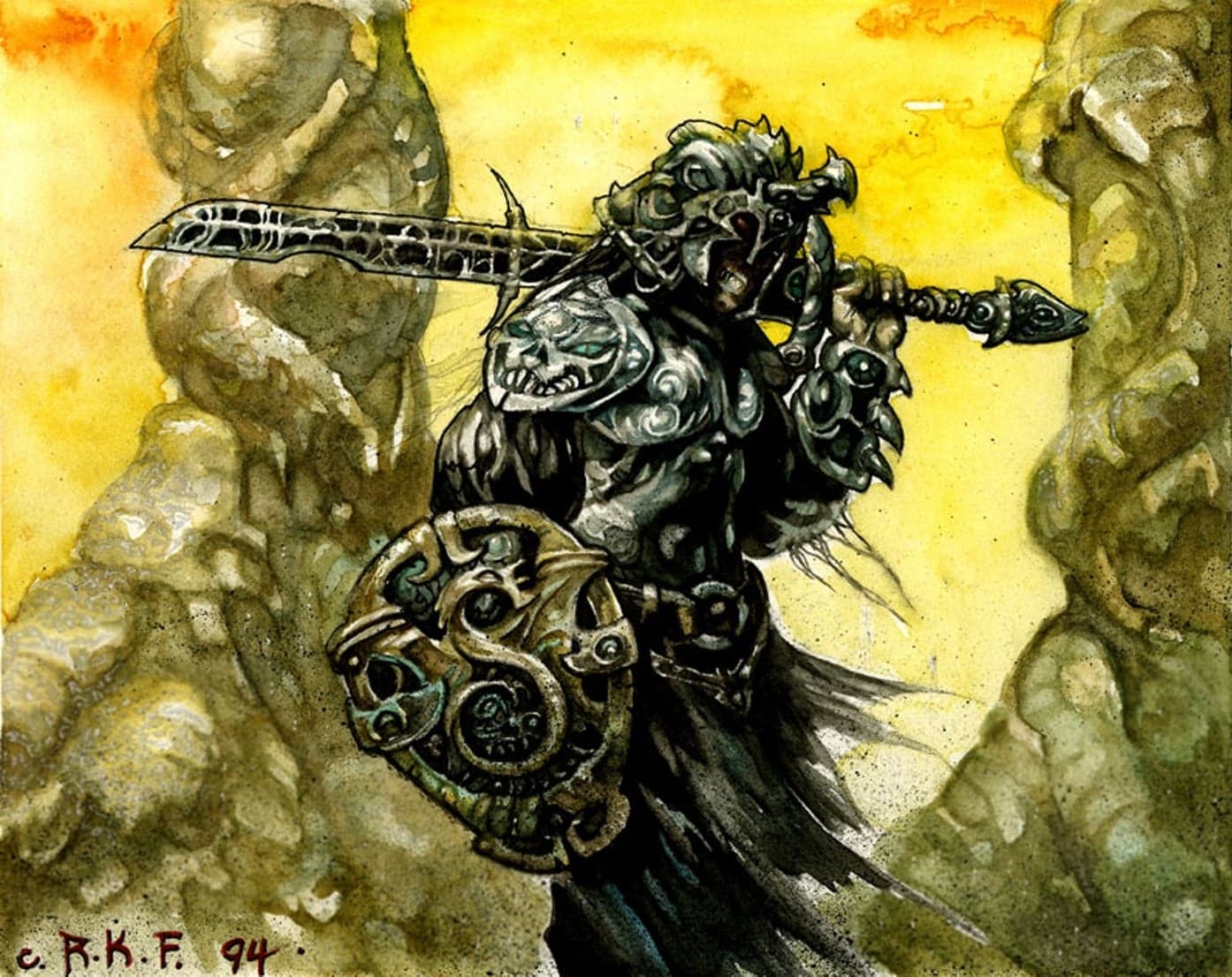
A good theme deck does two jobs at once: it makes you feel the source material, and it still casts spells, attacks, and survives a real Commander table. That is the trick here. Dakkon Blackblade gives the Elden Ring crossover a commander whose power scales with the lands you control, which is exactly the kind of slow-burn growth the Tarnished story wants to capture.
Why Dakkon fits the Lands Between
Dakkon Blackblade is a Legends card from 1994, and his text is about as elegant a thematic hook as you can ask for. His power and toughness are each equal to the number of lands you control, so the commander naturally rewards you for developing your board over time instead of trying to end the game with a single flashy combo. That makes him a clean stand-in for a wandering hero who keeps getting stronger as the journey goes on.
The Elden Ring connection is not just surface-level cosplay. In the game, the Tarnished were banished from the Lands Between by Queen Marika the Eternal and later beckoned back after the Elden Ring was shattered. That arc maps neatly onto Dakkon’s gradual growth: you start small, you build, and by the time you are fully online, the table can feel the momentum shift.
There is also a practical reason this commander works. Dakkon is already legal in Commander and already lives in the same neighborhood as lands-matter and Voltron decks, so you are not forcing an awkward square peg into a round hole. EDHREC’s current Dakkon page shows 1,837 decks and tags him for Lands Matter, Voltron, Equipment, and Landfall, which is exactly the mix you want when the goal is flavor first but not flavor only.
How the deck keeps the theme and the game plan aligned
The real strength of this brew is that it treats Elden Ring like a deckbuilding map, not a pile of Easter eggs. Instead of stuffing in random references, the list divides itself into major locations, major characters, and lore tokens, which gives the deck a structure you can actually pilot. That matters because theme decks fail when they read beautifully in the binder and play like a pile of mismatched souvenirs.
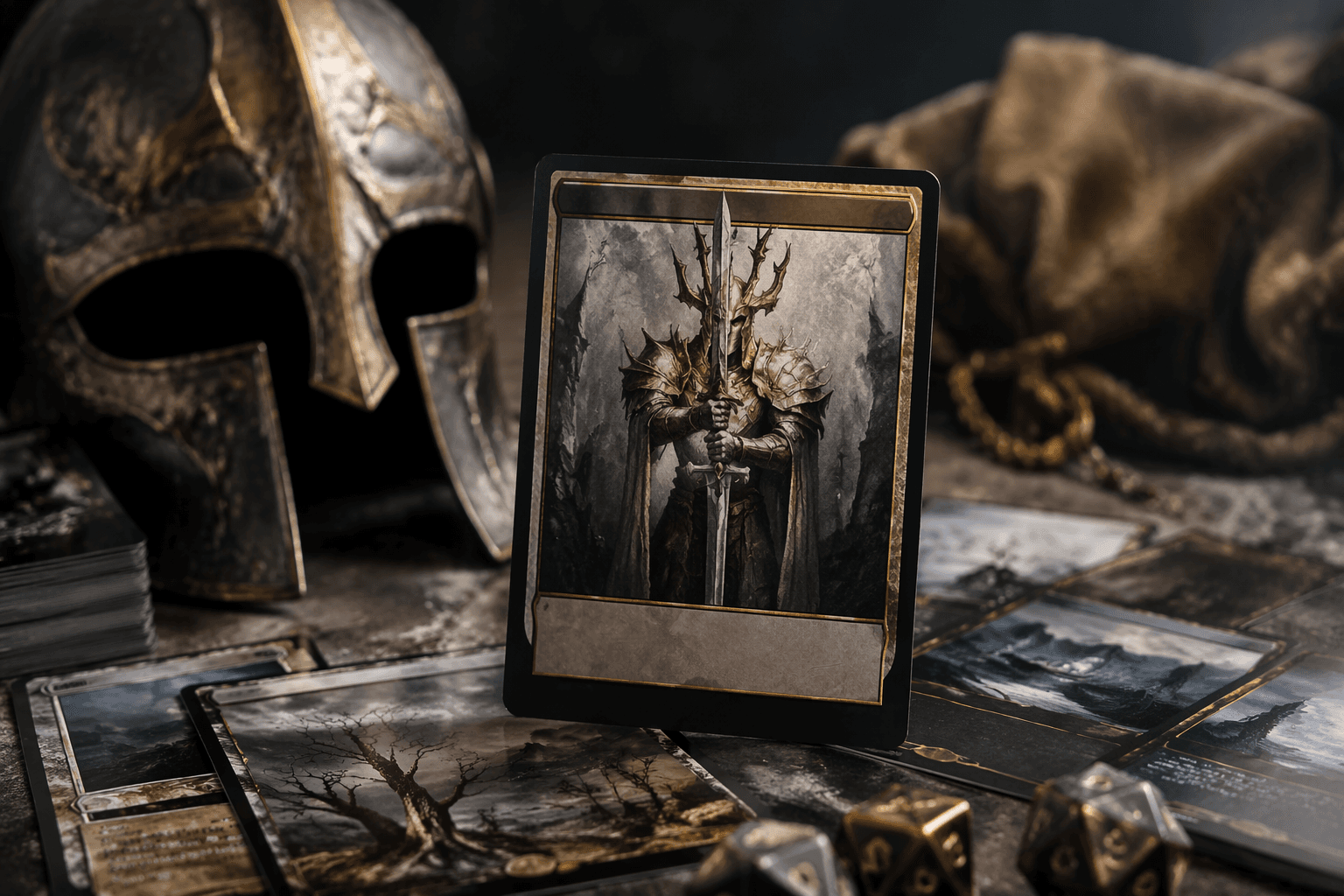
Dakkon’s scaling also explains why equipment shows up so naturally. Elden Ring is obsessed with weapons, armor, and the feeling of progression through gear, and Dakkon turns that into a mechanical plan: make your commander bigger, suit him up, and attack with a threat that keeps improving as your mana base grows. That is a much stronger translation than simply picking cards because their art looks dark-fantasy enough.
If you want to copy the method, the formula is straightforward:
- Pick one commander whose rules text already expresses the story’s core arc.
- Build around a mechanic that mirrors that arc, in this case lands, equipment, and gradual growth.
- Use flavor buckets like places, people, and artifacts so the deck feels like a tour through the setting rather than a random tribute pile.
- Keep enough real Commander functionality that the deck can still take part in normal games.
That is the difference between a deck that gets admired once and a deck that gets shuffled up again next week.
Bracket 1 is the right home for this kind of build
Wizards of the Coast introduced Commander Brackets in February 2025 as a shared language for power level, and this deck lives in Bracket 1, the ultra-casual “Exhibition” tier. That choice matters more than people sometimes admit. A flavor deck only feels good if everyone at the table knows it is meant to be a showcase of the concept rather than a tuned machine trying to race the strongest lists in the room.
Bracket 1 gives you permission to lean into the story without pretending the deck is something it is not. If you are building a lore-heavy Commander list around a franchise like Elden Ring, this is the safest place to keep the expectations honest: powerful enough to function, relaxed enough to showcase the theme, and clearly not built to farm the table with a hyper-efficient combo line. The bracket language also helps your deck read correctly before the first land drop, which is half the battle with a brew this conceptual.

That is why the Dakkon build lands so well. It is not trying to outmuscle the table with raw optimization, and it is not hiding behind flavor as an excuse for bad construction. It uses the Bracket 1 lane the way it is supposed to be used, as a transparent way to say, this is an Exhibition list, but it is still a real deck.
Why Elden Ring makes the crossover click
Elden Ring gives this Commander deck a surprisingly sturdy frame because the game already has the kind of scale and ascent that Magic deckbuilding can mirror. Bandai Namco says the game shipped more than 20 million units worldwide, which tells you the audience for this kind of crossover is not niche in the small-podcast sense, it is huge. There are a lot of people who know what the Tarnished journey feels like, even if they have never tapped a land for mana.
The world itself also lends structure. FromSoftware’s game, with its Hidetaka Miyazaki and George R. R. Martin pedigree, is built on memorable regions, ominous ruins, and a sense that every upgrade changes how you move through the world. That is exactly the kind of texture a Commander deck can borrow without needing to import Universes Beyond cards wholesale. The result is a list that feels like Elden Ring, but still looks and behaves like a Commander deck.
That balance is the whole point of the column’s approach. It is not “can you make a deck that says Elden Ring on the box.” It is “can you make a deck that feels like the Tarnished, plays like a coherent Commander list, and still gives the table a fair game?” Dakkon Blackblade answers yes, because his land-scaling body, equipment-friendly identity, and natural fit with lands-matter shells let the theme do real work instead of just decorating the sleeves.
That is why this build is worth studying. It shows that a flavor-first Commander deck does not have to choose between story and function, and with the right commander, it can make both matter every time you draw your opening hand.
This article was produced by Prism’s automated news system from verified source data, official records, and press releases, then run through automated quality and moderation checks before publishing. The system is built and supervised by the people who set the standards it runs under. Read our full AI policy.
Did this article answer your question?