Isshin, Two Heavens as One breaks free from the usual token loop
Isshin is more than the stock token loop. Evan Moss shows how the commander’s attack triggers can power card draw, mana, and pressure without losing the aggressive core.
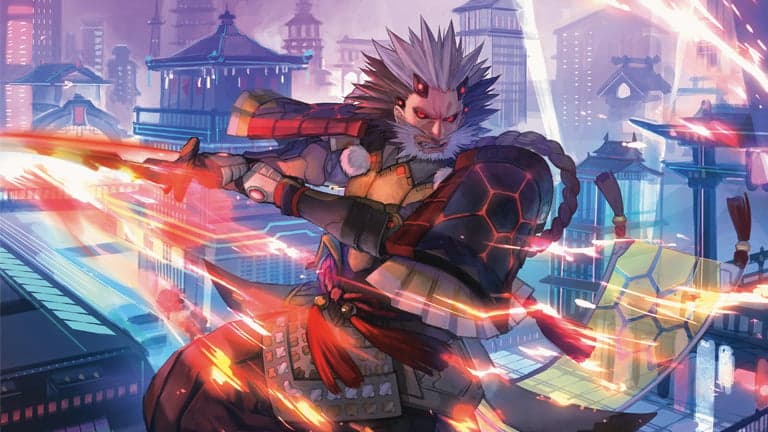
Isshin, Two Heavens as One is a three-mana Mardu commander that doubles triggered abilities when you attack. That low cost is exactly why he has become such a familiar face in Commander, but it is also why so many lists collapse into the same pattern of attack, make tokens, ramp, and repeat. His real strength is not just combat math; one attack step can produce cards, tokens, mana, and pressure at once.
The real job of Isshin
The first mistake is assuming Isshin only wants the same battlefield script every game. Evan Moss frames the commander as a value engine disguised as an aggro piece: every time you turn creatures sideways, you are doubling triggers that care about attacking, and that can mean two cards, two tokens, extra mana, or extra pressure instead of just more bodies. The shell still wants to attack, but the point is to let the attack trigger itself become the engine, not merely the token production that follows it.
EDHREC’s Isshin page tracks recommendations from roughly 28,938 to 28,973 Commander decks, putting the commander squarely in established, heavily mined design space. When a commander is that widely built, the easy version of the deck gets solved quickly, and the harder question becomes how to keep the card fresh without drifting away from what makes it powerful in the first place.
Why the stock loop feels so familiar
Most Isshin lists lean into the same comfortable Mardu rhythm because it is efficient and obvious. Attack triggers that make tokens naturally feed the next combat step, and Mardu colors supply plenty of ways to convert board presence into more board presence. That line works, but it can narrow the deck into a loop where the commander’s only job is to multiply the same payoff over and over.
A deck built around attack triggers can also be a card-advantage deck, a mana engine, or a pressure deck that plays like a combo puzzle without needing to abandon combat. When your attack step replaces itself with cards or mana, you stop relying entirely on token volume to stay ahead.
How to build beyond the obvious shell
The cleanest way to escape the routine is to ask what else gets better when attack triggers happen twice. If your list only rewards token creation, Isshin becomes a glorified anthem for sideways creatures. If you widen the frame to include draw, mana, and other combat-triggered value, each combat step starts to look like a multi-tool instead of a single plan.
That opens the door to a few useful deckbuilding priorities:
- Effects that reward attacking with cards, so the deck keeps gas flowing
- Effects that turn attacks into mana, so the extra trigger actually accelerates your turns
- Effects that create pressure without depending only on tokens, so you can close games through different board states
- Effects that punish blocked, ignored, or unprofitable attacks, so the table cannot simply wait out your combat steps
The upside of that approach is flexibility. You do not need to flood the board with the same creatures every game, and you can shift between value generation and finishing pressure depending on the table state. The tradeoff is that the deck asks for more discipline in construction, because every slot has to support the trigger engine instead of just piling onto the most obvious token payoff.
Isshin and the rest of Mardu
If someone wants the same color identity but a different experience, there are other commanders to reach for. Caesar, Legion’s Emperor gives Mardu players a newer option from the Fallout Commander decks Wizards announced in 2024, while Queen Marchesa remains the older political alternative from Conspiracy and the Black Rose corner of Magic story.
If your deck is trying to do what those commanders already do well, Isshin may not be the cleanest choice. Caesar leans toward a different style of Mardu value, and Queen Marchesa pushes a more political, monarch-centered game.
Why the card’s origin still matters
Wizards of the Coast previewed Isshin on February 2, 2022, ahead of Kamigawa: Neon Dynasty’s release on February 18, 2022. The preview story casts him as a former bodyguard for an Imperial statesman in rural Kamigawa who turned away from rigid authority after the emperor disappeared and the central government splintered.
Kamigawa: Neon Dynasty arrived as a modern Commander-friendly set with new legends designed around clear, expressive play patterns, and Isshin became one of the clearest examples of that approach. Wizards later referenced him again in Commander rules and template discussion as a comparison card for wording changes.
This article was produced by Prism’s automated news system from verified source data, official records, and press releases, then run through automated quality and moderation checks before publishing. The system is built and supervised by the people who set the standards it runs under. Read our full AI policy.
Know something we missed? Have a correction or additional information?
Submit a Tip