Which Magic creatures are worthy enough to wield Mjölnir?
Mjölnir becomes real cardboard only when your legend can turn its damage-doubling and worthy clause into a plan. Cloud, Kassandra, Thor, and a few others do the heavy lifting.
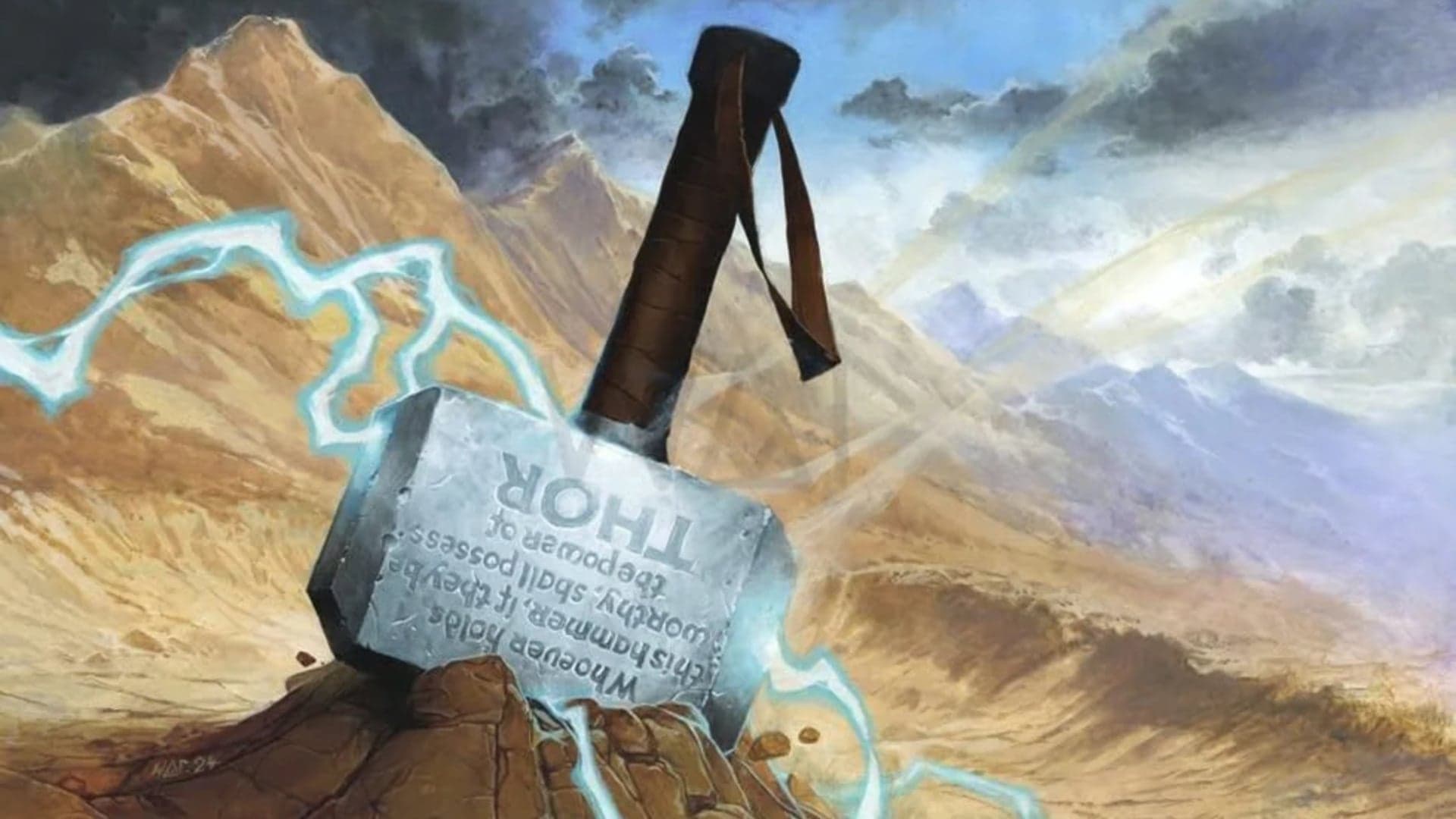
Mjölnir looks like a flavor card until you put it next to a commander that can actually cash in on it. Josh Nelson’s framing treats worthiness like Marvel does, with courage, conviction, compassion, and a bias toward the greater good, but Commander asks a colder question: which legends turn a four-mana hammer into pressure, cards, or a kill?
What “worthy” means at the table
Nelson deliberately refuses to turn the idea into a sprawling Universes Beyond census, because once you open the door to every crossover legend, the list stops being useful for deckbuilding. That is why his article briefly name-checks candidates like Avatar Aang, Cloud, Planet’s Champion, Gandalf the White, Kassandra, Eagle Bearer, Lightning, Army of One, and Longshot, then narrows the discussion back toward the cards that can actually justify a slot.
The hammer’s rules do most of the work here. Mjölnir, Hammer of Thor costs {3}{R}, enters and deals 4 damage to up to one target creature, doubles all damage the equipped creature would deal, and has Equip worthy {1}, with worthy defined as a legendary non-Villain that’s red and/or white. It also has a {2}{R} activated ability that discards it to deal 2 damage to each creature, which gives the card a backup mode even when you do not have the right body on board.
That worthiness clause is not as airtight as it first reads. Wizards says the hammer can still end up attached to a non-worthy creature if it is moved by something other than its equip ability, and if a creature later stops meeting the worthy requirement, the Equipment stays attached. In Commander terms, that means Mjölnir rewards the same kind of rules-savvy nonsense that already makes Equipment decks dangerous: attachment cheats, timing tricks, and creatures that keep doing their job even if the board shifts underneath them.
The legends that make the hammer matter
Cloud, Planet’s Champion is one of the cleanest homes because the card already treats Equipment as part of its identity. Cloud is red-white, gets double strike and indestructible on your turn while equipped, and reduces equip abilities that target him by {2}. That makes Mjölnir’s damage-doubling text much more than a novelty, because Cloud turns a single hit into a high-ceiling combat step while making the hammer cheaper to move onto him in the first place.
Kassandra, Eagle Bearer is another strong fit, and she does something different enough to matter. She is also red-white, has haste, tutors The Spear of Leonidas into play when she enters, and draws a card whenever a creature you control with a legendary Equipment attached to it deals combat damage to a player. Because Mjölnir is itself legendary Equipment, Kassandra turns the hammer into a value engine instead of just a pump spell with a fancy name.
The shells that get the most real value
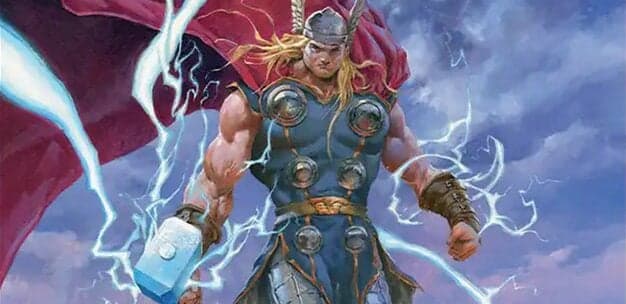
Thor, God of Thunder points Mjölnir toward a more explosive red shell. Thor is a red-red 5/5 flyer that can exile an Equipment, instant, or sorcery from your graveyard when he enters, then lets you play that card, and he deals damage equal to the mana value of every noncreature spell you cast. Mjölnir fits him twice over, because Thor likes to recur the hammer and then use damage-doubling to make every source of burn or combat damage hit harder.
Gandalf the White is the kind of white legend that makes Mjölnir feel less like a one-card gimmick and more like part of a broader engine. He has flash, and he makes triggered abilities from legendary permanents and artifacts trigger an additional time when those permanents enter or leave the battlefield. Since Mjölnir brings its own 4-damage trigger when it enters, Gandalf is the sort of commander that can make the hammer’s front half matter just as much as the equip line.
Avatar Aang, Lightning, Army of One, and Longshot sit more in the thematic bucket than the tightest build-around bucket, but they still show how wide the worthy space is before you even touch Marvel’s own cast. Nelson’s point is not that every legendary hero is secretly a hammer deck, it is that the card’s mechanical gate and flavor gate only line up cleanly when the rest of your list is built to support one of those bodies.
Where Mjölnir belongs in Commander
The cleanest homes are Equipment-centric Voltron decks, legendary-creature shells, and red-white value builds that can move the hammer efficiently and turn one connection into a meaningful swing. EDHREC’s Mjölnir page already reflects that kind of experimentation, with recommendations based on 5,375 decks, which is a healthy sign that players are treating it as a real package rather than a punchline.
The broader Marvel Super Heroes release only sharpens that picture. Wizards says the set releases on June 26, 2026, calls it the biggest Magic collaboration ever, and ties it to four Commander decks: Avengers Assemble, Wakanda Forever, The Fantastic Four, and Doom Prevails. That lineup tells you where Mjölnir naturally wants to live, in red-white and artifact-friendly shells first, with the villain deck mostly needing help from outside the worthy clause unless you are leaning on one of the card’s rules loopholes.
There is even a little Magic history around the name. Wizards has already used Mjölnir once before, on Mjölnir, Storm Hammer in Assassin’s Creed in 2024, so the Marvel version is part of a larger habit of reusing mythic iconography across crossover products. That makes the new hammer feel less like a one-off joke and more like a test of how much work a single piece of flavor can do inside Commander.
Mjölnir only looks like a novelty when the commander holding it cannot convert the trigger, the equip discount, and the damage multiplier into something immediate. Put it on the right legendary body, and the hammer stops being a costume piece and starts behaving like a plan.
This article was produced by Prism’s automated news system from verified source data, official records, and press releases, then run through automated quality and moderation checks before publishing. The system is built and supervised by the people who set the standards it runs under. Read our full AI policy.
Know something we missed? Have a correction or additional information?
Submit a Tip