Kurkesh, Onakke Ancient turns cheap artifacts into combo engines
Kurkesh, Onakke Ancient turns one cheap artifact activation into two, and that tiny rules text hides a budget combo shell that can jump to infinite mana or extra turns.
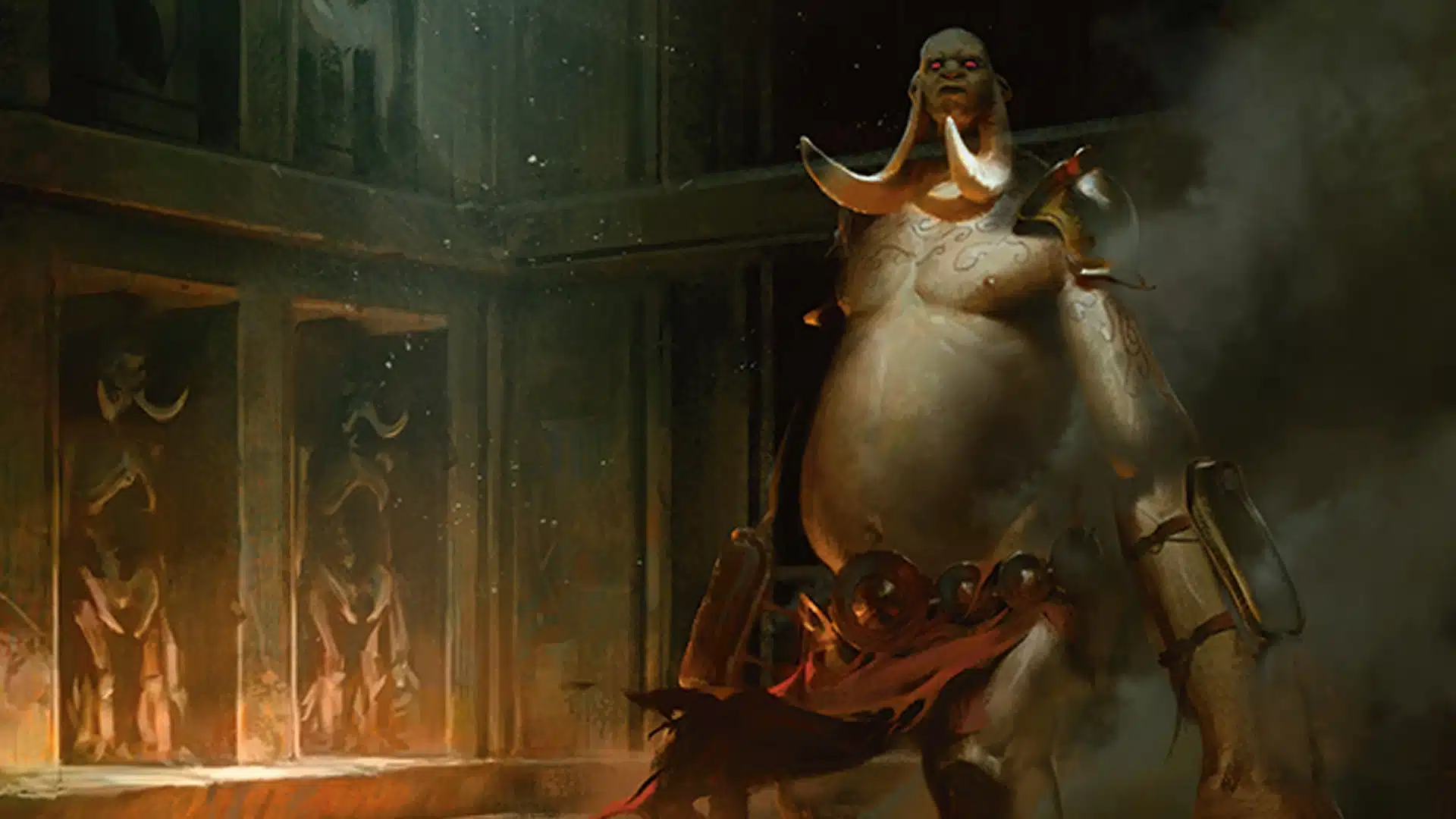
Kurkesh is the kind of commander that looks harmless until you read the text twice
A $0.26 legendary creature that copies artifact activations is exactly the sort of card Commander players overlook right before it starts stealing games. Kurkesh, Onakke Ancient is a Magic 2015 rare, a mono-red Legendary Creature - Ogre Spirit for {2}{R}{R}, and his ability turns every non-mana artifact activation into a second activation if you can spare a red mana.

That is the whole trick, and it is a nasty one. Kurkesh does not ask you to build a huge artifact pile just to collect value over time. He turns ordinary artifacts into engines, then turns those engines into combo pieces once you start pairing them with untap effects, repeatable activations, and a few of the right expensive toys.
Why the cheap version of this deck is the real appeal
Kurkesh is easy to underestimate because the card is so cheap and the body is so plain. But EDHREC still places him around rank #1,998 with about 500 decks, which is exactly the kind of footprint you expect from a hidden gem rather than a solved staple. EDH.Wiki describes him as a proven mono-red commander that specializes in artifacts and combo strategies, and that is the right lens for him.
The budget angle matters because Kurkesh rewards cards that already see play in casual artifact decks. Conjurer’s Bauble, Mishra’s Bauble, Burnished Hart, and Wayfarer’s Bauble all become more threatening when one activation becomes two. You do not need to start with a pile of mythics. You need cheap permanents with activated abilities, a little red mana, and a willingness to let the deck snowball.
The core shell is small, and that is what makes it practical
The cleanest Kurkesh lists all revolve around the same idea: activate an artifact, pay {R}, copy the ability, and use the extra activation to pull ahead. That can mean more ramp from Baubles and Burnished Hart, more card flow from activated draw artifacts, or more interaction from utility artifacts that suddenly start doing twice as much work.
The important part is that the deck does not need to be fancy to function. Even the simplest version gets better when you lean on artifacts that already want to be activated again and again. Once you add cards like Ring of Three Wishes or Wand of Wonder, Kurkesh becomes much scarier, because every copied activation turns your mana into an immediate advantage instead of just a small increment.
The cheap cards that pull the most weight
- Conjurer’s Bauble and Mishra’s Bauble give you extra mileage from tiny pieces of cardboard.
- Burnished Hart and Wayfarer’s Bauble turn ramp into a much bigger swing when Kurkesh copies the activation.
- Ring of Three Wishes and Wand of Wonder get much more dangerous when you have spare mana and a commander that doubles the effect.
- Any artifact with a strong tap or sacrifice activation becomes better than it looks on paper, because Kurkesh effectively turns it into a two-for-one.
That is why the deck feels stronger than a lot of obvious red artifact commanders at the same budget. Some builds ask you to assemble expensive engines before they really function. Kurkesh works from turn one with cheap utility artifacts, then scales into combo territory without changing cards.
Untap effects are what turn value into a lock
Kurkesh gets much more dangerous when you add untap pieces like Clock of Omens, Voltaic Key, and Unwinding Clock. Those cards do two jobs at once. They let you reuse your best artifacts, and they let Kurkesh copy the activations of your untappers too, which pushes the deck from simple value into repeatable loops.
This is where the commander starts feeling oppressive. A single artifact can become a source of repeated mana, repeated card selection, repeated removal, or repeated tutoring if the deck is built around the right activated abilities. Over a full turn cycle, that adds up fast, especially when Unwinding Clock lets you keep your board active outside your own turn.
The cleanest combo line is as blunt as it gets
The most direct infinite-mana line is Kurkesh, Voltaic Key, and Gilded Lotus. EDHREC tracks it as a three-card combo that produces infinite colored mana, and the line is straightforward: all permanents need to be on the battlefield, Gilded Lotus makes mana, Voltaic Key untaps it, and Kurkesh copies the Key activation when you pay {R}. Repeat the loop, and you make as much mana as you want.
That same pattern shows up with other three-mana-producing artifacts like Coveted Jewel or Chromatic Orrery. Once the deck is producing that kind of mana, the win can be almost anything that converts it cleanly, from huge card draw to a finisher like Walking Ballista. Kurkesh does not need a complicated kill once the mana engine is online. He just needs enough pieces to start the loop.
Magistrate’s Scepter gives the deck an extra-turn plan
If infinite mana is the cleanest line, Magistrate’s Scepter is the meanest one. EDHREC lists Kurkesh plus Magistrate’s Scepter plus Voltaic Key as an infinite turns lock, and it also tracks versions using Clock of Omens, Karn’s Bastion, Contagion Clasp, and Contagion Engine.
That matters because it shows how deep the deck can go without leaving its core plan. You are still using cheap artifact activations and red copy effects. You are just moving from incremental value to a turn loop once the right pieces line up. For a budget commander, that is a serious ceiling.
What Kurkesh does better than the obvious budget artifact picks
Kurkesh is stronger than he first appears because he does not require a specific tribe, a pile of treasure tokens, or a narrow combo package to matter. He rewards the exact cards budget artifact players already want to cast, then turns those cards into two activations instead of one. That is a much better place to start than trying to force a linear artifact plan with a commander that only cares about one kind of payoff.
If you want a cheap legendary creature that can actually carry a game, Kurkesh is the sort of build-around worth sleeving up immediately. He is a budget commander with real combo depth, a compact core shell, and enough low-cost artifact play to feel dangerous long before the infinite mana starts showing up. That tiny red payment on each copied activation is where the whole deck lives, and that is exactly why the card still punches far above its price.
This article was produced by Prism’s automated news system from verified source data, official records, and press releases, then run through automated quality and moderation checks before publishing. The system is built and supervised by the people who set the standards it runs under. Read our full AI policy.
Did this article answer your question?