March of the Machine still shapes Commander decks, EDHREC data shows
March of the Machine’s Commander winners are the cards that fit anywhere, not the flashiest ones. EDHREC data shows flexibility, not hype, is what keeps a set alive.
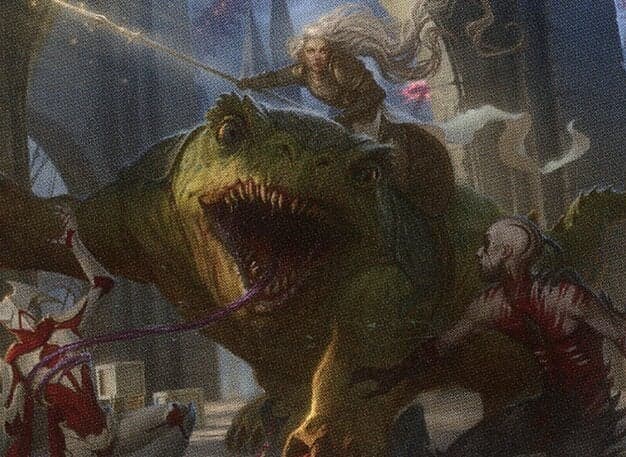
March of the Machine is still winning Commander slots because the set was built to spill everywhere at once. It brought in legends, a brand-new card type, and a pile of role-players that never needed a perfect home to matter. EDHREC’s deck data makes the point cleanly: the cards that survived were the ones that did useful work in real decks, not the ones that looked loudest on preview day.
A set designed to land in more than one place
Wizards of the Coast framed March of the Machine as the climactic “one last stand” against Phyrexia, and the release matched that scale. The set hit storefronts worldwide on April 21, 2023, with digital release on April 18, and it arrived as a package, not a single product. Between the main set, the March of the Machine Commander decks, and the Multiverse Legends bonus sheet, the set was built to feed Commander from several angles at once.
That broad footprint matters when you’re trying to explain why the set still shows up in deck data. Gatherer lists March of the Machine at 453 cards, while Scryfall’s visual spoiler shows 387 cards in the main set gallery. Those numbers are not a contradiction so much as a reminder that the release was spread across multiple sub-products, and Commander players quickly learned to pull from the whole stack.
The Commander decks were already pointing at Commander
The March of the Machine Commander product was not treated like an afterthought. Wizards described the five decks as on-ramps to Commander, and they were packaged that way: Growing Threat, Cavalry Charge, Divine Convocation, Call for Backup, and Tinker Time. Each 100-card deck came with 10 Planechase cards, 10 double-faced tokens, and a unique planar die, which is exactly the kind of extra table texture that helps a precon feel like an entry point instead of a stripped-down starter.

There was even more going on inside the product. Wizards’ Collecting March of the Machine article said each deck includes ten oversized Planechase cards, split between five new-to-Magic cards and five reprints. That mix says a lot about the set’s Commander logic: give players enough novelty to get excited, then anchor it with familiar pieces that actually function at a table. March of the Machine was never just about the splashy story beats. It was built to be opened, shuffled, and played.
EDHREC’s numbers reward the cards that keep doing work
The opening example in EDHREC’s list is Surrak and Goreclaw, and the numbers tell you immediately why it matters. The card shows up in 89,924 decks and appears in 527 commander slots, which is not niche build-around territory. It is the profile of a card that earns its way into green decks because it does something clean, efficient, and broadly useful: it gives aggressive top-end a place to live without asking the rest of the shell to bend around it.
That’s also why the current commander page still matters. EDHREC’s live page for Surrak and Goreclaw shows 525 decks, which means the card has stayed in the conversation even as newer sets have come and gone. Commander tends to reward cards that keep their floor high. If a card is good on rate, easy to cast, and useful across a wide range of green shells, it stays relevant long after the set conversation moves on.
Why March of the Machine’s cards stuck
The set’s long tail comes from how many different jobs its cards could do. March of the Machine introduced battles, the first new card type in years, and third-party reporting put the battle count at 36 cards in the main release. That alone gave the set a built-in novelty factor, but novelty is not what keeps cards in Commander decks. What keeps them there is flexibility, and March of the Machine had plenty of it through legends, combat payoffs, and cards that slotted into existing archetypes without demanding a rebuild.
That is the real throughline behind the data. Commander players keep rewarding effects that are modular, efficient, and easy to layer into what already works. A card like Surrak and Goreclaw does not need the entire table to revolve around it. It just needs creatures, combat, and a deck that wants a dependable top-end piece. March of the Machine delivered a lot of that kind of material, which is why the set keeps showing up in searches, decklists, and command zones long after release week is gone.
The deckbuilding lesson March of the Machine leaves behind
The best lesson from this set is not that every flashy story release becomes a Commander gold mine. It is that Commander consistently rewards cards that solve ordinary problems in a way that feels flexible, not narrow. March of the Machine’s legends, battles, and precon support cards all had their moments, but the cards that lasted were the ones that could be slotted into multiple archetypes and still feel correct.
That is why EDHREC’s set-by-set march works so well here. After a brief detour into Commander 2011 and a skip past The Lord of the Rings because it had already been covered, the data trail lands on a simple truth: March of the Machine was not just a story chapter. It was another deep injection of Commander-ready cards, and the set still looks healthy because the format keeps rewarding the same kind of sturdy, versatile effects that made these cards stick in the first place.
This article was produced by Prism’s automated news system from verified source data, official records, and press releases, then run through automated quality and moderation checks before publishing. The system is built and supervised by the people who set the standards it runs under. Read our full AI policy.
Did this article answer your question?