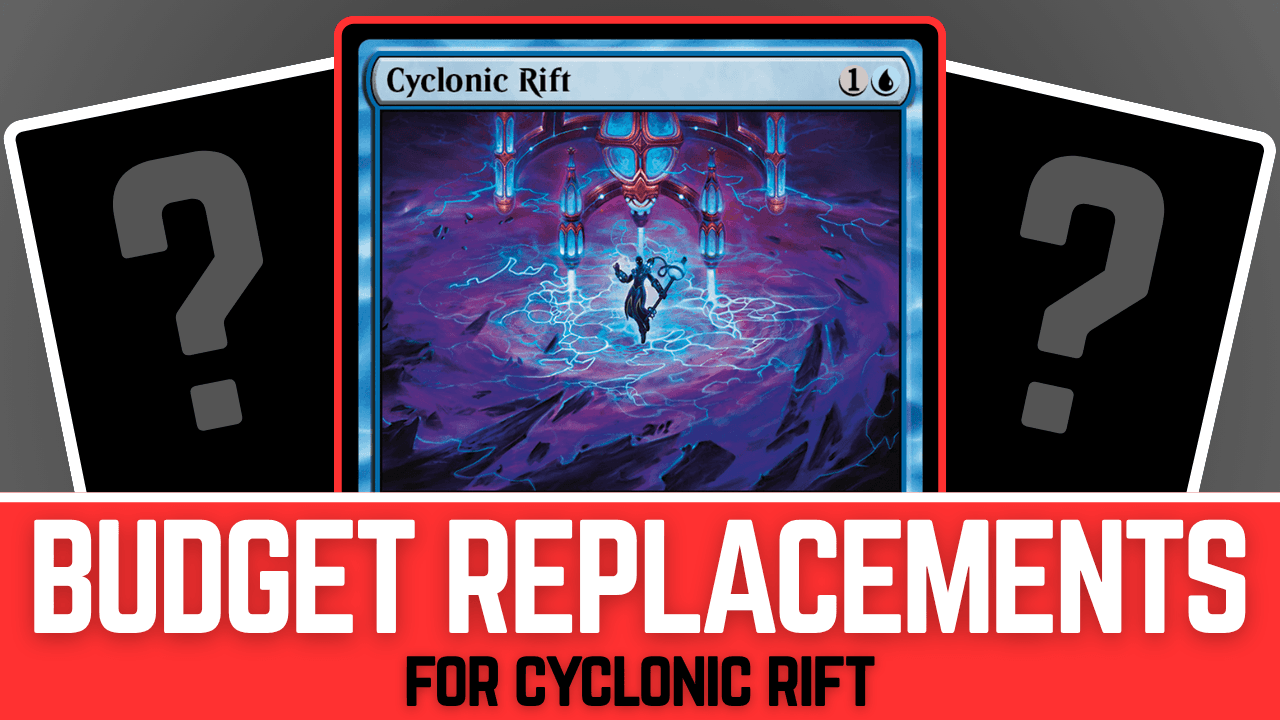
Rising Waters turns into a Commander lock with the right build arounds
Rising Waters is one of those old prison cards that looks fair until it blanks a whole table. In the right shell, it is a brutal Commander lock for blue control and stax pilots alike.

What Rising Waters really does
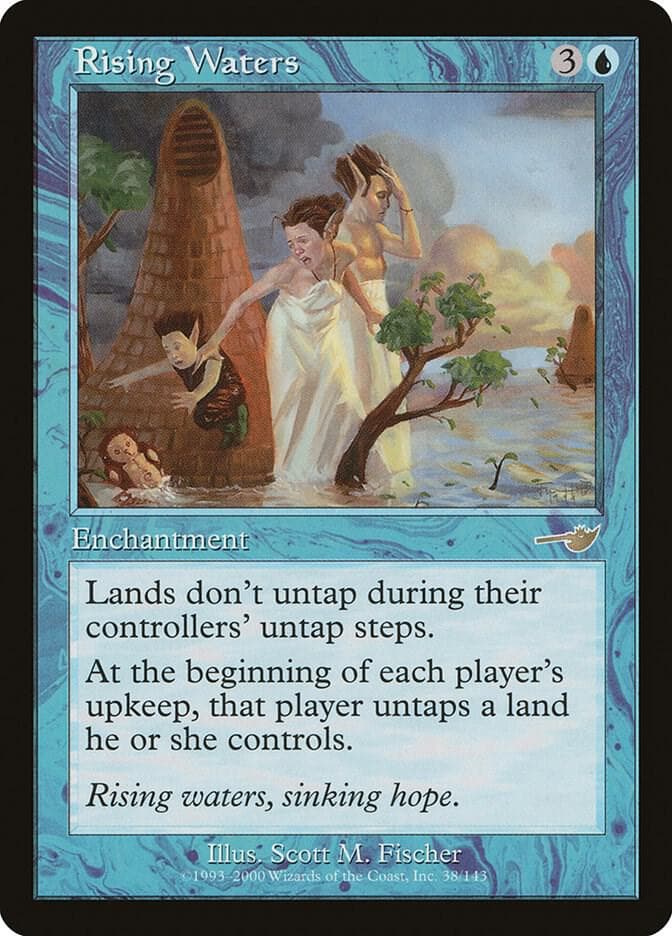
Rising Waters is not flashy. It is a rare blue enchantment from Nemesis, card number 38, and its Oracle text is brutally simple: lands do not untap during their controllers’ untap steps, and at the beginning of each player’s upkeep, that player untaps a land they control. That means every player is functionally capped at one land untap a turn unless they have a way to cheat the symmetry. In a 100-card Commander deck built around one legendary commander, that kind of squeeze is not just annoying, it is a game plan.
The reason this card still matters, 26 years after it first appeared in 1999, is that Commander rewards engines that can operate on less mana than the rest of the table. A card like Rising Waters does not need to win the game on the spot to be powerful. It only needs to make every normal turn awkward while your deck keeps functioning.
Why it is a stax card and not just a nuisance
Rising Waters sits squarely in the stax camp because it attacks the most basic resource in the game: untapping. Stax is resource denial, and the best stax pieces make the table play under rules that are bad for everyone except the person who built around them. That is exactly what Rising Waters does when it lands early or lands behind a lead.
This is also why it deserves more respect than it usually gets. A lot of players think of symmetrical hate as self-defeating, but symmetry only matters if both sides are actually paying the same cost. Once you understand that Commander is a format where decks can be built to ignore tapped lands, the enchantment stops being a weird old prison piece and starts looking like a real lock. It is more punishing than pillowfort staples like Propaganda or Ghostly Prison, because those cards mostly tax attacks. Rising Waters attacks development itself.
How to break parity
The cleanest way to exploit Rising Waters is to untap lands while everyone else stays stuck. That is why commanders and engines that untap permanents are such a natural fit. Jorn, God of Winter, Derevi, Empyrial Tactician, and Xolatoyac, the Smiling Flood all let you keep advancing while the table crawls through its turns. In shells like that, Rising Waters is not symmetrical in practice. It is a one-sided mana choke.

The same logic is why Urza, Lord High Artificer and Vivi Ornitier make so much sense here. Those decks are already designed to generate large amounts of mana without leaning on a normal land-drop, tap-your-lands, pass-the-turn pattern. If your deck is happy to turn artifacts, creatures, or other nonland sources into mana, Rising Waters becomes a way to turn everyone else’s fair game into a bad one.
There are also more generic ways to make the card miserable for opponents while keeping yourself ahead:
- Mana dorks let you keep deploying threats without needing untapped lands
- Lands that tap for multiple mana, like Gaea’s Cradle, let a single untap do far more work than the table expects
- Free-spell support such as As Foretold lets you keep casting while your lands stay stuck
- If you get ahead on board first, Rising Waters can become the seal on a game that is already slipping away from the table
That last point is the one a lot of players miss. You do not have to slam this enchantment into an empty board and hope it carries you. The cleaner play is often to develop first, then drop Rising Waters once you already have the permanent advantage to survive your own lock.
The shell matters more than the card text
The reason Rising Waters is worth talking about at all is that it is not just a hate piece. It is a build-around. A bad shell turns it into an awkward slow-down card that irritates everyone, including you. A good shell turns it into a prison piece that makes the rest of the pod stumble while you keep operating.
That is where Commander’s structure matters. Since the format is a 100-card multiplayer game, with 99 cards plus one commander, you have enough room to stack the deck with parity-breakers, untap effects, and mana engines. Commander also lives on multiplayer pressure, which makes resource denial especially effective when the rest of the table is trying to curve out and develop in parallel. Wizards now manages the format directly, and that current official framing lines up with the reality at the table: this is a format where prison cards can still matter if the deck is built to exploit them.
EDHREC’s Commander data also supports the broader point. Derevi remains one of the more established stax commanders in the format, and that is not an accident. Untap manipulation and hate-bear style shells are not fringe curiosities. They are a real way to build a Commander deck when you want your board to function on a different axis than everyone else’s.
How it compares to the usual prison pieces
Most Commander players know how to play around soft tax effects. Propaganda and Ghostly Prison are annoying, but they usually buy time rather than locking the table out of real development. Rising Waters is nastier because it goes after mana, and mana is the thing most decks need to do literally everything. If the table cannot untap lands normally, then every removal spell, every ramp spell, and every development turn gets clumsy fast.
That is why this old Nemesis enchantment still has bite in the right meta. It does not need to be the most powerful stax card ever printed. It just needs to hit the kind of pod where people are trying to do too much with greedy mana bases and normal land sequencing. In those games, one untap per turn cycle can feel like a hard ceiling, especially if you are the only player with mana dorks, untap engines, or a commander that keeps working through the lock.
The social and tactical cost
This is the part worth saying plainly: Rising Waters is not a card you bring casually. It has immediate table-impact implications, and the social cost is real because it changes the tone of the game fast. If your group expects battlecruiser magic and relaxed development, this enchantment will feel like you brought a knife to a pillow fight. If your meta is already loaded with greedy mana bases, fast starts, and overextended value engines, it becomes a very reasonable meta call.
That is the tension with old-school prison cards. They are not universally good, and they are not always welcome. But when the table is built to stumble under pressure, Rising Waters is exactly the kind of forgotten hate piece that reminds everyone how little mana it takes to make Commander miserable. If you want a lock that hits harder than the average tax piece, this 1999 enchantment still knows how to close a game.
Know something we missed? Have a correction or additional information?
Submit a Tip