BBC warns magnet fishing can uncover explosives and weapons
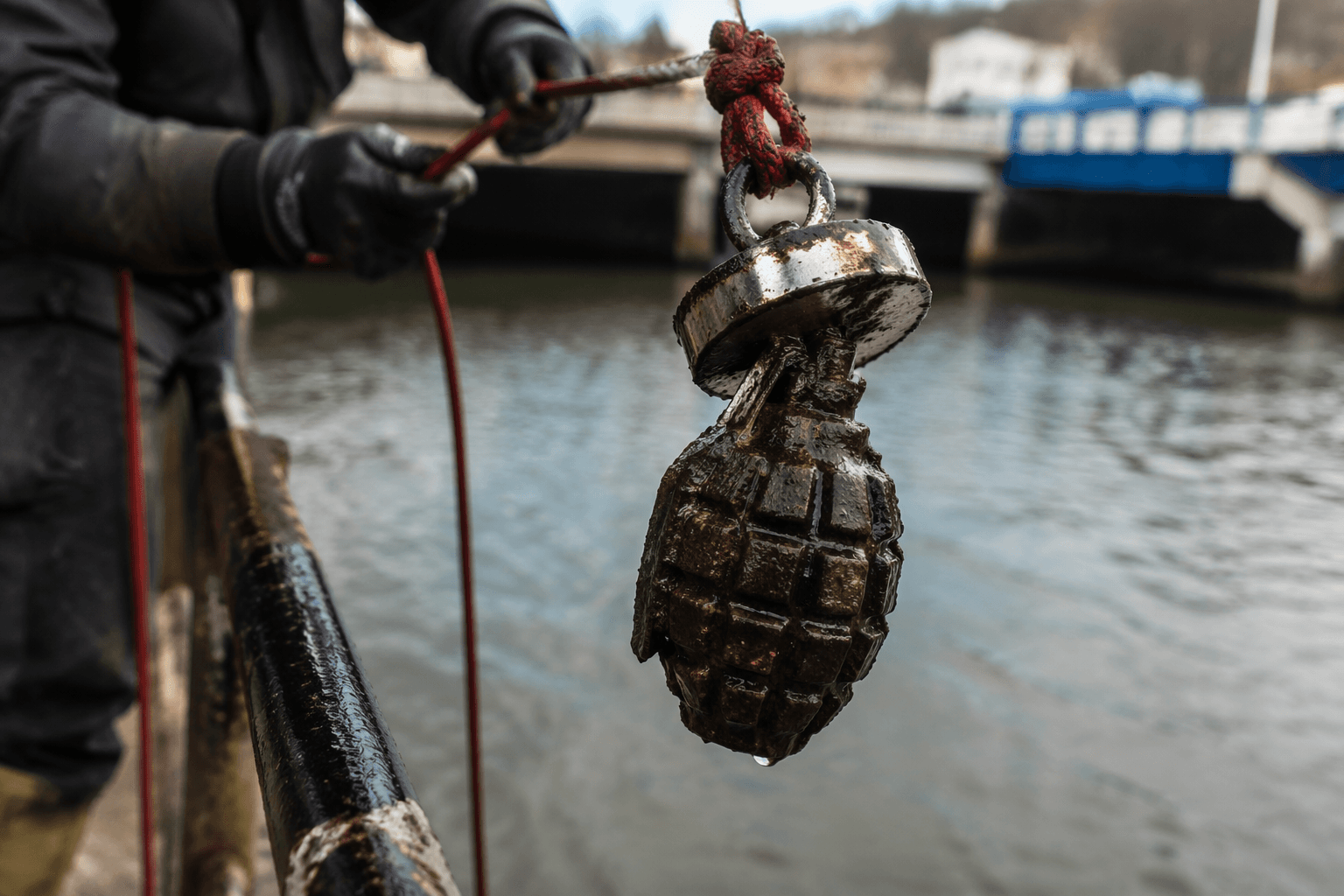
A magnet line can bring up knives, hard drives or a suspected explosive in one pull. The safest move is to back off, mark the spot and call police.
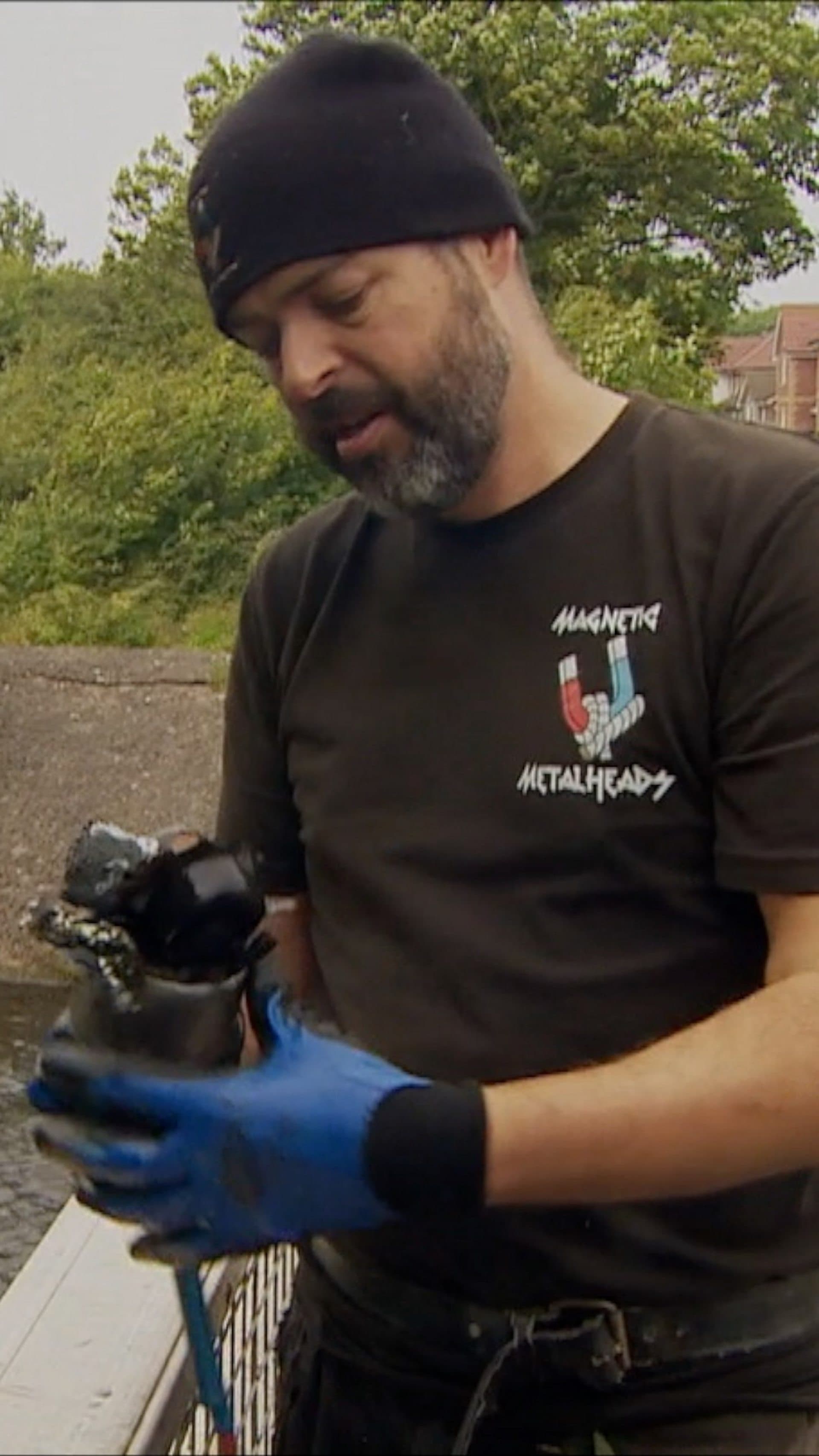
Magnet fishing can feel like cleanup, treasure hunting and a bit of canal archaeology rolled into one, until the magnet bites on something that should never be hauled any farther. The BBC video on the Kennet and Avon Canal puts that reality front and center, with magnet fishers describing finds that range from explosives and knives to hard drives. The lesson is blunt: the hobby only stays harmless when the next move is caution, not curiosity.
When a find stops being scrap
Not every odd object is an emergency. A hard drive, for example, may be interesting because it could be evidence or a personal item, but it is not the same thing as a suspect explosive or a weapon. The line gets crossed the moment the object looks like ordnance, ammunition, a knife, or anything that could be used as a weapon, because then the find is no longer about salvage or curiosity.
That is the split the BBC segment leans on. Tony Scott, Elliot Bromfield, Henry Jones, Dave Jordan and Gareth all speak to a side of magnet fishing that can move in seconds from the thrill of recovery to a situation that belongs to police, not to the riverbank.
Curiosity finds stay curiosity finds
Most magnet fishers know the ordinary haul: scrap, bike parts, bolts, and the sort of metal clutter that has been sitting in a canal for years. Those items may be messy, rusted and unpleasant, but they are still in the realm of recovery and cleanup.
Even then, the habit of sorting finds matters. Anything that looks like paperwork, electronics or a hard drive should be treated as potentially sensitive, not as a prize to be opened on the towpath. The point is simple: the magnet is doing the retrieving, but you are responsible for deciding what should not be handled further.
Immediate-risk items end the session
Explosives and weapons are a different category entirely. The Canal & River Trust says magnet fishing is not permitted on its waterways because dragged objects can be sharp or heavy enough to pull a person into the water, and because its own guidance has included reports of old war bombs and dumped weapons being recovered. That is not a theoretical warning. It is the sort of risk that turns a quiet outing into an emergency response.
The Trust also says piles of metal left on the towpath create problems for other visitors, including families with young children. On its waterways, the issue is not just what comes up from the water. It is what happens next on a shared public route used by walkers, cyclists, boaters, anglers and others.
What the rules say on the canal bank
The Canal & River Trust says it manages about 2,000 miles of towpaths, and it describes those routes as part of a historic inland waterway network stretching back about 250 years. That makes these spaces busy, narrow and shared, which is why the Trust’s towpath code emphasizes considerate use and keeping routes safe and accessible.
There is also a hard legal backdrop. The British Waterways Board General Canal Bye-laws are dated 24 February 1965, and they prohibit removing material from canals without authorization. So when magnet fishing takes place on Trust land, the problem is not only safety. It is also that the activity runs against published policy and long-standing canal rules.
What to do when the dangerous find happens
1. Stop pulling immediately.
Do not keep dragging the line to see what sticks. If the object looks like a shell, grenade, weapon, bomb, or anything with wires, casing, or fuses, treat it as live until specialists prove otherwise.
2. Keep distance.
Move everyone away from the water’s edge and keep bystanders from gathering around the spot. The goal is to stop the scene from becoming crowded, because crowds create pressure, noise and unnecessary risk.
3. Do not handle, clean or test it.
Do not wipe mud off it, try to open it, or use another magnet to figure out what it is. The more the object is disturbed, the more the situation shifts away from safety and toward danger.
4. Mark the location from a safe distance.
Use landmarks, a clear bank reference or a point on the towpath, but do not stay beside the item. The location matters far more than your guess about what it is.
5. Call police and let them decide whether bomb disposal is needed.
If officers identify ordnance, an Explosives Ordnance Disposal team takes over. That is the handoff that matters, because the specialist teams are there to make the final call, not the people holding the magnet line.
Why the warnings keep proving true
Recent incidents show why this protocol matters. In Salisbury, a magnet fisher found a suspected explosive device that was removed by Explosives Ordnance Disposal specialists. In Long Melford, Suffolk, magnet fishing triggered a short road closure after historic railway track explosives were recovered. In Northampton in 2022, a magnet fisherman said he pulled 52 track explosives from the Grand Union Canal.
The Rail Safety and Standards Board describes track explosives as small devices placed on tracks to alert train drivers to hazards. That detail matters because it shows how a canal find can carry a rail-security dimension as well as a public-safety one. A metal object lifted from the water can still be part of a much wider safety story once it reaches police, rail staff or bomb disposal teams.
The Kennet and Avon Canal has already seen that pattern. A live grenade was reported there several years ago, which is why the BBC segment lands with more force than a one-off scare story. The canal, the towpath and the magnet line can look peaceful right up until the moment they are not.
The best magnet-fishing instinct is not the grab, it is the pause. The minute a find looks explosive, weapon-like or otherwise serious, the hobby stops, the distance starts, and the right call goes to police instead of back into the water.
This article was produced by Prism’s automated news system from verified source data, official records, and press releases, then run through automated quality and moderation checks before publishing. The system is built and supervised by the people who set the standards it runs under. Read our full AI policy.
Did this article answer your question?