Magnet fishers help track abandoned fishing gear in waterways
Magnet-fishing hauls can reveal where lost hooks, lines and weights are piling up, turning a lucky pull into real cleanup data for waterways.
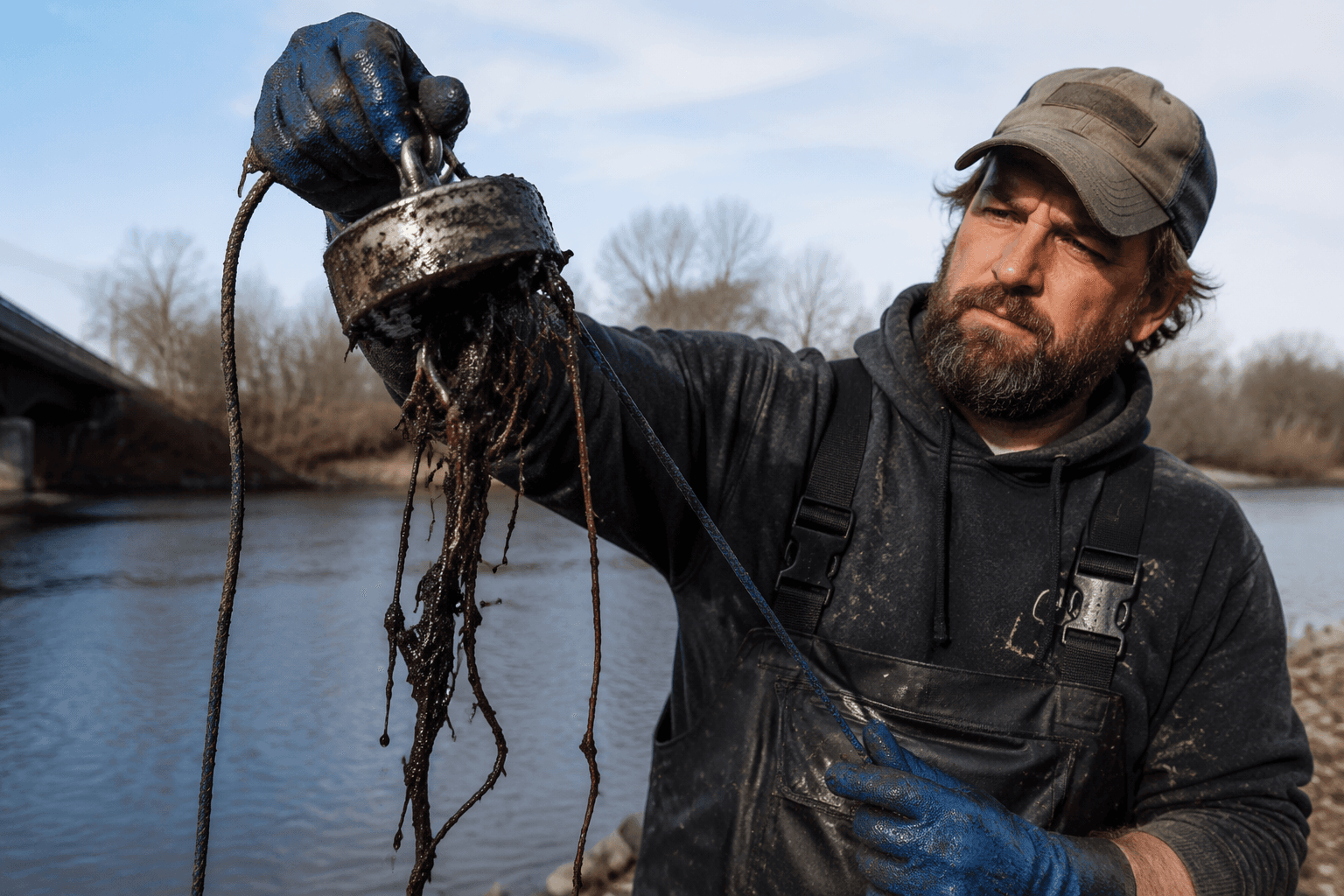
A magnet yanked from a canal can tell you more than what sank there last weekend. A Hydrobiologia paper treats the hobby’s catch as evidence of abandoned fishing gear in the water, not just scrap in the bucket. It was received on 31 May 2023, revised on 5 December 2023, accepted on 11 December 2023, and published online on 25 January 2024.
What magnet fishers are uniquely positioned to see
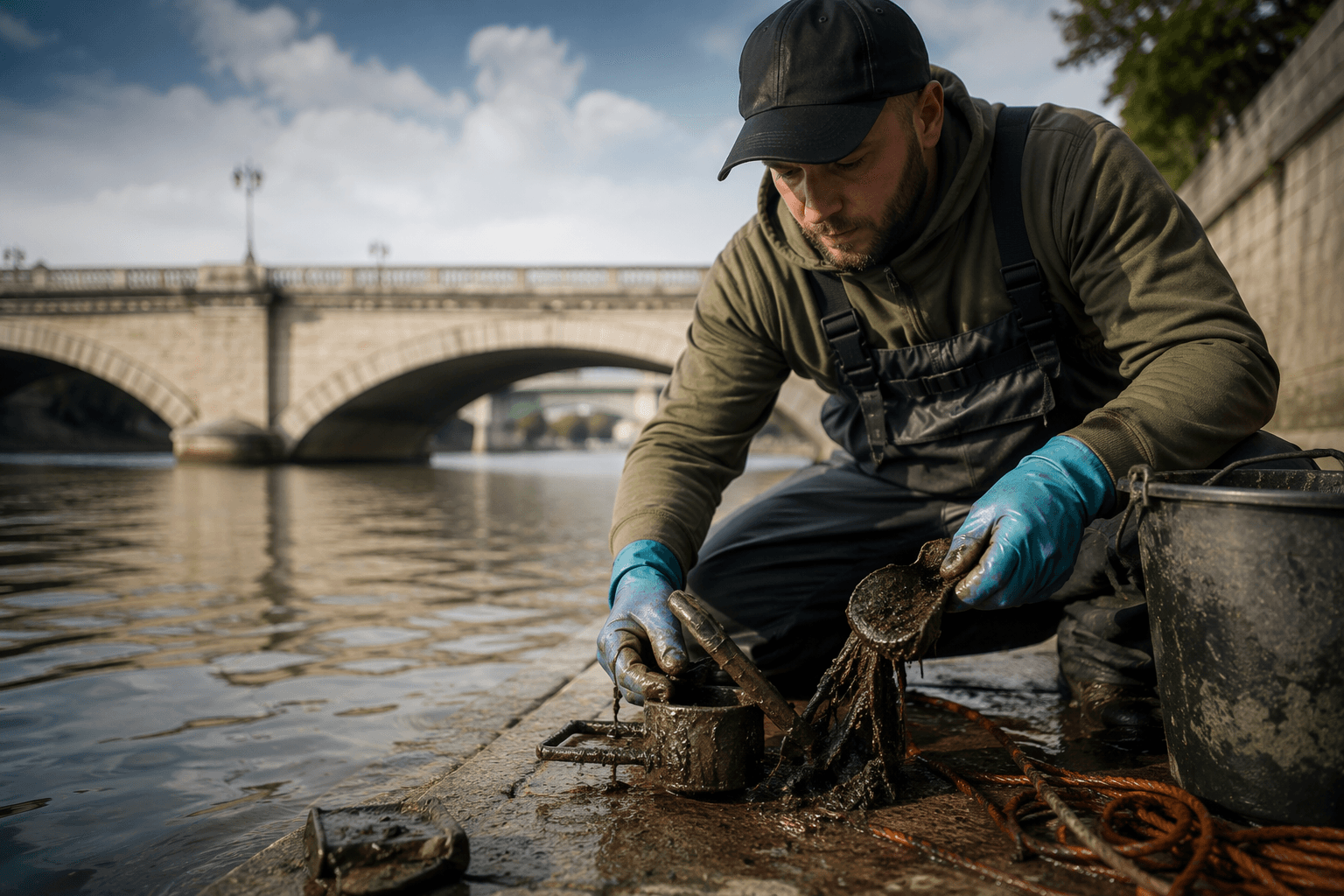
When you work rivers, canals and harbors with a magnet, you keep encountering the same kinds of metal tackle that anglers lose or leave behind. Hooks, sinkers, swivels, lures, wire, line components and other ferromagnetic bits show up again and again, especially in slow-moving urban waterways where gear and scrap settle out together. That makes a single haul a small, repeatable sample of what is getting left in a waterway.
A magnet only sees the metal side of the problem, so it will miss nylon line, floats and other nonmagnetic debris, but it is particularly good at flagging the hard stuff that keeps turning up in the same places. When the same hooks, weights and steel tackle pieces keep coming up in a stretch of water, they mark a pattern that ordinary shoreline cleanups can easily miss.
Why those small finds matter
Abandoned, lost or discarded fishing gear is a pollution source in both freshwater and saltwater environments worldwide. Derelict gear can keep fishing after it is lost or discarded, trapping animals and entangling marine life long after the angler has gone home. It can also damage coral reefs, mangroves and seagrass beds, and even create hazards to navigation.
Lost gear does not stop affecting the water just because it is no longer tied to a rod. Each recovered hook, sinker or wire leader is a visible trace of that pressure, and a magnet fisher working a local cut or harbor edge is often the first person to see it in quantity.
What to document when you pull up gear
The quickest way to turn a haul into useful cleanup data is to record it before it disappears into the bucket. A magnet fisher’s eye for detail is the whole advantage here, because the evidence is strongest when the item is still tied to the place it came from.
1. Photograph the find where it comes out of the water.
A picture with the bank, dock, bridge or shoreline in view gives context that a cleaned-up table shot cannot. If the item is still tangled in line, attached to a weight or caked with mud, leave it that way long enough to capture the scene.
2. Note exactly what came up.
Hooks, sinkers, swivels, lures, wire leaders and line hardware are the key categories here. Count them if you can, and separate pure tackle from mixed scrap metal so the haul does not blur into one anonymous pile.
3. Log the waterway and the spot.
Rivers, canals and harbors do not behave the same way, and slow-moving urban stretches often collect the kinds of debris this method is best at spotting. Write down the access point, the bank type and anything that suggests repeated angling pressure, such as a launch area, bridge shadow or snag-prone bend.
4. Share the record with cleanup and fisheries groups.
Local waterway cleanups, derelict gear removal efforts and agencies that track marine debris can use a simple note set, especially when the finds cluster in one place. The goal is to show where the gear is accumulating, not to turn a single pull into a grand claim about the whole system.
How big the abandoned-gear problem is
CSIRO estimated in 2022 that enough fishing line is lost at sea each year to circle the Earth 18 times, with about 14 billion hooks lost at sea annually and roughly 740,000 km of line disappearing every year.
NOAA estimates Papahānaumokuākea Marine National Monument receives 52 metric tons of derelict fishing gear every year from commercial fisheries across the Pacific. NOAA’s Washington derelict fishing gear removal project has collected hundreds of tons over time in Puget Sound and the Northwest Straits region, which gives magnet-fishing catches a real comparison point against long-running cleanup work.
A hobby that can feed the bigger map
Because you are repeatedly drawing up ferromagnetic tackle from the same stretches of water, your finds can help spot hotspot waterways, likely loss patterns and the kinds of gear most often left behind. The method will never replace a formal survey, but it can complement one by showing what is sitting in reach of a magnet before it breaks down, drifts or keeps fishing as ghost gear.
This article was produced by Prism’s automated news system from verified source data, official records, and press releases, then run through automated quality and moderation checks before publishing. The system is built and supervised by the people who set the standards it runs under. Read our full AI policy.
Did this article answer your question?