Responsible magnet fishing, how to handle finds and respect waterways
One careless pull can spoil access for everyone. The rulebook is simple: sort scrap, stop on dangerous finds, and leave every bank cleaner.
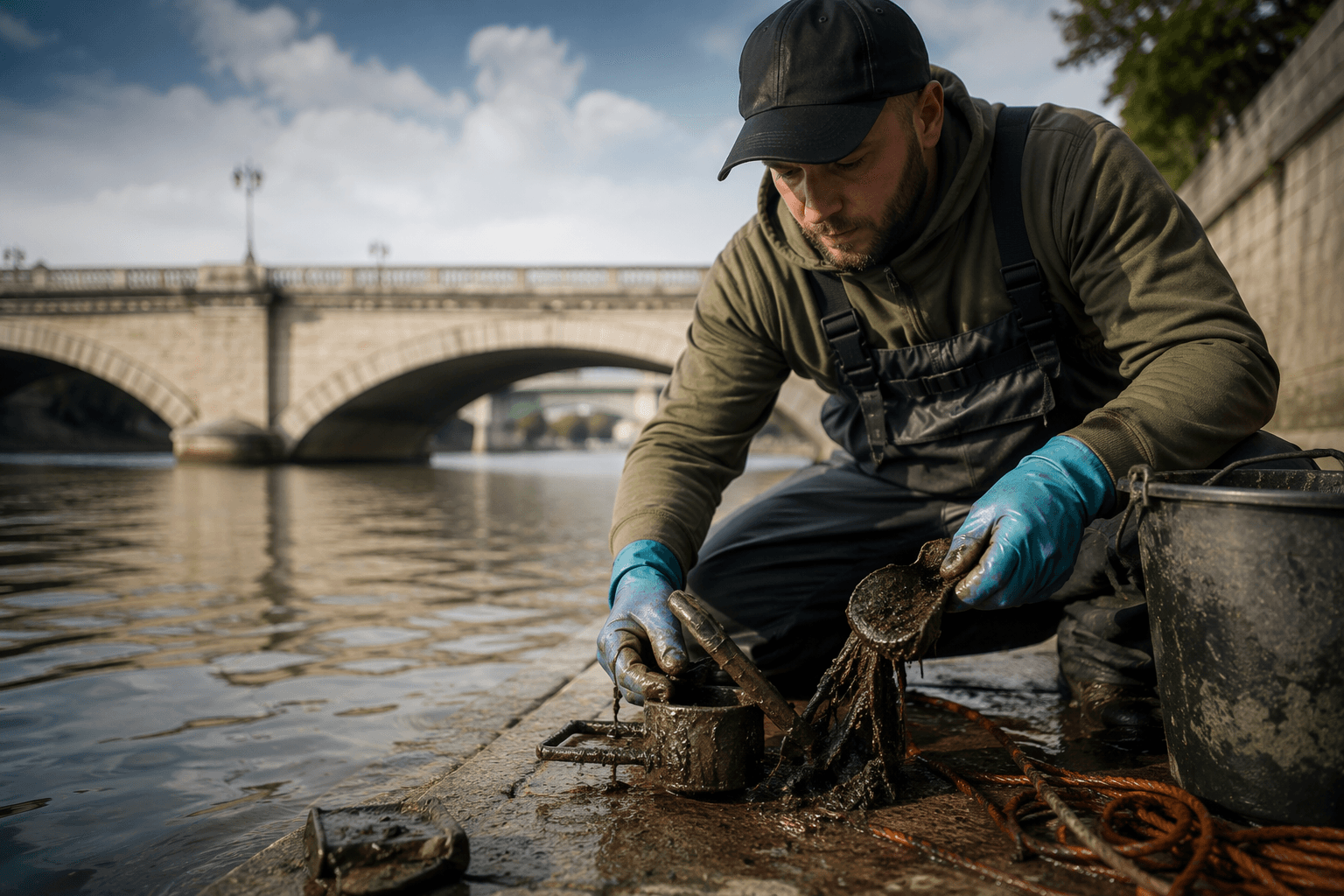
One blocked footpath or dumped heap of rusty scrap can be enough to get a site shut down for everybody else. That is the real code of conduct in magnet fishing: treat every shoreline as shared space, and every find as something that needs judgment before action. The difference between a good day out and a crackdown often comes down to what you do in the next 30 seconds.
Sort the pull before you sort the photo
Magnet fishing is not just extraction. It is the moment where you decide whether the item belongs in a scrap pile, a report, or a preservation case. Harmless metal goes one way. Anything dangerous, historically significant, or obviously belonging to someone else needs a pause, not a pry.
A practical order helps:
1. Lift the object clear enough to see what you actually have.
2. Stop if the shape, weight, wiring, or condition looks wrong.
3. Photograph it where it sits if that can be done safely.
4. Decide whether it is clean scrap, a hazard, or something that should be left alone.
5. If there is any doubt, back off and call the proper authority.
That pause matters because the hobby has gone viral repeatedly on social media, with thousands of magnet-fishing videos on YouTube. The urge to turn every pull into a clip is real, but the better habit is to make the responsible call before the camera gets the victory shot.
Handle dangerous finds like they are not yours
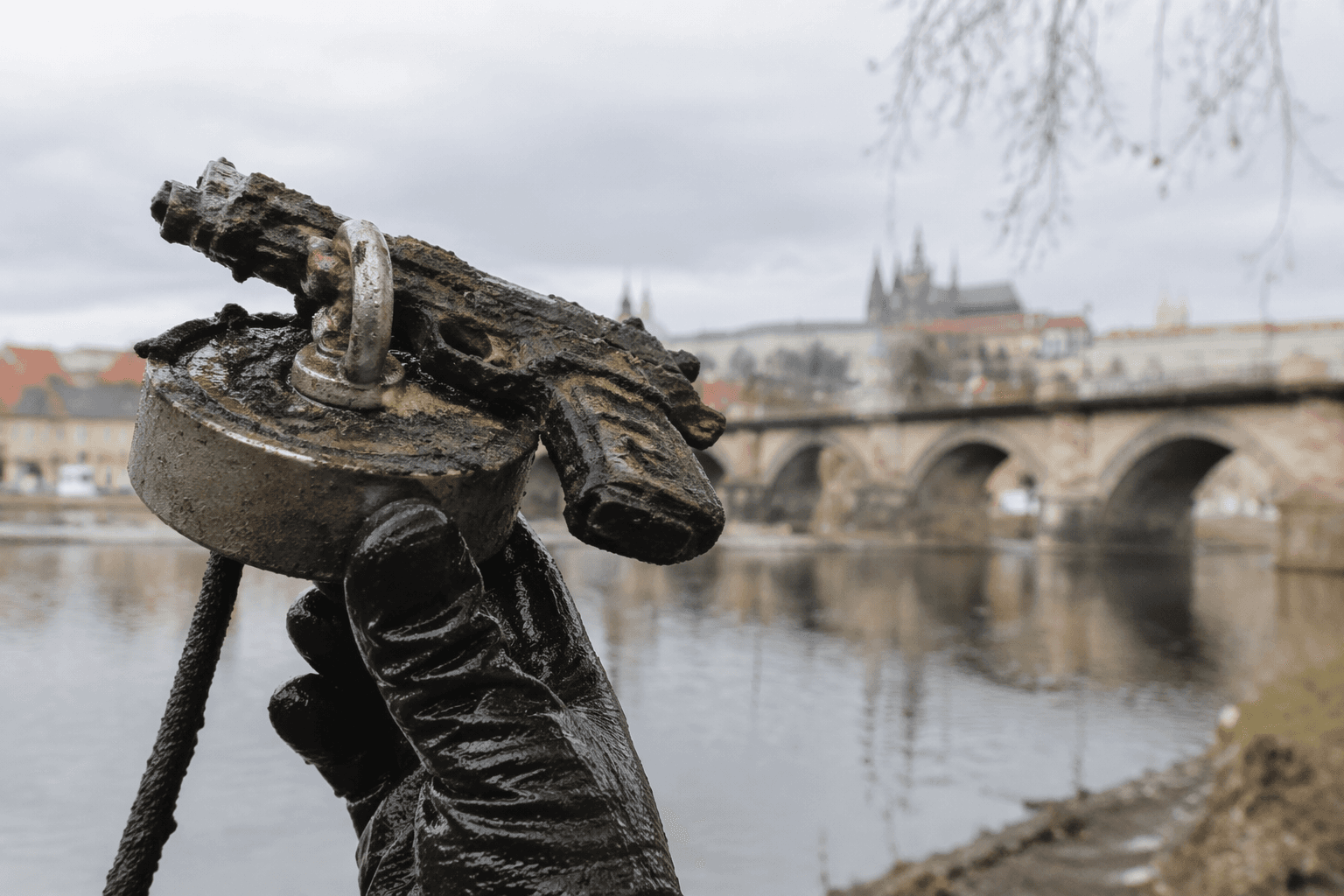
Taking items out of canals can be dangerous without the right support. In 2018, guns and grenades were dredged from the Midlands canal network, and the Canal & River Trust urged people to stop putting their safety at risk after those finds. A family from Rugby, Warwickshire, also reported recovered old guns to Rugby police, which is the right instinct when a pull looks more like a weapons callout than a clean-up win.
The warning got sharper again in 2024, when a father-and-son pair, Mark McGeachin and James McGeachin, had found bombs, axes, machetes and guns in Scotland’s canals over five years. That is the kind of haul that should end the session immediately. If the object is large, suspicious, sharp, unstable, or looks like ordnance, leave it in place and get the authorities involved. Do not try to “see what else is attached,” and do not drag it onto the towpath to sort it out later.
Leave the shoreline cleaner than you found it
On the Canal & River Trust network, canals and rivers are enjoyed by millions of people each year, and most visitors leave them as they found them. The Canal & River Trust still cleans up hundreds of tonnes of litter and debris every year. If you are already pulling metal from the water, the least you can do is make sure your footprint disappears when you leave.
Keep your rope, scrap, and breakage under control. On the Canal & River Trust network, which spans over 2,000 miles and has free open public access, the towpath is often narrow, and other users are close by. Do not block pedestrians, leave coils of rope across the path, or abandon broken line, glass, sharp offcuts, or rusty piles on the bank.
- put clean scrap straight into a bucket, bag, or pile for recycling or proper disposal
- separate sharp fragments from the rest so they do not end up in a boot, bike tire, or child’s hand
- pick up any litter you disturbed while working the snag
- check the spot once more before you go so the bank looks better, not worse
A clean exit looks like this:
Respect the boundary lines before you cast
Permission matters as much as the pull. Work only where access rules are clear, and do not treat every stretch of water as fair game just because it looks empty. Historic Environment Scotland publishes magnet-fishing guidance for scheduled monuments and related consent pages, and links the hobby to heritage crime guidance. On Scotland’s canal network, Scottish Canals requires permission from the landowner and Scheduled Monument Consent from Historic Environment Scotland.
Historic sites can carry legal and conservation restrictions anywhere, and the Caledonian Canal, Clachnaharry Sea Lock to Muirtown Quay decision shows that underwater object retrieval can be treated as a regulated activity, not casual litter-picking. If you are unsure whether you are standing on protected ground, do not improvise. Move on.
Handle bystanders like you are being watched, because you are
You usually are. Towpaths are public, and the Canal & River Trust network has free open public access. That means walkers, anglers, cyclists, dog owners, and families can be passing within a few feet while you are swinging a heavy magnet on a rope. Keep the retrieval movement contained, leave clear walking space, and do not create a tangle that forces other people into the water’s edge.
A respectful magnet fisher also knows how to answer the curious without turning a bank into a performance. If someone asks what you found, keep it short and civil. If a pull looks dangerous, do not crowd around it with strangers nearby. The bigger the crowd, the faster a manageable stop becomes an avoidable incident.
This article was produced by Prism’s automated news system from verified source data, official records, and press releases, then run through automated quality and moderation checks before publishing. The system is built and supervised by the people who set the standards it runs under. Read our full AI policy.
Did this article answer your question?