High-traffic bridge turns magnet fishing into a steady haul
A busy bridge can fish like a conveyor belt, not a lottery, with every pull turning up more metal than the last. The same spot also demands a sharp safety and legality check.

Pull a magnet under the right bridge and the water stops behaving like a gamble. Here, constant traffic made the haul feel inevitable, not random, with each pull bringing up something new and sometimes more than one item at a time. That is the whole lesson in one shot: when a crossing stays busy long enough, the bridge itself becomes the hotspot.
Why this bridge paid off
High-traffic bridges are productive because they act like funnels for lost metal. Foot traffic, bike traffic, and vehicle traffic all raise the odds that something gets dropped, tossed, or shaken loose, then ends up in the water or trapped near the structure. The area beneath the span also collects debris over time, so one pull can turn up a bottle cap, a bolt, a tool, or a cluster of scraps instead of a single lucky snag.
That is why bridge edges, pilings, and access points keep showing up in magnet-fishing conversation. The current does part of the work for you, moving small items into pockets where they settle and stay put. In a place with enough daily movement, the magnet is not really hunting one object, it is working a pile that has been building quietly for years.
The best part of this kind of spot is that the location explains the finds. A bridge with constant traffic does not need a dramatic backstory to be worth fishing, because the infrastructure itself creates the pattern: lots of hands, wheels, and weight above the water, lots of forgotten metal below it. That is why urban bridge fishing can feel less like searching and more like reading the water correctly.
What the finds teach about choosing a spot
The practical takeaway is simple: productive urban water is usually busy water. Independent magnet-fishing guides describe bridges as classic drop zones because people lose or discard items there, and the underside becomes a magnet for metal over time. Treasure Valley Metal Detecting Club also flags bridges as high-traffic hotspots for lost treasure, which matches what the bridge pull here showed in real life.
A good bridge spot usually has a few things working at once:
- steady traffic above the water
- places where metal can fall and settle, such as edges and pilings
- current that can move small objects into a pocket or snag zone
- enough access to work the magnet safely without crowding pedestrians or vehicles
That combination matters more than scenery. A remote stretch of water might look promising, but a busy crossing in town can cough up far more because the daily volume of people and vehicles keeps feeding it. The bridge turns into a long-term collection point, and that is exactly why experienced magnet fishers keep coming back to them.
When bridge fishing stops being casual
The same spots that produce junk can also produce trouble. Bridge-related magnet fishing has already shown how fast a routine pull can turn serious: in March 2026, a Cape Cod magnet fisher recovered a handgun from the Taunton River in Bridgewater, Massachusetts, and Bridgewater Police opened an investigation. That is the sharp edge of bridge fishing, because the water does not sort harmless scrap from dangerous metal for you.
The warning is even clearer in the UK example from The Mill Suspension Bridge, where the Peaky Dippers said their haul included grenades, bombs, anti-aircraft bullets, and guns. They described it as the largest ever known in the history of their hobby, which tells you how quickly a bridge pull can jump from bragging rights to public-safety territory. Once weapons or explosives are involved, the story is no longer about a neat haul, it is about who has to deal with it next.
That is why bridge fishing should always be treated as a location choice, not just a gear choice. A productive bridge is great, but a productive bridge with a history of discarded or trapped metal deserves extra caution. The bigger the haul, the more important it is to know what you are actually pulling before you celebrate it.
Safety sidebar: traffic, pedestrians, and submerged clutter
Bridge spots are productive partly because they are busy, and busy is exactly what makes them risky. You are usually working near moving traffic, people walking by, and a waterline that can hide rebar, cables, broken hardware, and other submerged metal clutter. A strong throw can bounce, snag, or come back with enough force to surprise you, especially near concrete edges and crowded access points.
Keep the setup tight and the surroundings in view:
- stay clear of lanes, shoulders, and blind corners
- watch for pedestrians and cyclists before every cast
- expect snags around pilings, brush, and junk piles
- treat unknown heavy items as potentially dangerous
- if a find looks like a weapon or explosive, stop and report it through the proper channel
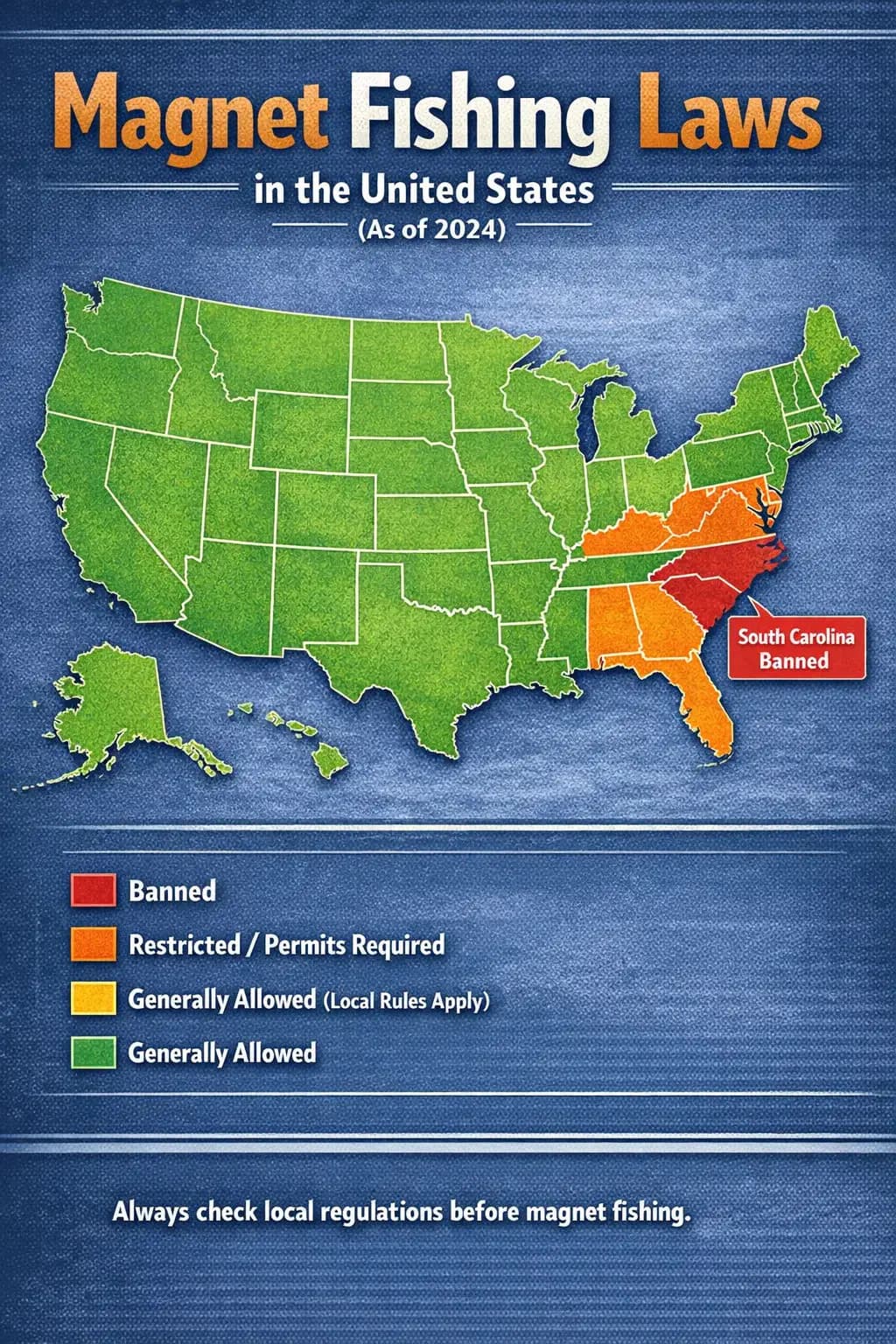
Indiana’s rules make the legal side just as plain. The Indiana Department of Natural Resources requires a magnet fishing permit on DNR-owned, managed, or leased properties, and it says dangerous items should be reported to property office staff or law enforcement. More broadly, there is no single federal ban on magnet fishing in the U.S., but state, local, and property rules can still control where you can fish and what you do with what comes up.
The real takeaway from the bridge
This is why high-traffic bridges keep earning their reputation. They are not magical, they are mechanical: lots of movement above, a long stretch of time below, and metal collecting where the water has nowhere else to send it. When a bridge starts producing item after item, sometimes more than one at a time, it is usually telling you the same thing every experienced magnet fisher already knows, the busiest crossing in town can be the most productive spot in the water.
This article was produced by Prism’s automated news system from verified source data, official records, and press releases, then run through automated quality and moderation checks before publishing. The system is built and supervised by the people who set the standards it runs under. Read our full AI policy.
Did this article answer your question?