Magnet Men return to Arkansas Black River for cleanup and historic finds
Jon & Pops keep returning to Black River because it still gives up trash, history, and a cleanup mission in the same cast. Their latest run shows why some waterways stay magnet-fishing hot.
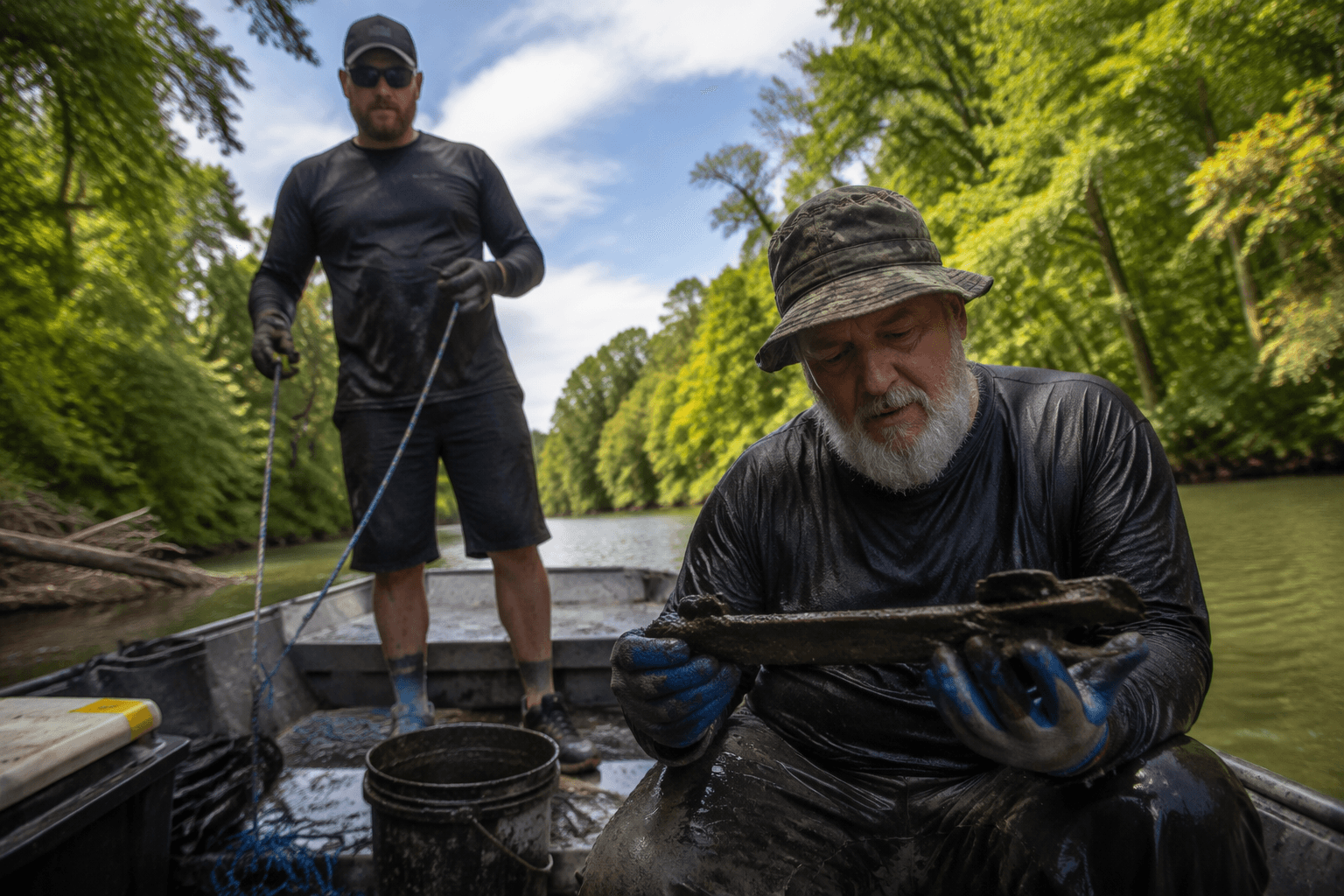
In their July 10 video, posted July 11, the Magnet Men return to northern Arkansas because they “just can’t seem to pull everything out” of the Black River. The line captures the real rhythm of a good magnet-fishing stretch. One trip rarely closes the book, and a river with layers of debris, access points, and old history can keep rewarding repeat visits.
Why this stretch keeps working
The Encyclopedia of Arkansas calls Black River’s role in northeast Arkansas “significant, but shifting,” and early Native Americans used it as an essential source of food and transportation. A find in this water does not feel random the way it might in a shallow drainage ditch or a one-off canal pull.
The current Magnet Men run shows that same pattern in real time. Their latest outing is part of an ongoing river series, and that continuity is exactly what gives the location its pull. A crew can come back and still expect another layer of metal, another hidden object, or another story.
Cleanup and keepers in the same cast
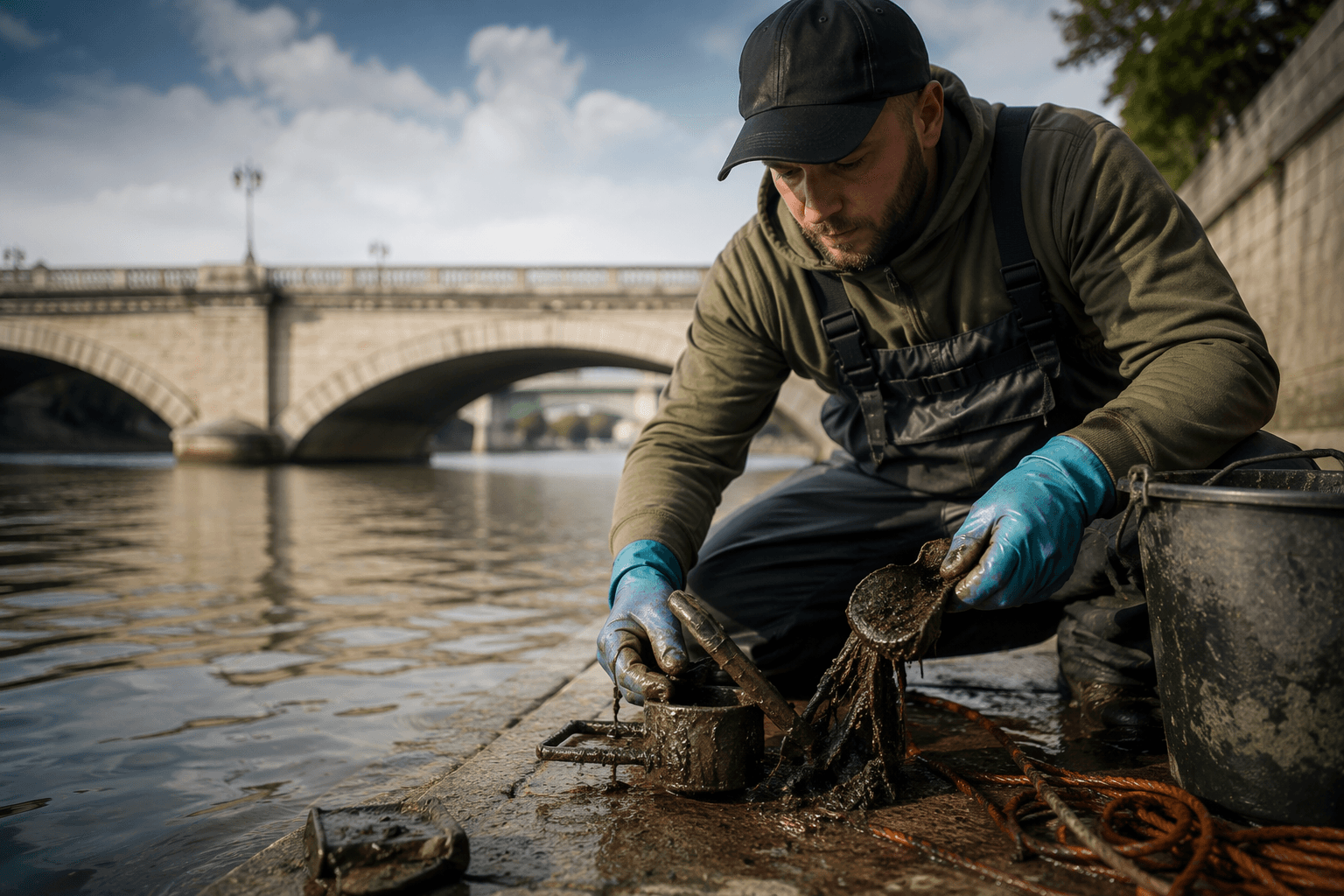
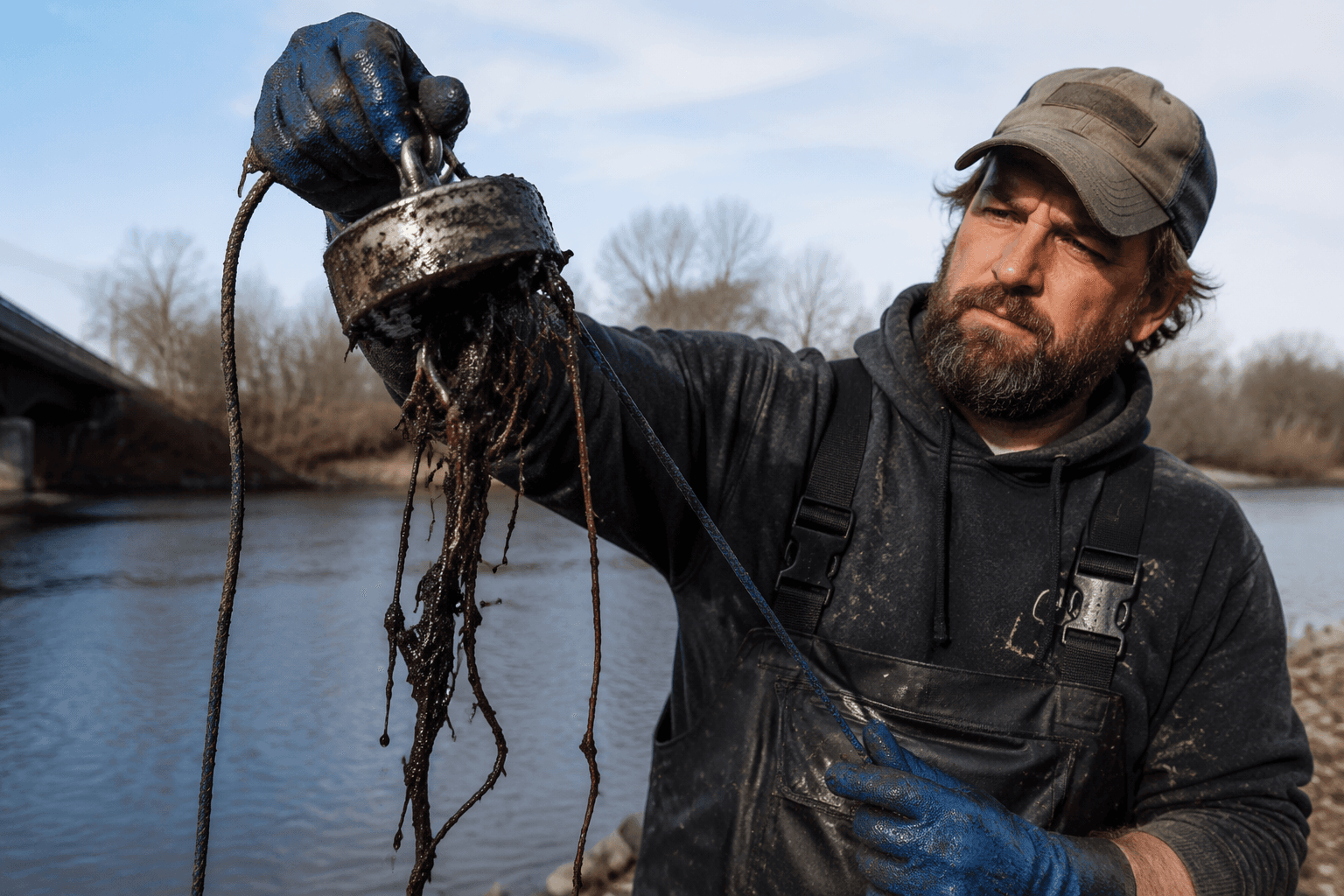
Jon and Pops say they are trying to clean up the river “as best we can,” which places the outing firmly in the cleanup side of magnet fishing instead of the pure treasure-hunt lane.
They also say they sometimes keep items that are “historical or neat,” and that single phrase fits Black River well. It is not just about clearing scrap. It is about the split-second judgment that happens when a cast comes up with something that looks more like local history than junk. In this case, the river gives the pair both jobs at once: clean the channel and watch for something worth saving.
A river that has already given up history
The recent Black River run makes more sense when set beside two earlier Magnet Men uploads. In a July 6 video with Captain Mike, Pops says he pulled an “1850 or so Colt revolver” from the bottom of Black River in north Arkansas. In a July 9 video, the group references an “1851 Navy Colt revolver” recovered from the same river, and Captain Mike is shown working on it.
Those finds help explain why the Black River has become such a repeat target. Once a stretch of water produces a historic firearm, the location has a proven track record for objects that are old enough to matter, unusual enough to document, and intact enough to talk about after the pull.
What the video numbers say about the audience
The July 10 listing was modest in scale but active in response, with 106 views, 9 likes, and 5 comments soon after publication. That is not a giant audience, but it is the kind of signal that shows a small community following a specific waterway like a serialized story. The comments and likes show the Black River content functioning as a continuing arc rather than just another random upload.
The wider cleanup-and-history trend
Volunteers have used magnets to remove debris from Maine waters, and magnet fishers on the Detroit River have paired treasure pulls with the hobby’s historical allure. Those examples place the Black River run inside a broader shift in how magnet fishing is being seen: not only as novelty hunting, but as a form of informal environmental cleanup with a historical payoff.
If a river has enough traffic, enough old infrastructure, enough settlement history, and enough debris accumulation, it can support both the cleanup angle and the keep-or-release judgment that keeps the hobby interesting. The Black River checks those boxes in a particularly clear way, especially once a crew has already proven that it can produce an old revolver.
Why Black River is still a live magnet-fishing target
State management work reinforces that the corridor is still an active landscape, not a forgotten one. The Arkansas Game and Fish Commission has a Dave Donaldson Black River WMA Renovation Plan page, which signals ongoing conservation and access-restoration attention around the Black River Wildlife Management Area. Magnet fishers tend to do best where waterways remain reachable, visible, and part of larger management conversations.
Separate Arkansas resources on nonpoint-source pollution and watershed outreach add another layer to the picture. River cleanup is part of a broader environmental context in this state, and magnet fishing sits neatly inside that overlap when it is done as cleanup plus recovery rather than pure collecting.
This article was produced by Prism’s automated news system from verified source data, official records, and press releases, then run through automated quality and moderation checks before publishing. The system is built and supervised by the people who set the standards it runs under. Read our full AI policy.
Did this article answer your question?