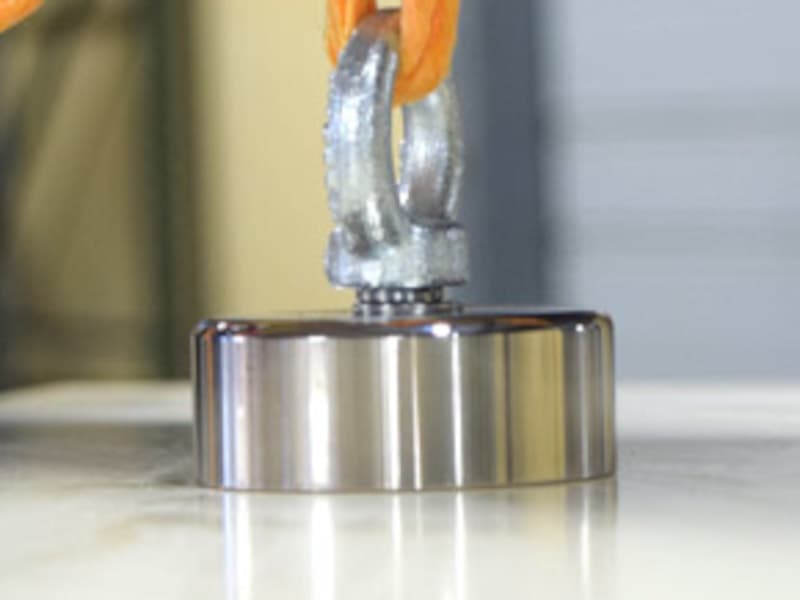
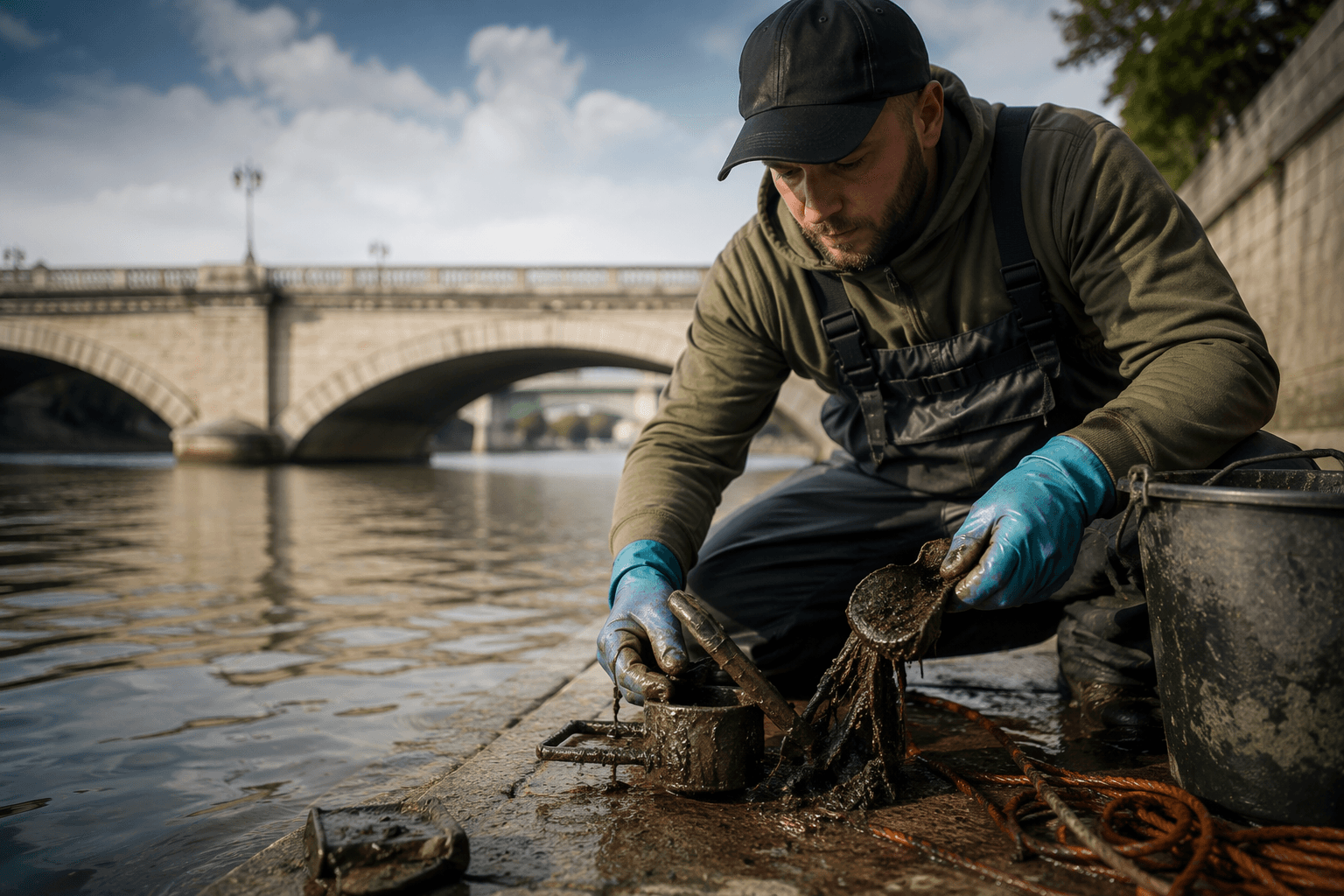
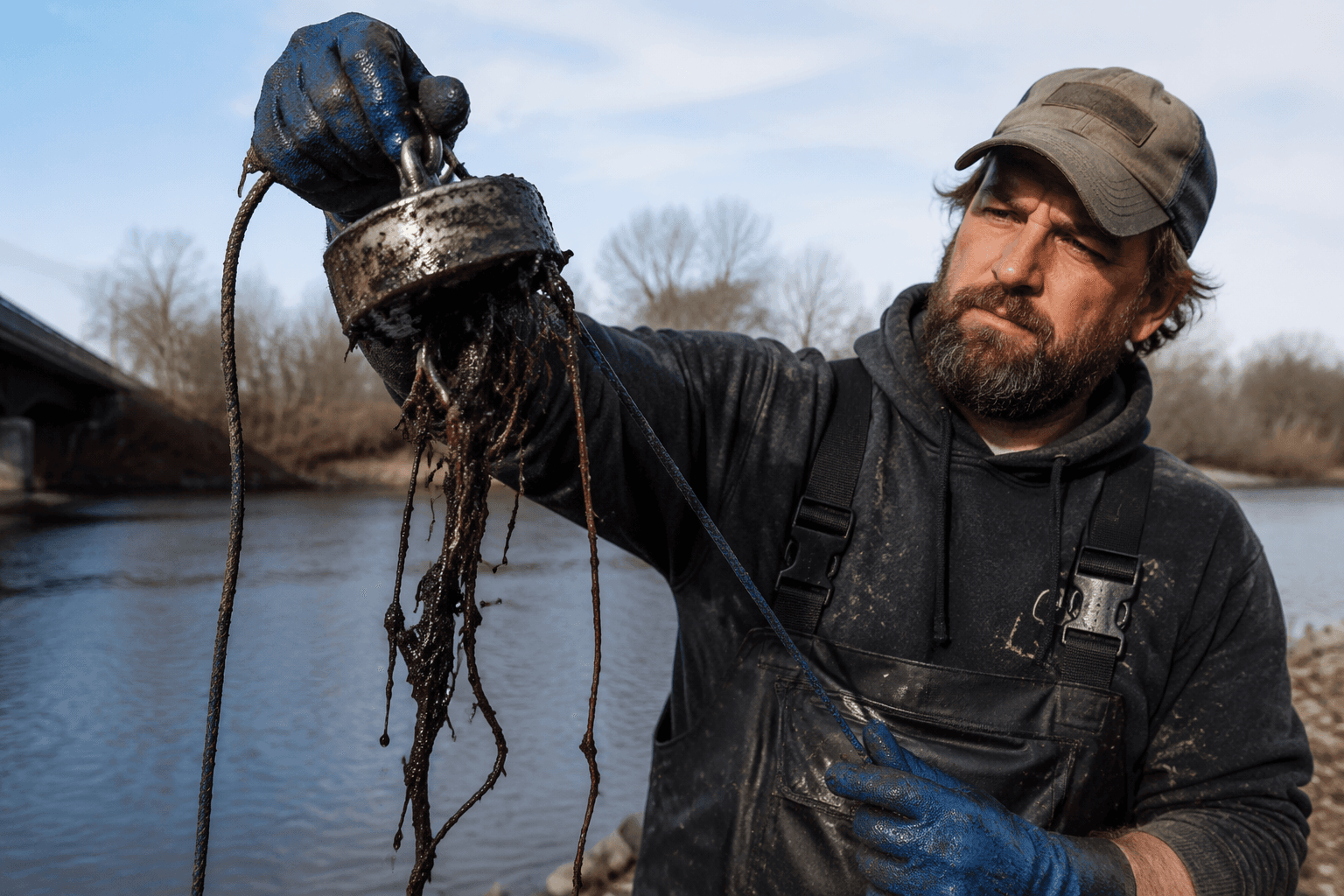
UK magnet fishing guide points to historic canals and old wells
Historic canals, old bridges, ferry landings, and genuine old wells are where the best legal finds usually start. ARCHI’s 200,000-site map and yearly 10,000 updates give you the weekend edge.

ARCHI’s database points magnet fishers toward ancient bridges, canal crossings, and older waterways across England, Scotland and Wales. The strongest spots are usually the ones with the longest human traffic.
Why the map matters before the magnet
The best UK locations are rarely random stretches of bank. They are places where centuries of trade, travel, dumping, loss, and repairs have left metal in the silt, and where a magnet can still pull up something with a story attached. ARCHI’s database covers more than 200,000 British archaeological sites and adds 10,000 new entries each year.
ARCHI also lets you search by British place-name, postcode, or coordinate, which makes it easier to pair a promising waterline with actual access on the ground.
Canal locks are the classic beginner-friendly search
If you want a place that consistently makes sense for first trips, canal locks are hard to beat. They concentrate foot traffic, towpath use, maintenance work, and dropped metal around a fixed piece of infrastructure, and they tend to sit in towns where people have been moving goods and rubbish for generations. That combination gives them strong odds for everyday finds such as tools, bike parts, fishing tackle, keys, and the kind of miscellaneous iron that builds up around working waterways.
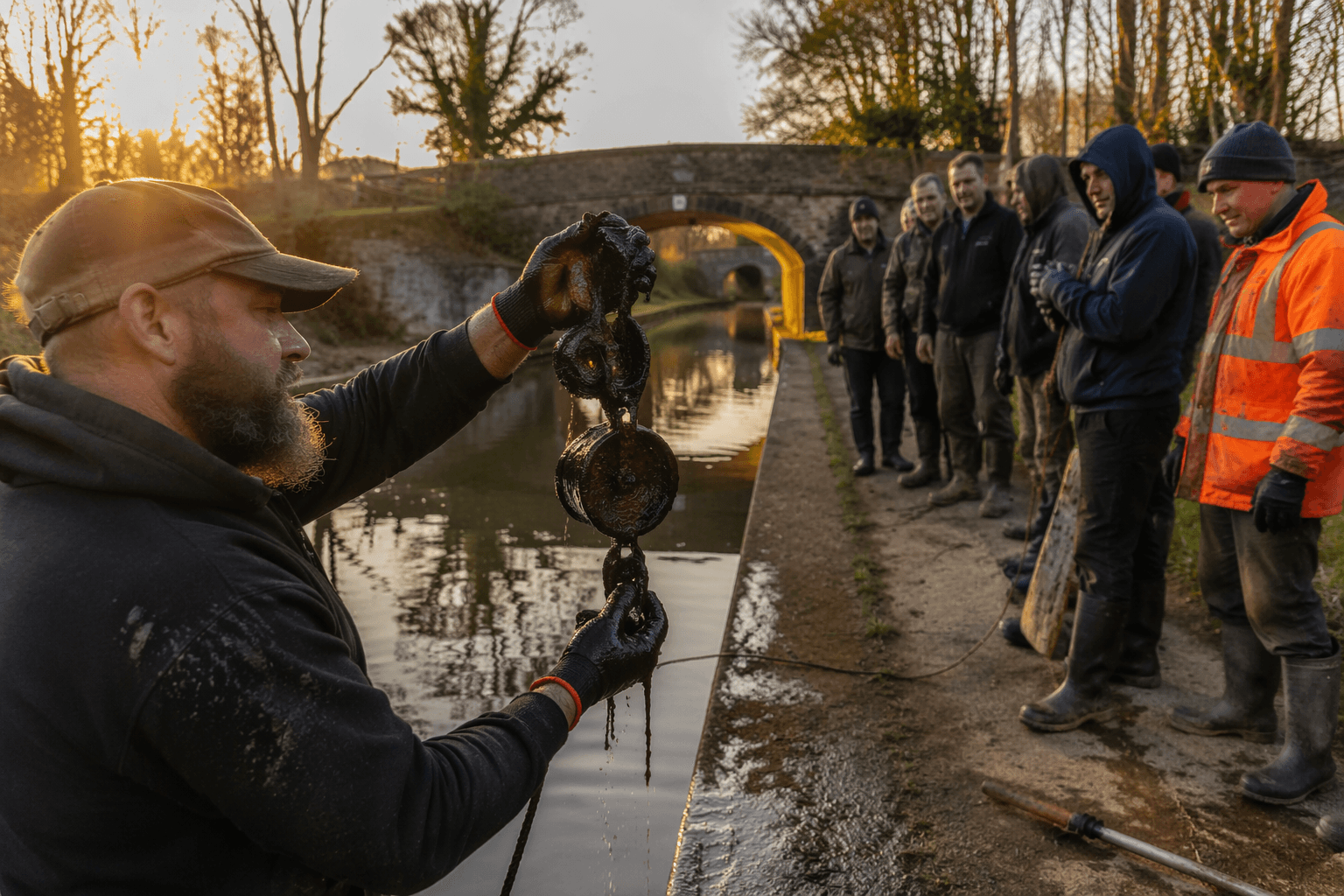
The access issue is the first thing to check. The Canal & River Trust states, “We do not permit magnet fishing” on its waterways and warns that removing objects from canals can be dangerous without the appropriate support. That means even a lock that looks perfect on a map may be off-limits unless you have specific permission from the right owner or manager.
Old bridges and ferry points often carry the richest history
Old bridges are one of the most reliable place types because people have been stopping, loading, repairing, losing, and dropping things around them for decades or centuries. ARCHI’s bridge records help identify older crossings and canal bridges that sit in historically busy corridors, where the water below has seen repeated use rather than isolated passing traffic. Those are the places most likely to produce older hardware, coins, hand tools, and the kind of iron clutter that tells you the site has been active for a long time.
Ferry points work in a similar way, especially where crossings pre-date modern roads. They are practical magnets for lost items because people clustered there before or after crossing, and anything handled near the water had a chance to fall in. The permission risk is higher where the bank, landing, or foreshore belongs to a separate landowner or heritage authority, so these are the spots where checking access before you travel saves the most time.
Town-center rivers give you the urban hunt without losing the history
Town-center rivers are the best urban class to try when you want a spot that feels accessible but still has age behind it. Cities and market towns grew around water for a reason, so riverbanks in the centre of town often combine old movement routes, bridge crossings, quay edges, and layers of redevelopment that can hide long-term metal loss. The likely finds here are often smaller and more everyday than the legend-hunt pulls people imagine, but that is what makes these locations repeatable.
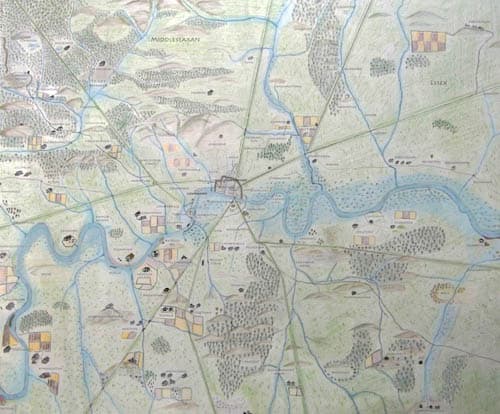
Historic England defines heritage crime as crime and anti-social behaviour affecting historic sites and buildings in England, and its enforcement policy notes that related issues can overlap with metal detecting and public nuisance. In a town-centre setting, that means a magnet line that looks harmless can still brush up against heritage sensitivity, especially if the riverfront includes protected structures or historic fabric.
Old wells are a specialist option, not a decorative shortcut
Old wells can be especially promising when they are genuinely historic. A working or abandoned well has the same appeal as a deep, enclosed dump point: if it was used for years and later filled or abandoned, it can preserve layers of lost metal that never saw daylight again. That makes wells different from casual ornamental features in gardens, parks, or modern developments, which may look old but usually have none of the same depth of use.
The key is to treat a well as a heritage object first and a magnet target second. If it is protected, recorded, or part of a scheduled site, the rules tighten quickly. Portsmouth City Council’s policy states that Scheduled Monuments are protected against unlicensed magnet fishing under the Ancient Monuments and Archaeological Areas Act 1979, and excavating one requires a Section 42 licence from Historic England.
The weekend decision framework
If you want a simple way to choose, start with the location type that matches your goal.
- Best beginner-friendly spot type: canal locks, because they are easy to identify, heavily used, and often surrounded by repeatable everyday loss. Just check permission first, since the Canal & River Trust does not permit magnet fishing on its waterways.
- Best history-rich option: old bridges, especially the ones ARCHI pinpoints as part of older canal and river networks. These tend to sit on lines of long use, which is exactly where older metal accumulates.
- Best urban location class: town-center rivers, because they give you access, foot traffic, and historic layering in one place. They are the easiest places to combine a short session with a meaningful search pattern.
Permission checks that matter before you drop the line
Permission turns on who controls the water. The Canal & River Trust manages a large share of the inland canal network in England and Wales, which is why canal searches need direct permission, not assumptions. Historic England’s heritage-crime guidance adds another layer in England, where protected and sensitive sites can raise both enforcement and access issues.
If you are thinking about the foreshore, Portsmouth City Council says requests should go to The Crown Estate first. If the area is a Scheduled Monument, you need the right licence and permission before any excavation, and magnet fishing is not a workaround for that.
This article was produced by Prism’s automated news system from verified source data, official records, and press releases, then run through automated quality and moderation checks before publishing. The system is built and supervised by the people who set the standards it runs under. Read our full AI policy.
Did this article answer your question?