Why neodymium powers modern magnet fishing gear
Neodymium’s rare-earth chemistry is why modern magnet fishing magnets stay compact and brutal, but the real payoff comes from matching shape and force to the job.
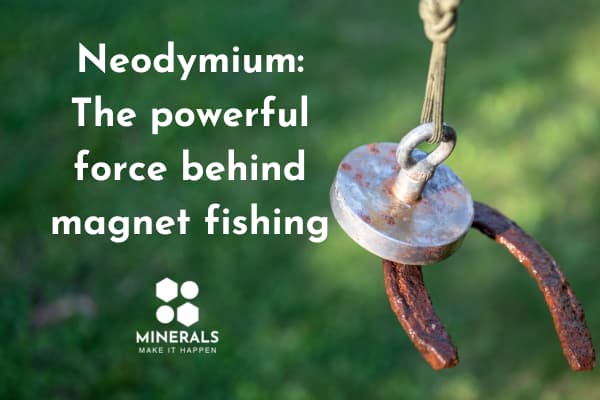
NdFeB, the neodymium-iron-boron alloy inside modern magnet-fishing gear, turns a small head into a serious retrieval tool. It gives today’s gear its strength-to-size advantage and its resistance to demagnetization. Once you understand that, the buying decision gets much simpler: you are choosing a shape and force profile, not chasing hype.
Why neodymium became the standard
Neodymium is one of 17 rare earth elements, and the name does not mean it is impossible to find. The U.S. Geological Survey classifies rare earths as a relatively abundant family that includes scandium, yttrium, and the lanthanides, with principal economic sources such as bastnaesite, monazite, loparite, and ion-adsorption clays.
The industrial backbone matters because modern neodymium-iron-boron magnets did not appear by accident. General Motors in the United States and Sumitomo Special Metals in Japan independently developed NdFeB magnets in 1984, and that breakthrough made compact rare-earth magnets commercially useful.
What the material gives your kit
The biggest reason neodymium dominates the hobby is simple: it packs a lot of force into a small body. The U.S. Department of Energy lists NdFeB magnets as key components in wind-turbine generators and electric-vehicle traction motors, which is the same core property that makes them attractive in magnet fishing. If a material can stay strong inside a turbine or motor, it can also hold onto submerged ferromagnetic scrap instead of slipping off at the first awkward angle.
That strength-to-size ratio is what makes the gear feel different in your hands. You get a compact magnet that still has the grip to pull up brackets, fasteners, tools, and other metal debris from the bottom of a river, dock, or canal. Raw pull matters, but so does how that pull is delivered, because circular and double-sided designs behave differently and give you different ways to work a spot.
What this means for your kit
This is where beginners often go wrong: they buy for the biggest number on the package and ignore how the magnet will actually fish. A heavy-looking magnet is not automatically a better one if it is awkward to control, poorly matched to the rope, or wrong for the way you throw and retrieve. Neodymium lets you choose a compact setup that still has serious bite, so it makes more sense to prioritize usable design over empty bragging rights.

That also means the magnet is only part of the setup. The shape, the way the magnet sits in the water, and how easily it can stay aligned while you work a bank or drag a line all affect the odds of bringing something up cleanly.
Cleanup is part of the pull
The hobby’s appeal is not only about what you find, but what you remove. The U.S. Environmental Protection Agency classifies much of the garbage in waterways from land-based activity as aquatic trash, which gives magnet fishing a direct cleanup role. Every haul of scrap, hardware, and other ferromagnetic debris is part of a broader effort to clear rivers, lakes, streams, and creeks of material that should not be there.
If you want a magnet that can lift the kind of debris that keeps snagging lines and cluttering shorelines, you need a material that keeps its strength and does not fade out after a few hard pulls. NdFeB is built for that job.
Where the hobby crosses into safety and heritage
The same force that drags up scrap can also drag up trouble. Magnet fishing is strictly forbidden in the historic canals Parks Canada administers, and Canada’s Department of National Defence warns that fishers can encounter knives, firearms, sharp metal, and unexploded explosive ordnance. Historic England warns that underwater and marine archaeology is complex and needs careful management and guidance.
In November 2023, a magnet fisher recovered a Viking sword from the River Cherwell in Oxfordshire, England, and experts dated it to between 850 and 975. Finds like that are why some waterways are treated as heritage sites first and fishing spots second.
This article was produced by Prism’s automated news system from verified source data, official records, and press releases, then run through automated quality and moderation checks before publishing. The system is built and supervised by the people who set the standards it runs under. Read our full AI policy.
Did this article answer your question?


