Dan previews three Seeed Meshtastic devices for summer field testing
Dan’s summer test list turns on what matters in the field: a pocket tracker, a screen-equipped node, and a solar base station with real-world Meshtastic range to prove.
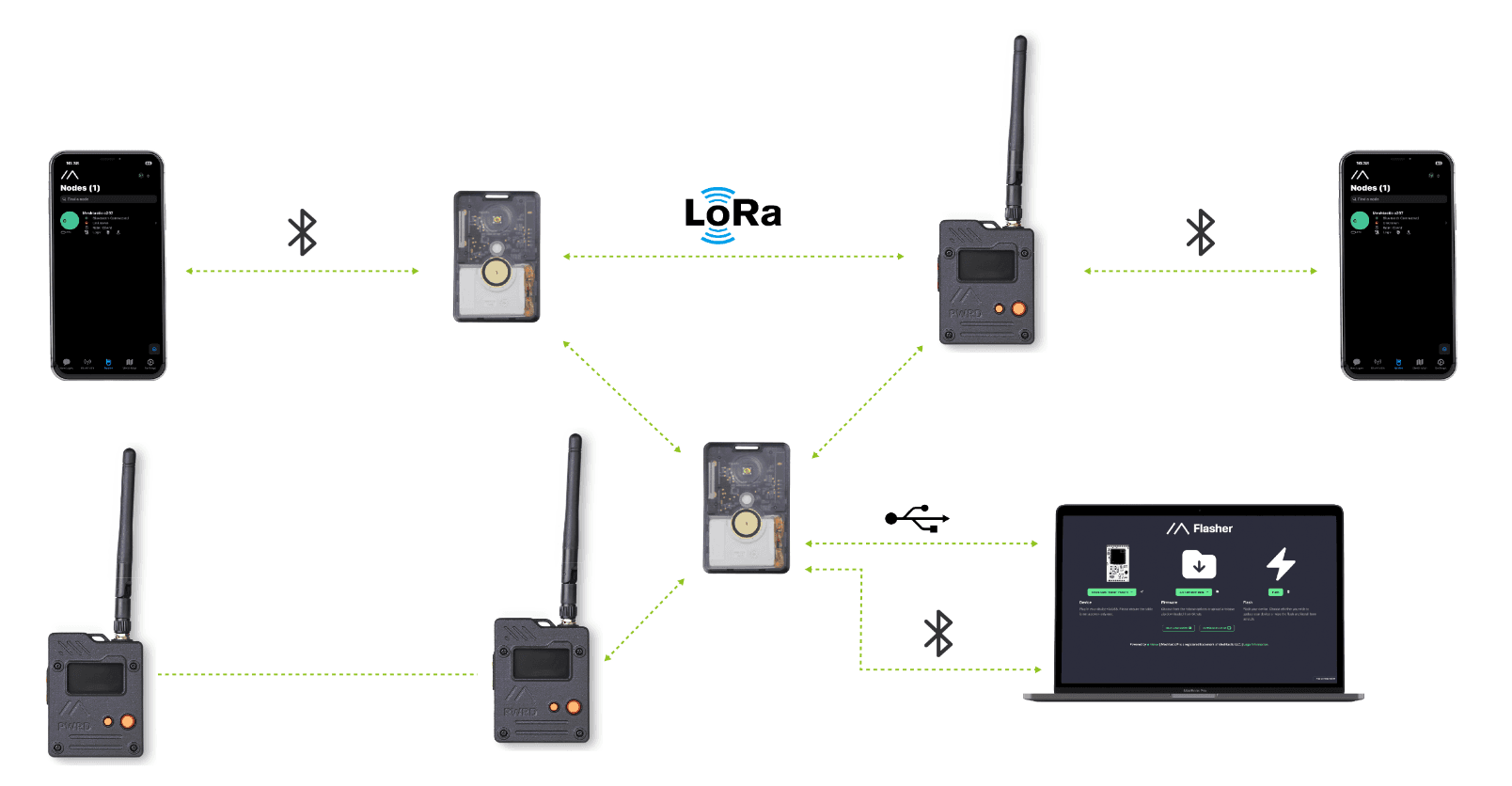
Three Seeed-built Meshtastic devices are headed into summer field testing, and the point is not which one has the flashiest spec sheet. The real test is how each one behaves when coverage disappears, terrain gets in the way, and you need a node that can still move messages over LoRa in the U.S. 900 MHz band.
Dan frames the whole exercise around the part of Meshtastic that actually saves the day: nodes relaying for one another instead of leaning on towers or internet backhaul. He is also starting from real reception, not theory. On a hilltop around Los Angeles, he has already pulled in nodes spread across roughly 20 to 40 miles, from the Port of Los Angeles out toward Santa Monica and Seal Beach, which puts a hard limit on the kind of range expectations readers should carry into the field.
The compact companion card tracker
The smallest of the three is the compact companion-style card tracker, and it is the most obvious fit when you want a node that disappears into a pocket and rides along with the phone. That matters on summer trips where portability comes first, because the fewer pieces you have to think about, the more likely the device stays with you instead of getting left in a pack or a truck.
This is also the device most likely to reward a low-friction setup. Dan’s workflow is straightforward: install the Meshtastic app on iOS or Android, pair over Bluetooth, then try messaging with the phone in airplane mode. That kind of phone-paired use is the simplest way to prove whether a compact tracker is ready for real off-grid use, especially if you want to keep the phone as the main interface and let the node do the radio work.
The field question here is not raw distance alone. It is whether the tracker stays useful when you are moving, whether it adds too much setup friction before a hike or a day on the trail, and whether the antenna and terrain you choose can turn a small package into a dependable link.
The Wio Tracker L1 Pro
The Wio Tracker L1 Pro sits in a different lane, and that is exactly why it belongs in the same summer test. Dan describes it as a standalone option with an LCD and an external antenna, which immediately shifts the focus from phone pairing to visibility and radio practicality. If the card tracker is about being light and easy, this one is about standing on its own and giving you more to read and more room to work with in the field.
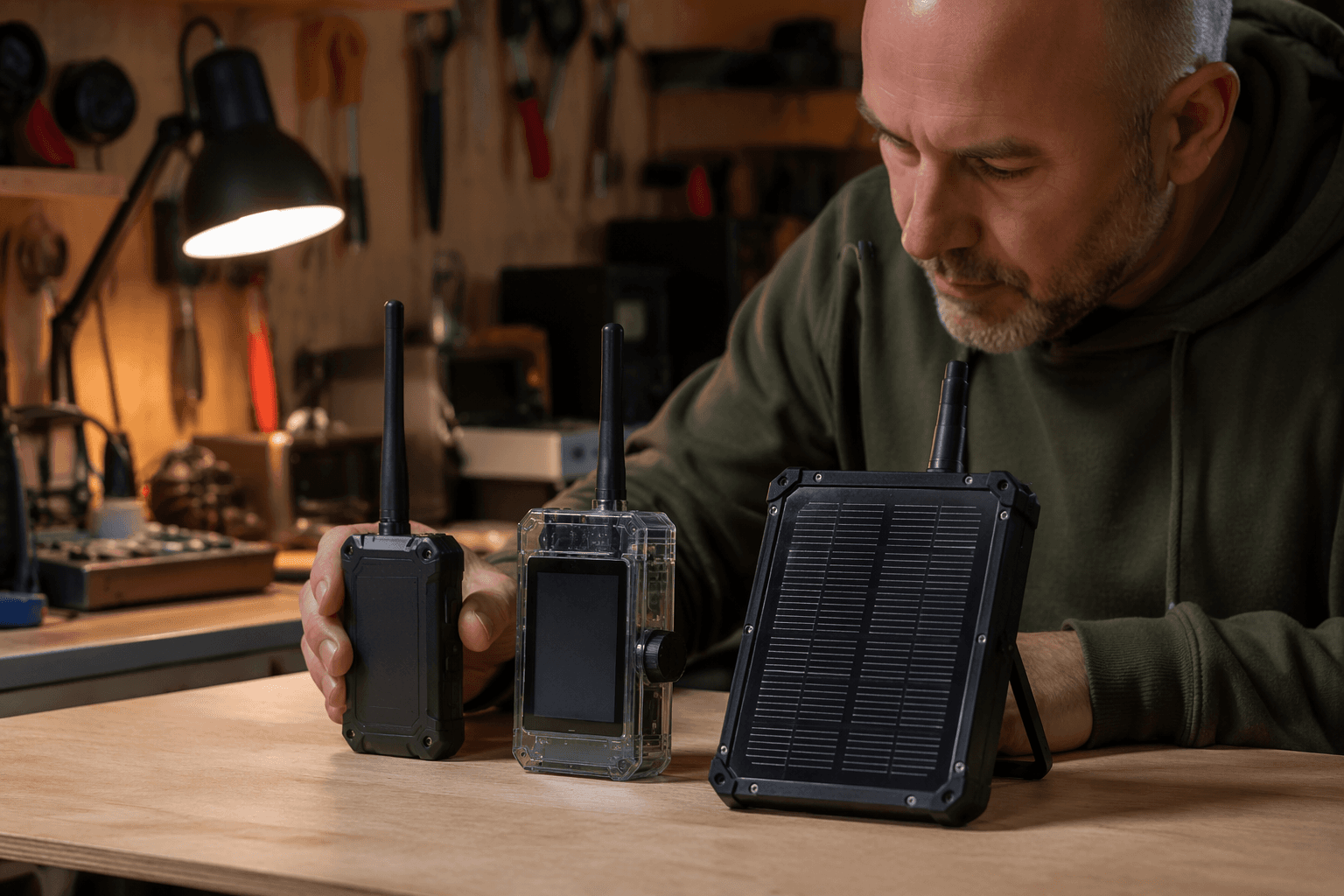
That LCD matters in the real world because screen usability becomes a day-to-day issue once you start using Meshtastic away from a desk. A built-in display can make it easier to check status, confirm links, and manage messaging without relying entirely on the phone, while an external antenna opens the door to better placement and potentially better performance when your location is not ideal.
Dan’s Los Angeles reception example makes this especially relevant. When terrain and elevation can pull in nodes from the Port of Los Angeles to Santa Monica and Seal Beach, the difference between a decent result and a disappointing one can come down to where you place the node and how well the antenna matches the task. The Wio Tracker L1 Pro looks like the kind of device that lets those choices matter more than raw gadget count.
The SenseCAP Solar Node
The SenseCAP Solar Node is the most purpose-built of the three, and its role is clear from the start: this is the one meant to live outdoors as a fixed solar base station. That changes the entire evaluation. Instead of asking how easily it slips into a pocket, the questions become power behavior, long-term placement, and whether a node can stay in service without constant attention.
That makes it the most interesting piece for anyone thinking beyond a weekend outing and toward a more permanent mesh presence. A solar node is about persistence as much as range, because a fixed installation can keep relaying messages long after a mobile unit would have been switched off, forgotten, or drained. It is also where antenna practicality becomes more than a convenience, since an outdoor base station can be positioned for cleaner sightlines and better coverage than a handheld or phone-tethered unit.
Dan’s larger point is that Meshtastic is valuable precisely because it works when infrastructure does not. The app pairing, the airplane-mode test, and the cross-phone messaging between Android and iPhone with cellular and Wi-Fi disabled all point to the same operational outcome: a small mesh can replace the missing layer when the network you normally depend on is gone. Summer field testing will decide which of these three Seeed devices is best suited to that job, but the opening benchmark is already set by a hilltop, a 900 MHz mesh, and a network that proved it could stretch from the harbor to the coast without a tower in sight.
This article was produced by Prism’s automated news system from verified source data, official records, and press releases, then run through automated quality and moderation checks before publishing. The system is built and supervised by the people who set the standards it runs under. Read our full AI policy.
Did this article answer your question?