Meshtastic encryption evolves with public-key security for off-grid messaging
Meshtastic locks payloads with AES256-CTR and per-channel keys, but headers, metadata, and bad key handling still leave real gaps.
LoRa payloads in Meshtastic use AES256-CTR and a different key for each channel, while the packet header stays in the clear so nodes can relay traffic they cannot decrypt. The newer public-key work in v2.5 adds identity and shared-secret machinery, but the practical question stays the same: what gets protected, what stays visible, and where your own setup can undo the benefit.
What Meshtastic actually encrypts
In Meshtastic, a channel is not just a chat room label, it is a security boundary. If you share the same channel configuration and keying material, you can participate in that channel; if you do not, you cannot read the payload. That is a concrete, useful model for off-grid messaging, especially when you are trying to keep trail check-ins, group logistics, or short operational notes private from everyone else on the mesh.
In the Meshtastic blog archive under 2025, Jonathan Bennett and Crichton describe the project in "Meshtastic Encryption: Evolving from Simple Messaging to a Versatile Solution" as beginning as a way to keep hiking buddies connected outdoors when cell service was unavailable, then growing through community contributions into Search and Rescue operations, off-grid communications, and community resilience use cases. Virginia Peninsula Mesh reposted that piece on September 13, 2024.
Why the public-key shift matters
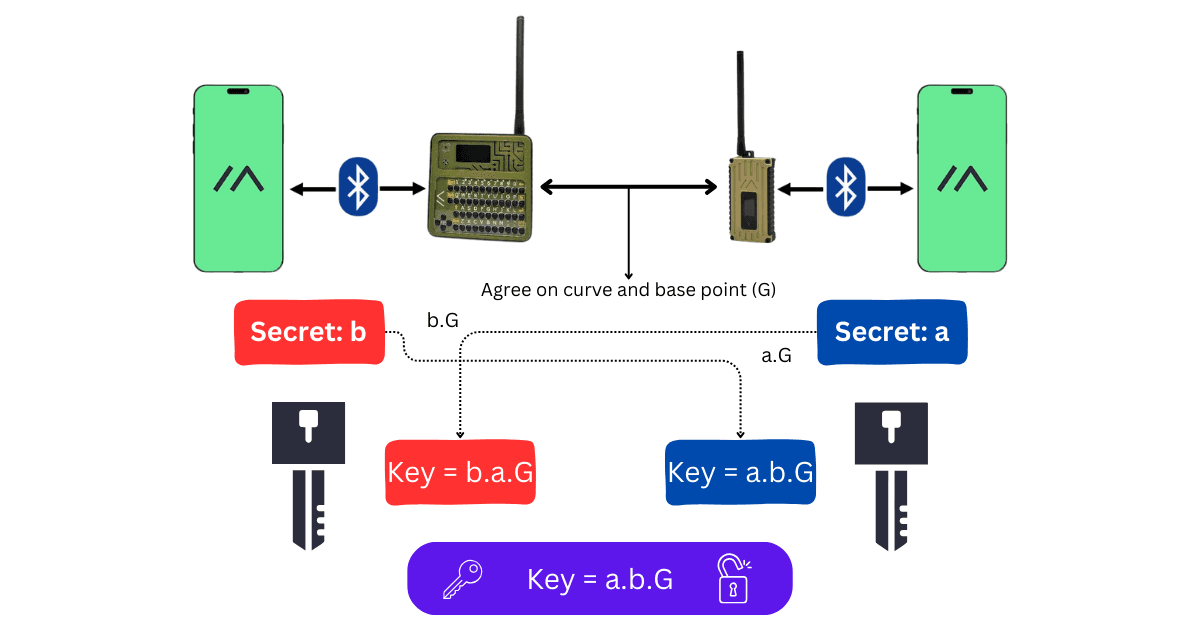
Meshtastic v2.5 is the point where the project moved beyond simple shared-channel secrecy and toward public-key cryptography. It changes the trust model: you are no longer relying only on a shared channel secret to keep traffic private, you are also dealing with cryptographic identity and secure shared-secret setup between devices.
The security configuration lists Public Key, Private Key, Admin Key, Is Managed, Serial Console, Debug Logs, and Admin Channel. A device’s public key is shared with other nodes so they can compute a shared secret key for secure communication. In practice, that means the sensitive material is not just the message text itself, but also the keys and control paths that decide who can talk, who can administer, and who can inspect the device.
What encryption does not protect
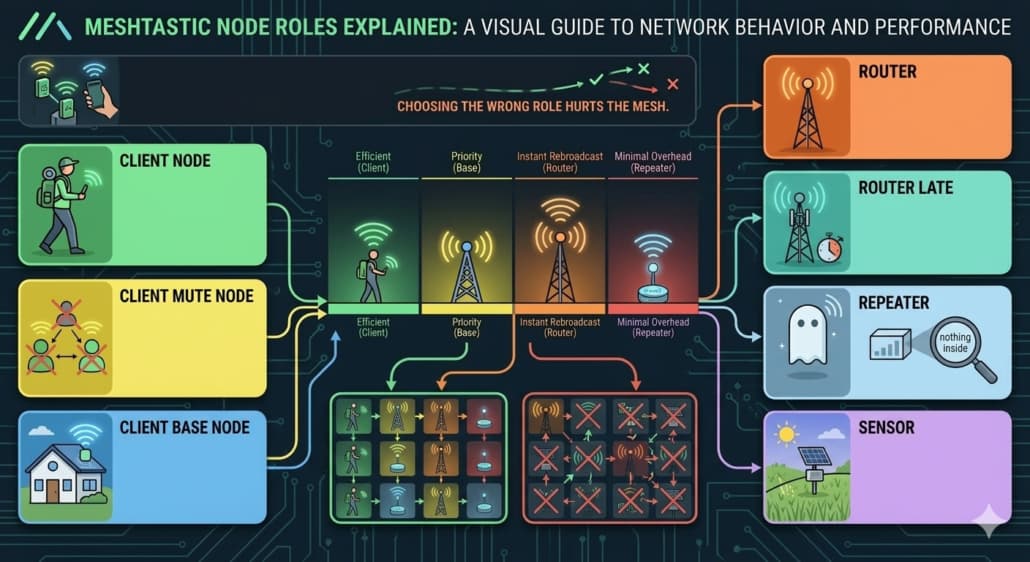
Meshtastic does not hide everything about a transmission. Clear packet headers let the mesh forward packets even when a node cannot decrypt the payload, and a different rebroadcast mode can disable that relay behavior.
The other common mistake is operational, not cryptographic. The default setup uses one primary channel, so if you leave devices on the same default channel, share keys too broadly, or mix up channel roles, you can undercut the privacy you thought you had. Channels are effectively the encryption boundary, so sloppy channel management is the fastest way to leak access.

Physical compromise sits outside the protection model too. If someone gets the device, the keys, the serial console, or enough debug output, encryption stops being your main defense. Admin Key, Serial Console, Debug Logs, and Admin Channel sit alongside the cryptographic settings because device administration is part of security.
Firmware version is part of security
Meshtastic’s security story is also tied to release cadence. The 2.6 preview called the release "1.5 years in the making" and included a new UI for standalone devices, Meshtastic UI, plus an all-new routing algorithm for direct messages.
The firmware itself has had real cryptographic problems. A GitHub security advisory titled "Repeated Public/Private Keypairs" exists for meshtastic/firmware, and a June 2025 warning told users on firmware 2.5.0 and above to update to 2.6.11 or later because a critical cryptographic flaw could let attackers read private messages and take control of devices.
A practical decision checklist
Use Meshtastic’s built-in security when your goal is straightforward off-grid privacy inside a known group and you can control the devices end to end:
- You trust the people who share the channel.
- You can keep firmware current.
- You mainly need to keep payloads private from outsiders, not hide every trace of the transmission.
Add extra opsec when the risk includes lost hardware, curious admins, exposed logs, or careless key sharing:
- Lock down physical access to nodes.
- Treat serial console access and debug logs as sensitive.
- Keep admin settings and channel roles tight, especially on shared gear.
This article was produced by Prism’s automated news system from verified source data, official records, and press releases, then run through automated quality and moderation checks before publishing. The system is built and supervised by the people who set the standards it runs under. Read our full AI policy.
Did this article answer your question?