Galveston solar Meshtastic node survives outdoor deployment challenges
A Galveston node swap shows why outdoor Meshtastic is a maintenance game: the battery failed, rust showed up, and painted brackets plus zip ties kept the relay alive.

After months outdoors, the original SpecFive relay battery failed, and the Galveston install was rebuilt around a compact Seeed Studio P1 solar node. Rust fixes, painted brackets, and zip ties turned a promising radio into something that can keep working in weather.
What failed first: the battery, not the radio
The key detail in the Galveston case is the failure mode. The relay did not die because Meshtastic itself stopped making sense, and it did not fail because the local network disappeared. The weak link was the original SpecFive relay battery. In most “it worked fine until I mounted it outside” stories, power hardware ages before the RF side does.
Swapping in a compact Seeed Studio P1 solar node reframed the whole deployment around long-term survival instead of early convenience. A compact board is easier to place, easier to secure, and easier to package into a weather-aware build. In a real outdoor node, the battery decides whether the relay stays on the air through heat, moisture, and dead-calm weeks when solar input is inconsistent.
Why the physical build matters as much as the packet path
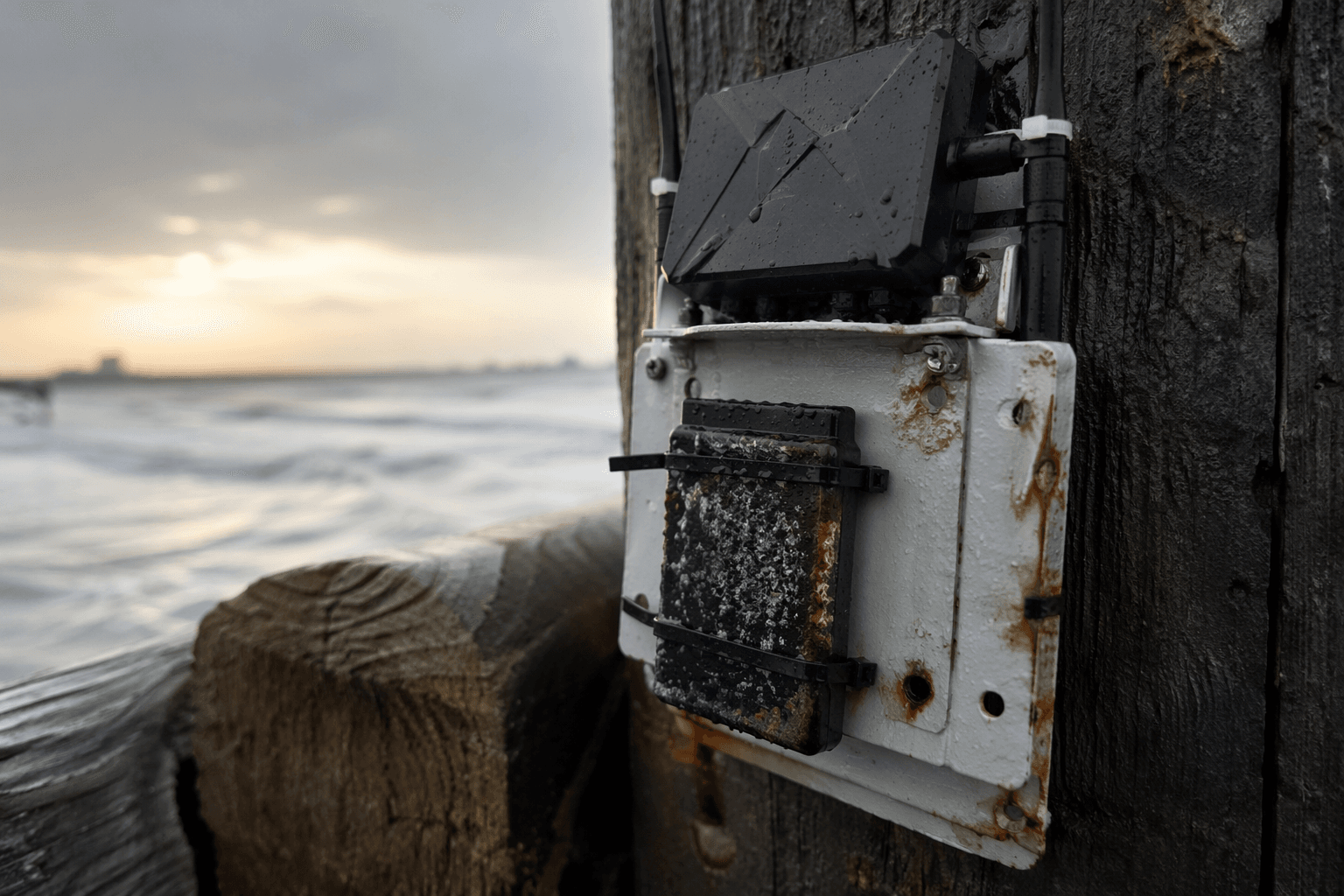
The post mentions rust issues, and corrosion is never just cosmetic on a rooftop or coastal install. Rust attacks fasteners, brackets, and any part of the mount that depends on a clean mechanical grip, and once the physical retention weakens, the radio becomes a future teardown instead of an always-on node.
The fix was practical rather than glamorous: painted brackets and zip ties. That combination sounds almost too simple, but it is exactly the kind of maintenance move that separates a permanent node from a temporary experiment. Paint slows down corrosion on exposed metal, while zip ties add cheap retention that can keep a lightweight install from shifting, loosening, or rattling itself apart in the weather.
For a bench build, you can get away with a tidy board, a battery, and a quick test on a desk. For a rooftop relay, a trail node, or any solar station that has to survive coastal air, the physical layer becomes the first real system to manage. Mounting quality, weatherproofing, and basic retention decide whether maintenance is a planned visit or a rescue mission.
The network picture is the payoff, not the decoration
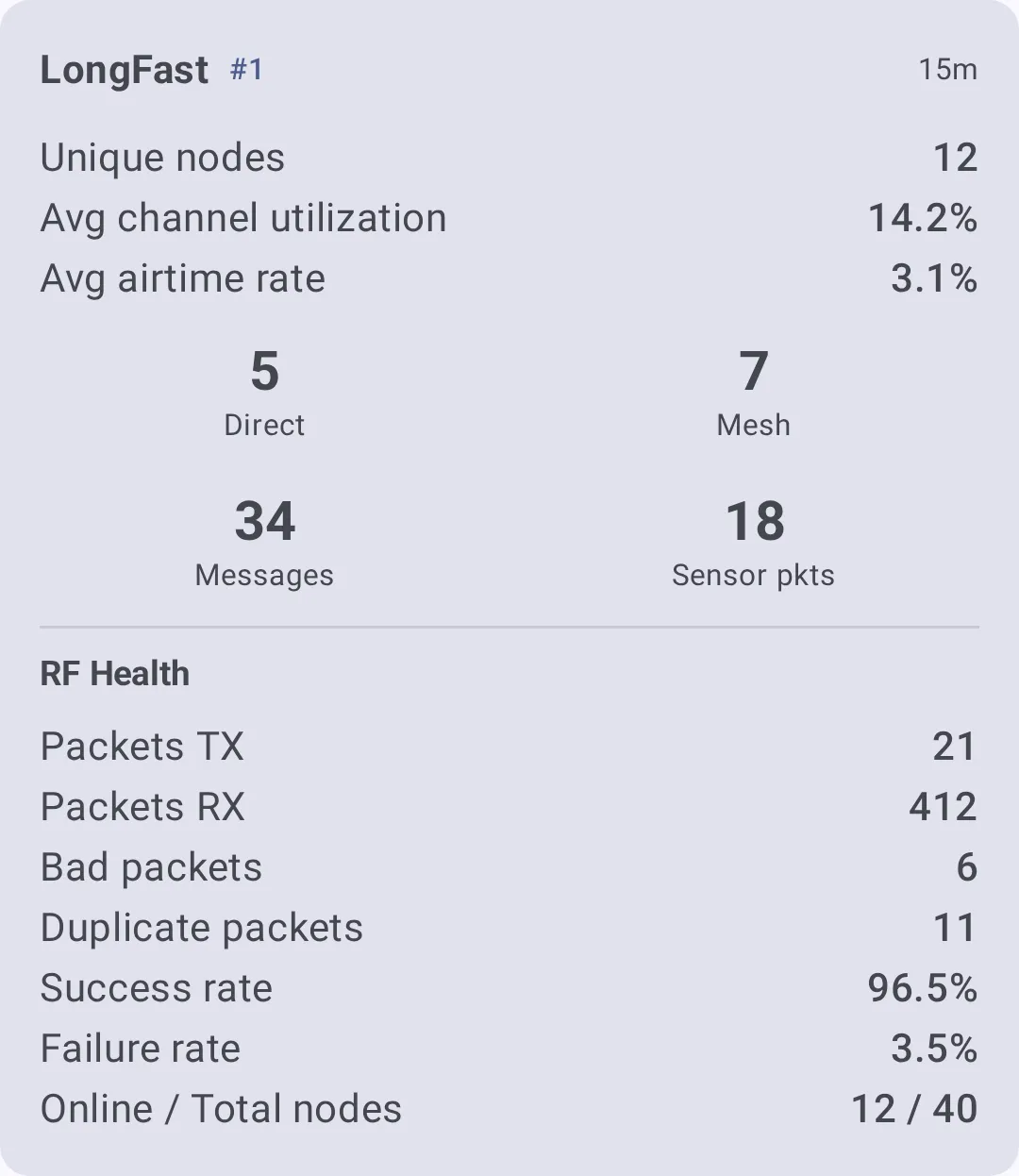
The area showed strong Meshtastic activity and almost no Meshcore nodes, which suggests that the local mesh environment is active enough to make a single outdoor node meaningful. A relay sitting in an urban or coastal zone is taking part in a living local network where placement can shape useful coverage for handhelds, vehicles, and other fixed stations.
In a place like Galveston, a well-placed outdoor node can become part of the route that keeps off-grid messages moving between radios that would otherwise struggle across the local terrain.
The low Meshcore presence also reinforces how local each mesh actually is. A healthy Meshtastic footprint does not automatically translate into a healthy neighboring ecosystem, and that difference can shape what kind of relay build makes sense.
Maintenance intervals are the real design spec
Replacing a failed battery, fixing rust, and securing the mounting hardware are not side notes. They are the schedule. Outdoor Meshtastic builds survive when you assume they will need regular attention, especially after the first few months of exposure.
That changes how you should think about hardware choices:
- Choose a battery and enclosure combination that can outlast a season, not just pass a bench test.
- Treat mounts, brackets, and fasteners as consumables if the site sees moisture or salt air.
- Use paint, retention, and simple physical reinforcement before the first sign of corrosion becomes a failure.
- Expect the node to need field maintenance even if the radio link itself is stable.
A bench build proves that the board powers up and passes packets. A solar node in the wild has to survive weather, corrosion, hardware creep, and the maintenance gaps between visits. The Galveston install needed a battery replacement, rust fixes, painted brackets, and zip ties.
What to copy, and what to avoid
Copy the iterative approach. The Galveston fix was not a grand redesign. It was a sequence of practical moves: replace the failed SpecFive relay battery, move to the compact Seeed Studio P1 solar node, address rust, then tighten the physical installation with painted brackets and zip ties.
Avoid assuming that a working bench setup is ready for outdoor duty. If the node needs to sit in weather for months, then power hardware, enclosure durability, and mounting discipline are not secondary details. They decide whether the node stays online when the season turns rough.
This article was produced by Prism’s automated news system from verified source data, official records, and press releases, then run through automated quality and moderation checks before publishing. The system is built and supervised by the people who set the standards it runs under. Read our full AI policy.
Did this article answer your question?