Meshtastic builders test solar repeater recovery and cheap node enclosures
Two cheap lessons decide whether a solar repeater stays on air: a healthy battery pack and an enclosure build that does not waste money. Seeed’s P1-Pro recovery and the Harbor Breeze hack both point to the same operator truth.
The boring parts are what keep the mesh alive
The best Meshtastic infrastructure stories are not about exotic radios. They are about whether a node survives a windy hilltop, a weak battery, and a solar setup that has to work every day without babysitting. That is exactly what the June 2026 LoRa Mesh archive gets right: it treats repeaters as real deployments, not as paper specs.
One post follows a high-elevation SenseCAP Solar Node P1-Pro repeater that raised the usual field worry list, battery, panel, or charging-controller trouble. Another shows how to keep costs down with a Harbor Breeze solar light enclosure hack, a trick that turns a cheap outdoor light into a housing for a LoRa mesh controller and antenna. Put together, they make the same point from different angles: the mesh usually fails or succeeds on power, packaging, and price, not on hype.
A hilltop repeater that recovered the practical way
The P1-Pro story is the one that every solar repeater operator recognizes immediately. The node lived at a remote, high-elevation site, which means every visit costs time, effort, and a hike that nobody wants to repeat unless the hardware really needs attention. The author had reason to suspect one of four remote repeaters might be suffering from the usual solar-node ailments, especially around the battery, panel, or charging controller.
Instead of guessing from a distance, the fix was physical. The unit was swapped for a spare, then the original got a simple charge-cycling treatment. That was enough to bring the repeater back to healthy charging behavior, which is the kind of result that matters far more than a lab-perfect reading ever will. The quiet headline here is that the battery system survived real deployment conditions well enough to recover, and the author came away with a very practical conclusion: Seeed appears to use very good batteries in that product.
That detail matters because solar repeaters are often judged by the radio first. In the field, the radio is usually the easy part. The hard part is whether the power system can tolerate weather, downtime, and a site that is inconvenient enough to make every repair expensive.
The Harbor Breeze enclosure hack is really about spending less on the right things
The second post is even more operator-friendly because it solves a familiar problem with an off-the-shelf shell. The Harbor Breeze Solar Light Enclosure Hack starts with a cheap 60-lumen solar outdoor light from Lowe’s, then strips out most of its internals and reuses the enclosure, solar panel, and light-ready shell as a housing for a LoRa mesh controller and antenna. It is a very Meshtastic move: buy commodity hardware, remove what you do not need, and keep the parts that make deployment easy.
The original version of the hack uses a RAK WisBlock controller that costs around $32. The revised version uses a Seeed Wio controller that costs around $14 when bought directly from Seeed. That price gap is the whole game. If you are trying to cover more ground with repeaters, shaving almost half the controller cost can be the difference between building one node and building several.
The enclosure itself is doing just as much work as the controller. Repurposing a solar lamp gives you a weather-ready shell, a panel, and a physical form factor that already makes sense outdoors. That keeps the build simpler and reduces the number of custom parts you have to source, seal, or fabricate.
Why this is a credible repeater path and not just a maker trick
This is where the archive stops being cute and starts being useful. In Meshtastic and related LoRa mesh projects like Meshcore, the enclosure, battery, and solar subsystem can matter just as much as the radio module. A cheap controller is not enough if the node leaks, overheats, or spends all its life starving for charge. A strong enclosure is not enough if the battery chemistry is poor or the charge controller is flaky.
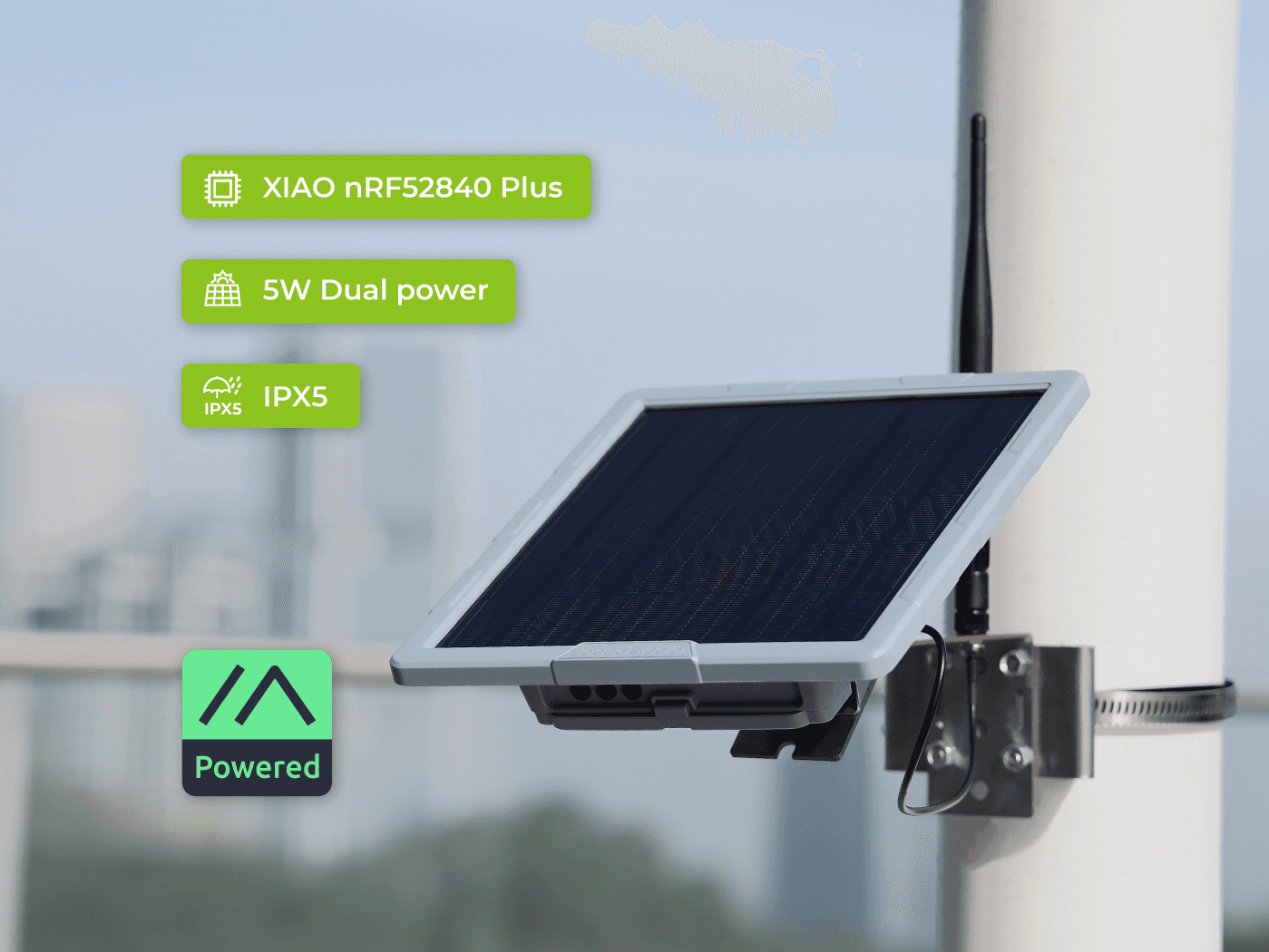
The archive’s larger message is that robust deployments are won by mundane details. Battery chemistry, charge controllers, and enclosure hacks are what decide whether a node stays on the air. That is especially true for remote nodes, hilltop relays, and solar-backed coverage extenders, where a single bad component can turn a clever build into a dead box on a pole.
What makes the Harbor Breeze path credible is that it lowers the cost of experimentation without pretending the build is magic. If the shell, panel, and controller are all chosen with field use in mind, you get a cheaper route to coverage expansion. If they are chosen casually, you just create a cheaper failure.
What to take from the two builds
The P1-Pro recovery and the Harbor Breeze enclosure hack point to the same operational mindset. First, assume the power system deserves as much scrutiny as the radio. Second, treat cost savings as a way to deploy more coverage, not as an excuse to cut corners on the parts that keep the node alive. Third, favor builds that are easy to service, because remote mesh infrastructure only pays off if you can actually maintain it.
For builders working on solar repeaters, the practical order of operations is clear: 1. Verify the battery and charging behavior before blaming the radio. 2. Use enclosures that already suit outdoor deployment. 3. Spend where it counts, and save where the enclosure or controller can be simplified.
That is why these June notes land so well. They are not selling a fantasy of elegant mesh architecture. They are showing what it takes to keep a repeater alive when the site is remote, the weather is real, and the difference between a $32 controller and a $14 controller determines how far the mesh can spread.
This article was produced by Prism’s automated news system from verified source data, official records, and press releases, then run through automated quality and moderation checks before publishing. The system is built and supervised by the people who set the standards it runs under. Read our full AI policy.
Know something we missed? Have a correction or additional information?
Submit a Tip