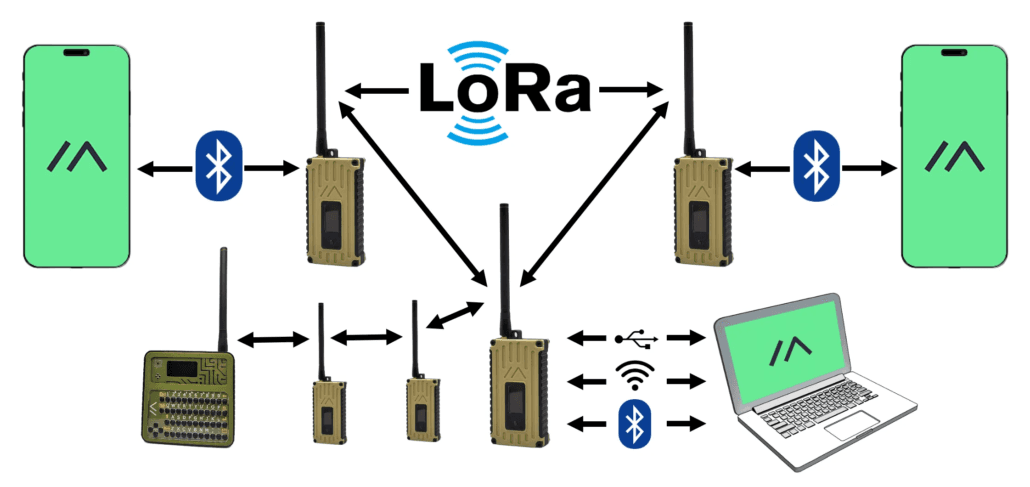
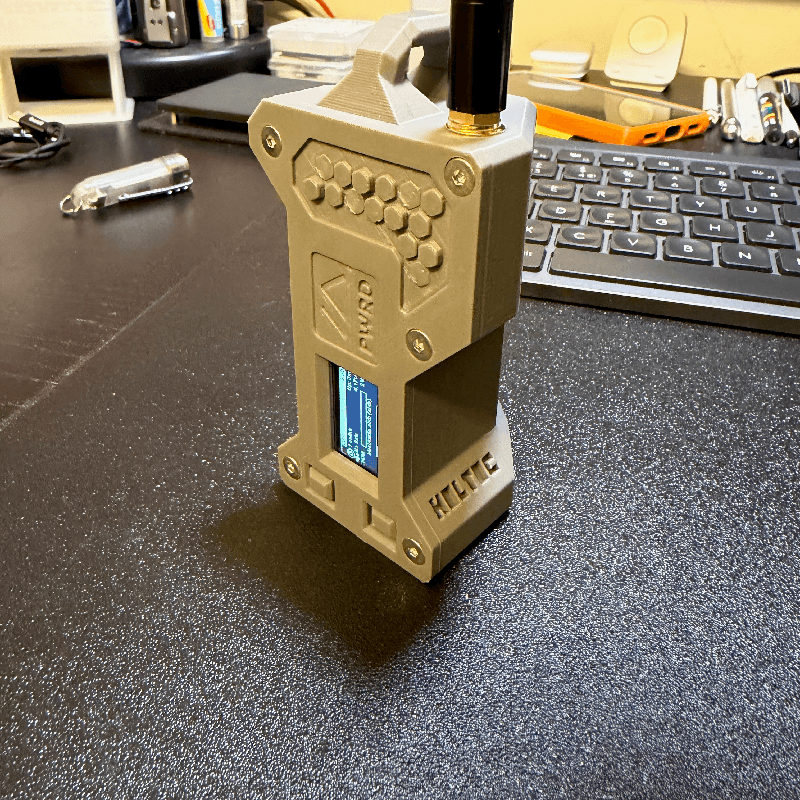
Meshtastic MQTT remains tricky, even after client proxy improvements
Meshtastic’s MQTT path still demands careful setup, while Flaresat’s relay trims it to a fast bridge, but it trades deep control for simplicity.
Meshtastic still makes you work to get radio traffic onto the internet, and that friction is the whole story. The official MQTT path can do the job, but it asks for broker choices, channel rules, security decisions, and a lot of troubleshooting before packets actually move the way you expect.
What the old MQTT path really asks you to do
The traditional setup starts with enabling the MQTT module, then pointing the radio at a broker and deciding which channels are allowed to uplink and downlink. Meshtastic’s documentation says one or more channels must be enabled for MQTT traffic to transmit to and from the mesh, so a device can look configured and still remain effectively silent if those toggles are wrong.
From there, the rabbit hole deepens. The module also exposes separate controls for TLS, JSON, root topic, client proxy, and map reporting, which is powerful but easy to misread when you are just trying to get a node online. That is the real source of the frustration: every extra option is a place where a small mismatch can stop the whole bridge from working.
Security is not an afterthought here, either. Meshtastic’s MQTT docs say unencrypted packets are sent to the broker if encryption is not enabled, even when uplink channels have encryption keys. That means the bridge can expose more than people expect if they assume the radio-side key alone is enough protection.
Why the public broker feels constrained
The public MQTT server is not a full mesh-wide relay, and that matters. Meshtastic says the public broker now uses a zero-hop policy, which means traffic from the public broker reaches directly connected nodes but does not fully propagate through the local mesh network. If you expected a single internet injection point to ripple across the whole group, that policy is the reason it stops short.
The project tightened that public path for privacy reasons. Meshtastic removed the ability to subscribe to all topics on its project-hosted MQTT server on August 21, 2024, and explained the change publicly on August 24, 2024, after observing public map data being stored and, in some cases, tracked over time. Meshtastic also said the broker changes reduced MQTT traffic, with more than half of the earlier traffic tied to position reporting.
That is an important signal for anyone trying to use the public broker as a convenient shortcut. It is there to keep the network usable, but it is no longer designed to be a wide-open catch-all for rediscovering everything that flows through the system.
What client proxy improved in firmware 2.3.2
Firmware 2.3.2 did make life easier for radios without built-in Wi-Fi. Client Proxy Enabled lets a node use the client device’s internet connection to reach the MQTT server, which means a phone can become the bridge instead of forcing the radio to carry the burden alone. For a lot of setups, that is the difference between a usable field node and a radio stranded on the wrong side of the network boundary.
Meshtastic also added Map Reporting Enabled starting in firmware 2.3.2, and that feature brings a detailed unencrypted report. The packet can include the node name and ID, position and altitude, hardware model and role, firmware version, LoRa region, modem preset, primary channel name, whether the node can be reached on the default channel with the known key, and the number of local online nodes heard in the last two hours.
There is even a fail-safe in the 2.3.2-era discussions: a zero MQTT map-report interval now falls back to a safe default instead of causing endless data to be sent. That change matters because it shows how easy it is for one bad setting to turn a useful bridge into a noisy one.
Why MQTT still pushes people toward self-hosting
If you want true privacy and better reliability, you often end up running your own broker. Meshtastic’s Mosquitto guide makes the operational cost plain: you need to install the broker, configure it to listen on 0.0.0.0, decide whether to allow anonymous access or manage credentials, and adjust firewalls so Meshtastic devices can reach it. That is before you even deal with uptime, certificates, or the usual server maintenance.
The root topic adds another layer of flexibility, because it can separate multiple networks through ACLs. That is useful when you want different groups to stay isolated, but it also gives you one more place to misconfigure the bridge. MQTT is still the most flexible option in the Meshtastic stack, but it is flexibility with sharp edges.
Where Flaresat’s relay changes the equation
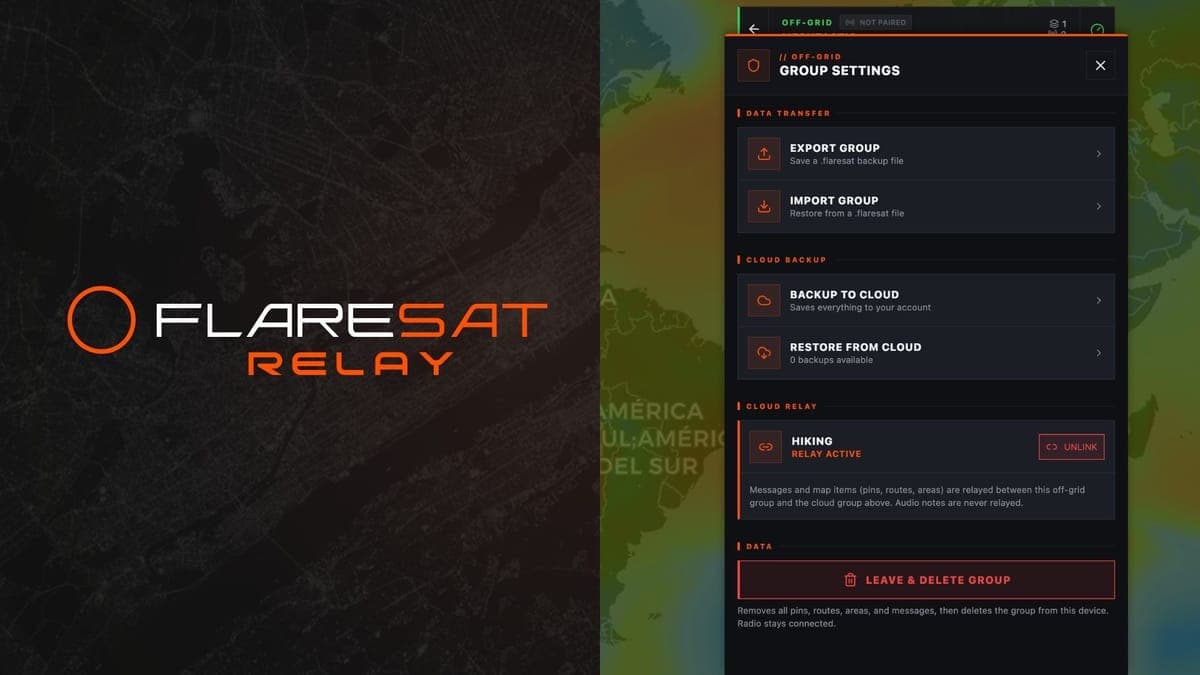
Flaresat’s Relay Bridge is aimed squarely at that friction. Flaresat says Relay connects an off-grid Meshtastic group to a Flaresat cloud group so that messages, pins, routes, and areas sync automatically in both directions. The pitch is simple: use a phone’s internet connection, avoid extra server infrastructure, and get connected in roughly 20 seconds.
That is a very different experience from building an MQTT path by hand. Instead of thinking through brokers, channels, TLS, topics, ACLs, and firewall exposure, you are effectively choosing a prebuilt bridge that handles the path between the mesh and the cloud for you. For users who only need occasional internet reachback, that simplicity is the main attraction.
It also sidesteps one of the most common ways MQTT becomes a project of its own. You are not standing up your own broker, and you are not managing a public-facing Mosquitto instance just to let a few nodes sync with the wider world. For a lot of groups, that is the pain point that matters most.
Who should choose simplicity, and who should keep MQTT
If you want a family mesh, a preparedness group, a search-and-rescue team, or an event network to get online with minimal fuss, the relay model makes a lot of sense. It is especially attractive when you do not want to become the person who maintains a broker, opens ports, and babysits certificates just to keep the link alive.
If you need custom routing, multiple network separation, ACL control, or a deeply tuned bridge, MQTT still wins on flexibility. The official ecosystem gives you the knobs for that, but it also makes you responsible for all of them. That tradeoff has not gone away, even after client proxy improvements in firmware 2.3.2.
Meshtastic’s own direction makes the choice clearer: it is an open-source, community-driven off-grid mesh built on affordable low-power devices, and the networking layer is trending toward safer, more opinionated defaults. Flaresat’s relay removes a lot of the setup pain, but it does not change the underlying truth that MQTT is still the more technical path. For most people, the decision is now simple: take the bridge if you want convenience, or keep MQTT if you want control and are ready to earn it.
This article was produced by Prism’s automated news system from verified source data, official records, and press releases, then run through automated quality and moderation checks before publishing. The system is built and supervised by the people who set the standards it runs under. Read our full AI policy.
Did this article answer your question?