Meshtastic vs MeshCore, real-world tradeoffs for off-grid LoRa meshes
Meshtastic stays the easy button for quick off-grid chat, but MeshCore starts making sense when you need learned routes and more deliberate mesh control.
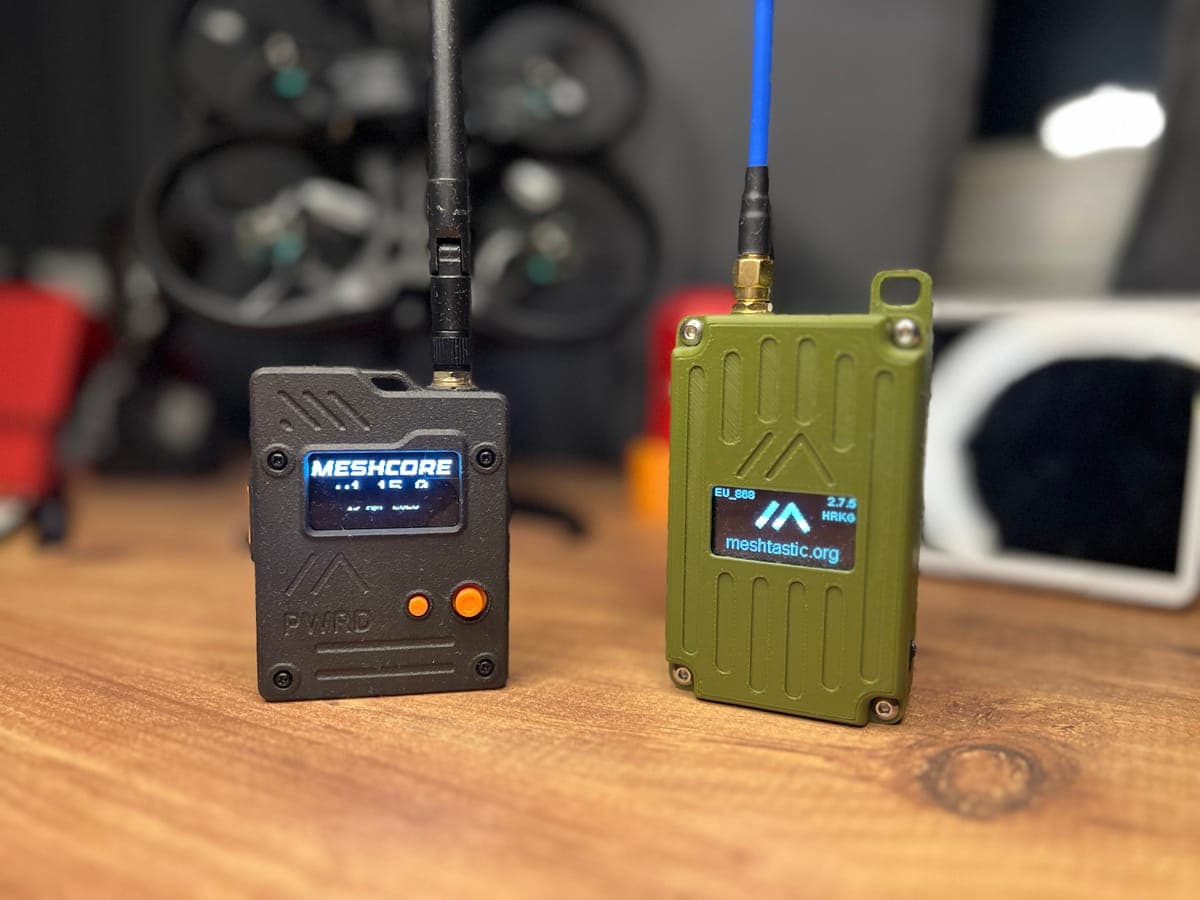
If you are choosing between Meshtastic and MeshCore, the useful question is not which side wins the protocol argument. It is which system gets you on the air fast, and which one gives you more control once the mesh stops being a hobby demo and starts behaving like infrastructure. Adrelien’s comparison, built from time on a Wio Tracker L1 Pro and a SenseCAP T1000-E, lands exactly there.
The split is really about operating style
Meshtastic is still the cleaner fit when you want something open-source, off-grid, decentralized, and built around affordable low-power devices without spending your afternoon on setup. It is 100 percent community-driven and open source, and its docs lean hard into approachable onboarding with a Supported Hardware section and a web flasher for ESP32 devices. That is not just polish, it is a clue about the kind of operator Meshtastic is trying to serve.
MeshCore is aimed at a different kind of job. Its official GitHub describes it as a lightweight, portable C++ library for multi-hop packet routing for embedded projects using LoRa and other packet radios, which already tells you this is less about casual messaging and more about deliberate routing behavior. If you are building something with structure, regions, or repeated paths, MeshCore starts to look like a tool, not just a network.
What Meshtastic gets right
Meshtastic’s big advantage is that managed flood routing keeps the mental model simple. According to its routing docs, that approach removes route discovery overhead and lets devices start messaging immediately after boot, which is exactly what you want when you have a small group, mobile users, or a quick setup scenario. The network is easy to understand because the system does not ask you to think like a router operator before you send your first packet.
That simplicity still matters even as Meshtastic has evolved. Since version 2.6, direct messages use next-hop routing while broadcasts still use managed flooding, so the platform has already added more route-aware behavior where it helps most. In practice, that means Meshtastic is not frozen in a pure flood-only past, but it still keeps the broad, forgiving behavior that makes it feel immediate.

The scale story backs that up too. Meshtastic’s 2025 DEF CON post said the deployment was the second event-specific firmware rollout, and attendees reportedly saw more than 2,000 nodes connected. That is a serious proof point for a community project, but Meshtastic also notes the catch that shows up on constrained hardware: under heavy load, old nodes can cycle out of the node database. If you push a small device too hard, the network may stay up while the bookkeeping starts to age out.
Where MeshCore earns its keep
MeshCore is more opinionated about how traffic moves, and that is the point. The comparison here is not that it floods less for the sake of elegance, but that it floods once to find a route, then prefers to send traffic along that learned path until something breaks. When the route fails, it falls back to flooding again. That shifts how much air time gets burned, how much planning you need, and how much control you have over the mesh.
That routing style is why MeshCore makes more sense for larger, more structured regional infrastructure. If you are thinking in terms of repeaters, corridors, or a mesh with a clearer physical shape, a learned path can be a better fit than constant broadcast-style chatter. It is less forgiving than Meshtastic in the casual sense, but it can be more disciplined about where packets actually go.
MeshCore also looks like a project that is actively filling out its user-facing side. Its companion app is available on Android, iOS, macOS, Windows, Linux, and web, which matters because a routing engine is only useful if people can actually operate it. The project’s June 6, 2026 1.16.0 release also shows current development rather than a stalled experiment.
Hardware and stability change the answer
This is where the practical decision stops being abstract. Adrelien’s comparison is grounded in real hardware, and that matters because a Wio Tracker L1 Pro and a SenseCAP T1000-E are not lab curiosities, they are the kind of devices that expose how a mesh behaves when the battery, memory, and radio all have to cooperate. Meshtastic’s easier onboarding and broad hardware support make it a less painful place to start when you want working nodes now.
MeshCore asks for a little more confidence that your topology is worth the extra intent. The project’s newer status is part of that story, and so is the fact that its own blog post about the split names Scott, Liam Cottle, Recrof, FDLamotte, and Oltaco as the current team. That gives the ecosystem a clearer human shape, but it also reminds you that the project is still defining itself while Meshtastic has had since 2019 to settle into a mature community rhythm.
How to choose without turning it into a culture war
If your priority is quick off-grid communication, portable nodes, and a system that gets out of your way, Meshtastic is the safer bet. Its managed flooding, immediate post-boot messaging, broad hardware support, and web flasher make it the more turnkey option, especially for small groups and mobile use. If your priority is a mesh with more deliberate routing, more structured paths, and a design that rewards planning, MeshCore is the sharper tool.
The important part is not to treat this like old versus new. Meshtastic is already adding route-aware behavior for direct messages, while MeshCore is still building out the layers around its routing core. The real choice is between a platform that favors simplicity and broadcast-friendly resilience, and one that favors learned paths and operator control. If you want the mesh to feel like a radio network, Meshtastic still makes that easy; if you want it to feel like something you have shaped on purpose, MeshCore is where that conversation starts.
This article was produced by Prism’s automated news system from verified source data, official records, and press releases, then run through automated quality and moderation checks before publishing. The system is built and supervised by the people who set the standards it runs under. Read our full AI policy.
Know something we missed? Have a correction or additional information?
Submit a Tip