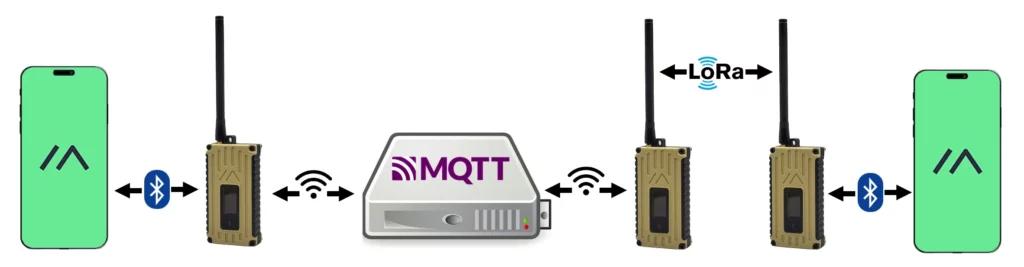
Tiny Meshtastic node pairs Seeed XIAO ESP32S3 with Wio SX1262
A thumb-sized XIAO plus Wio SX1262 keeps Meshtastic truly compact without giving up a real radio path. It is a strong pick for discreet nodes, travel kits, and simple fixed installs.
Why this tiny pairing matters
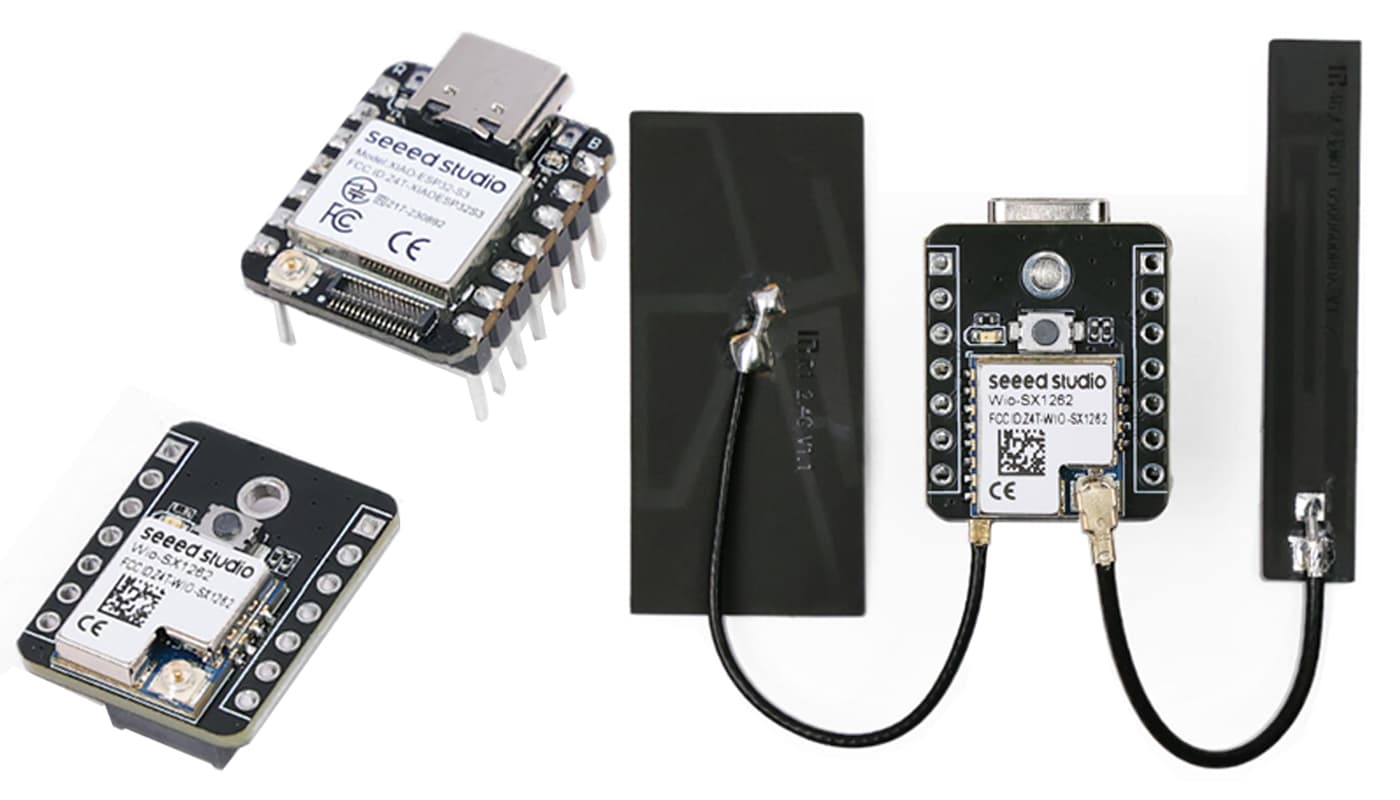
If you want a Meshtastic node that stays genuinely small, this XIAO ESP32S3 plus Wio SX1262 combo is aimed right at that gap between a bare prototype and a bulky handheld. The appeal is not just that it is compact, but that it keeps the compute board and the LoRa radio separate, which makes the build feel modular instead of locked into one appliance-style shape.
That matters because Meshtastic is built around affordable, low-power devices, and this kit leans into that philosophy without forcing you into a bigger dashboard node or a chunky all-in-one enclosure. For a first custom build, the benefit is immediate: you can plan around enclosure size, battery placement, antenna routing, and accessory expansion instead of solving around a fixed shell.
What the kit actually gives you
Seeed positions the XIAO ESP32S3 & Wio-SX1262 Kit as a thumb-sized starter kit for Meshtastic and LoRa projects, and that is the right mental model. The XIAO ESP32-S3 board measures 21 x 17.8 mm, uses a dual-core Xtensa processor running up to 240 MHz, and supports Wi-Fi and BLE 5.0. It also reaches deep sleep power consumption as low as 14 A, which is exactly the kind of number that makes a tiny battery-powered mesh node feel practical instead of theoretical.
The Wio-SX1262 side brings the radio. It is based on the Semtech SX1262 chip, and Seeed sells variants for EU868 and US915 as well as 433 and 470 MHz bands. The module includes an onboard IPEX antenna connector and a TCXO, and the kit supports Wi-Fi, BLE, and LoRa while adding a built-in power-management chip plus I²C, UART, and GPIO expansion.
The practical sweet spot
This is not the kind of node you buy because you want every bell and whistle on the table. You buy it because you want the smallest sensible build that still feels like a proper Meshtastic device, with enough radio integrity to be useful in the field. Seeed says the kit can support 2 to 5 km single-channel LoRaWAN and Meshtastic communication, which gives it enough reach for a discreet tracker, a travel kit node, or a simple fixed deployment in a home, cabin, workshop, or vehicle.
The size advantage is the story here, but the real win is that the small board does not force you into a fake compromise. A lot of compact builds end up cutting corners on radio layout or power handling. This one keeps the radio path explicit, and that makes it easier to think like a Meshtastic builder instead of just a gadget buyer.
A good quick decision lens looks like this:
- Choose it if you want a small node that still leaves room for a real antenna setup.
- Choose it if you prefer modular parts and custom enclosures over a finished handheld shell.
- Choose it if you want a light travel node, a discreet field unit, or a minimal fixed installation.
- Skip it if you want the simplest possible out-of-box appliance with no pin mapping or firmware care at all.
The tradeoffs are real, but manageable
The biggest tradeoff in a build this small is that antenna choice and placement matter more, not less. The Wio-SX1262 uses an IPEX antenna connector, so you are not dealing with an abstract radio block hidden inside a larger product. That is good for flexibility, but it also means you need to think carefully about enclosure material, antenna routing, and where the node will actually live.
Power is another place where the tiny format helps, but only if you use it intentionally. The XIAO ESP32-S3’s low deep-sleep draw makes it a strong fit for battery use, and the built-in power-management chip reinforces that. Still, this is most compelling when you are building for low duty cycle use, not when you are trying to make a tiny box behave like a high-traffic dashboard node.
Assembly difficulty and the hidden gotcha
For a modular Meshtastic build, the hardware is approachable, but not entirely plug-and-play. Seeed says the kit can be paired with GNSS modules and other accessories through GPIO, which is a big reason makers like it. That expansion path is what turns a small starter kit into a purpose-built tracker or field node.
The caution is in the pin mapping. Meshtastic’s hardware documentation warns that the Wio-SX1262 module in this kit does not share the same pin configuration as the Wio-SX1262 module shipped with the XIAO nRF52840 kit. If you mix modules across kits, you may need custom firmware with the correct pin definitions. That is not a flaw so much as the cost of modularity, but it is the kind of detail that decides whether a build feels elegant or frustrating.
There is also an update-path warning worth taking seriously. Seeed’s wiki says customers who bought the XIAO ESP32S3 & Wio-SX1262 Kit before October 24, 2024 should flash firmware using the provided tutorial, and should not use NRF-OTA updates because they may make the device unusable. For a small, low-footprint node, the firmware path is part of the build, not an afterthought.
Who this build suits best
- discreet field nodes
- travel kits
- lightweight trackers
- simple fixed nodes where space matters more than a big screen or handheld ergonomics
This is the right kind of hardware when you want Meshtastic to disappear into a pocket, a case, or a corner of a deployment without turning into a compromise-heavy science project. It fits especially well in:
It also fits builders who already think in modules. The separation of MCU and radio makes the build easy to reason about, and that is a big reason this pairing feels more practical than many bulkier handheld-style nodes for small-space projects. Seeed’s close work with the Meshtastic community reinforces that this is meant to be a usable community platform, not just a parts bundle.
The tiny XIAO plus Wio SX1262 combination earns its place by solving the smallest practical entry point problem without pretending size does not have consequences. If you want a Meshtastic node that is easy to tuck away, still has a real radio path, and leaves room for a custom enclosure, this is one of the cleanest low-footprint builds to copy right now.
This article was produced by Prism’s automated news system from verified source data, official records, and press releases, then run through automated quality and moderation checks before publishing. The system is built and supervised by the people who set the standards it runs under. Read our full AI policy.
Know something we missed? Have a correction or additional information?
Submit a Tip