14th-century gold ring found by detectorist goes on display in Rugby
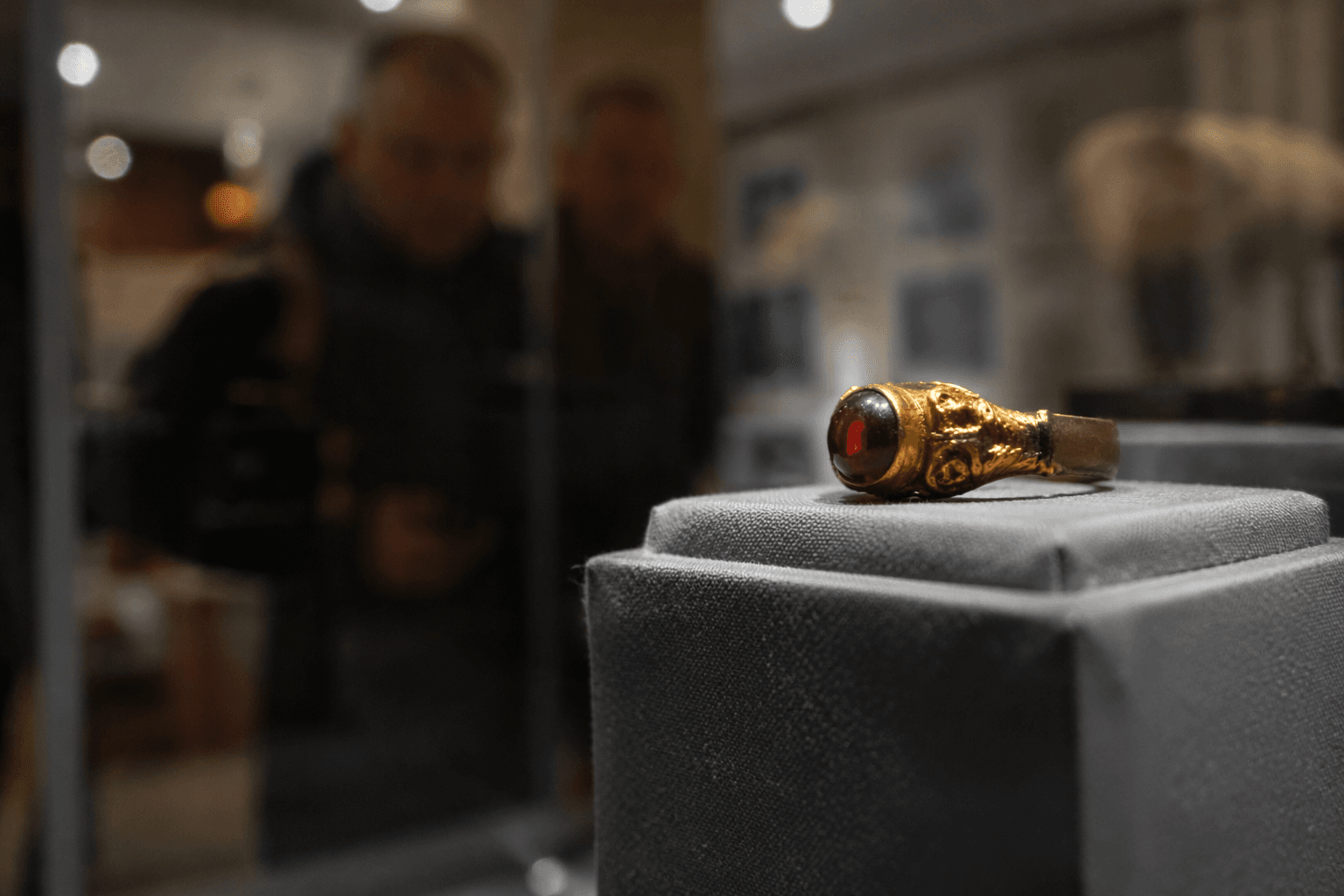
A detectorist’s gold ring from Bourton and Draycote is now in Rugby’s archaeology gallery, with its red cabochon stone still set in place.

Rugby Borough Council put a 14th-century gold finger ring on display at Rugby Art Gallery and Museum, turning an October 2023 detector find into a public exhibit in the archaeology-now section. The ring, discovered in Bourton and Draycote, was recorded through the British Museum’s Portable Antiquities Scheme and declared treasure because of its age and precious-metal content.
The Portable Antiquities Scheme record describes the object as a complete medieval gold finger ring set with a single red cabochon gemstone, dating broadly to c. AD 1200-1400. The council’s own material identifies it as 14th-century, and the ring’s details make the date feel grounded rather than abstract: an oval bezel holds a dark red cabochon stone, while the shoulders are decorated with small panels of horizontal, incised grooves.
Rugby Borough Council said the ring had been buried long before the original St Andrew’s Church was built, which places the find inside a medieval landscape of movement rather than a one-off loss. That matters in a detecting context because it turns a good signal into evidence. A single gold ring from a Warwickshire field can help map how people moved through the area, what they carried, and where traces of daily life still survive below ground.
The display also shows the route a find can take when the paperwork is done properly. A detectorist makes the recovery, the Portable Antiquities Scheme creates the record, treasure procedures are followed, and the object can move into museum display instead of disappearing into storage or a private collection. For the hobby, that is the cleanest outcome: the find stays tied to a place, a date, and a documented history that other people can actually see.
Rugby Art Gallery and Museum is a working local venue, not just a display case. Council information says it hosts the Rugby Collection of modern art and regular exhibitions, and the museum’s 25th-anniversary coverage said it had welcomed more than 1.5 million visitors and educated more than 50,000 school pupils. That makes the ring part of a broader heritage programme, where one medieval object can speak to school groups, casual visitors, and detectorists who know exactly how much work it takes to get a find from the ploughsoil to a label.
The ring’s journey from Bourton and Draycote to Rugby’s archaeology gallery is the real story here. The gold still catches the eye, but the afterlife of the find is what gives it lasting value.
This article was produced by Prism’s automated news system from verified source data, official records, and press releases, then run through automated quality and moderation checks before publishing. The system is built and supervised by the people who set the standards it runs under. Read our full AI policy.
Did this article answer your question?