Melsonby Hoard reveals Britain’s largest Iron Age metalwork cache
A steady signal near Melsonby became Britain’s largest Iron Age metalwork cache because the finder reported it and let archaeologists do the digging.
A steady signal in a North Yorkshire field turned into the Melsonby Hoard only because Peter Heads stopped, listened, and reported what he found. That one decision converted a likely pile of scrap into Britain’s largest known Iron Age metalwork cache, a discovery that now sits at the center of how detectorists talk about best practice.
The beep that changed the map
Heads, an amateur metal detectorist, first encountered the hoard in late December 2021 near Melsonby, North Yorkshire. He had the landowner’s permission, and instead of digging the whole thing out himself, he reported the find and left the recovery to archaeologists. That choice is the difference between a story that disappears into the black market and one that can rewrite the record.
Durham University later excavated the site in 2022 with advice from the British Museum and support from Historic England. Historic England says it contributed more than £120,000 in grant funding to the excavation, which is the kind of backing that lets a serious signal get treated like the major site it is. From that point on, the object was no longer just a detector hit. It was a controlled archaeological recovery.
What came out of the ground
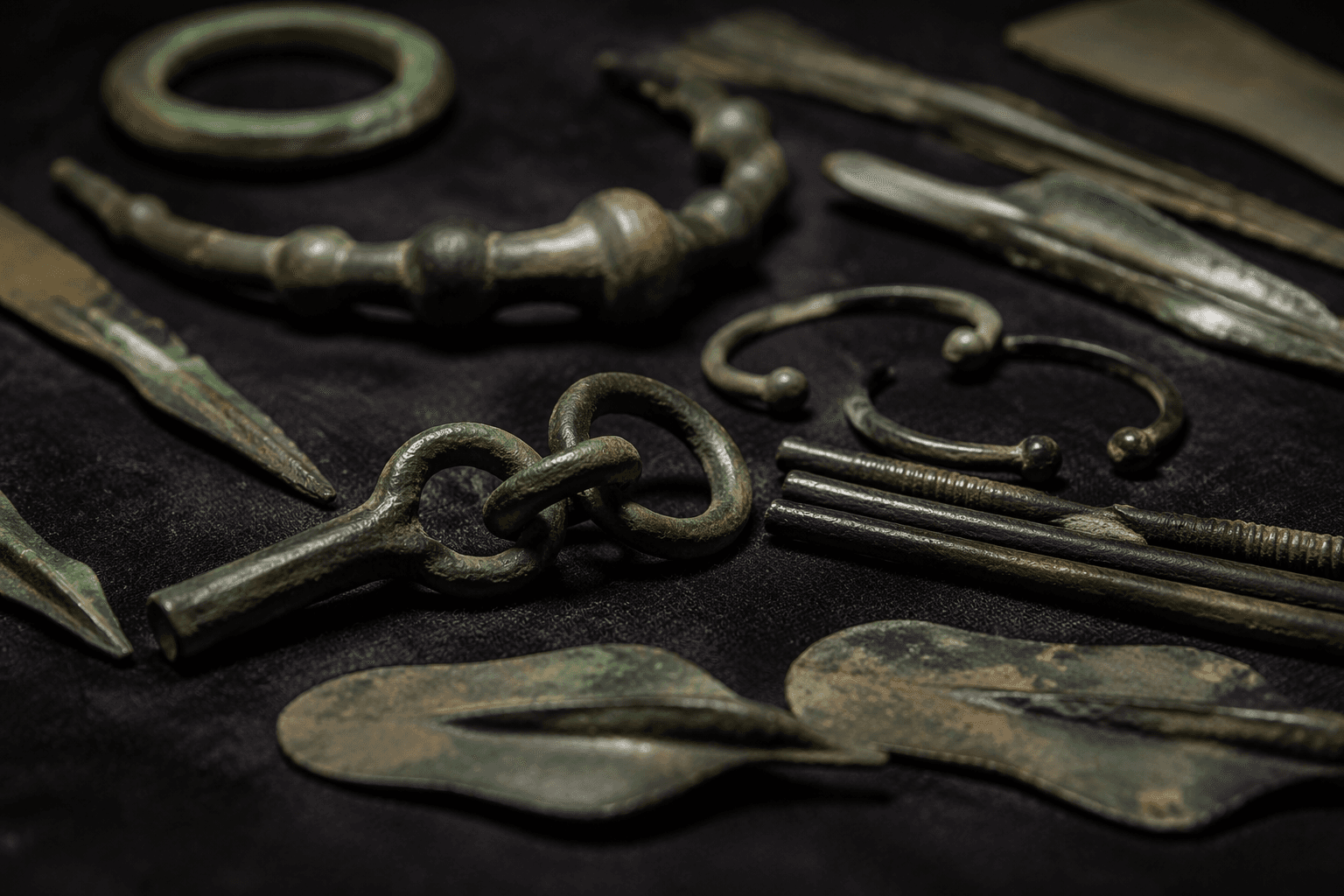
The scale is what sets Melsonby apart. The hoard has been described as the largest hoard of Iron Age metalwork ever found in Britain, and Durham’s later overview says the deposit may contain almost 950 items. Even the lower count, more than 800 objects, would be exceptional. This was not a lone brooch or a scattered pocketful of fragments. It was a mass of high-status material with enough variety to tell a story about how Iron Age power was displayed and buried.
The assemblage includes evidence for vehicles, horse harnesses, weapons, and vessels. York Museums Trust says the group includes 28 iron tyres, two vessels, elaborate horse harnesses, bridle bits, and ceremonial spears. Durham also notes pieces connected to feasting, display, transport, and warfare, including pony harness fittings, wagon or carriage components, decorative spears, cauldrons, and other elite metalwork. Taken together, those are not the contents of a random rubbish pit. They are the gear of status, movement, and ceremony.
Why the context matters more than the metal
The real story at Melsonby is not just that metal was found. It is how the material was recovered, dated, and read in context. Durham’s research overview places the deposit in the Late Iron Age, roughly 40 BC to AD 40, in the decades before the Roman conquest of northern England. That timing matters because it puts the hoard in a period of political churn, when local elites were making and breaking alliances under pressure from changing power structures.
That is why the mix of objects matters so much. Scholars think the cache may reflect deliberate destruction, redistribution, or ceremonial deposition rather than simple storage or loss. The assemblage points to powerful local groups, a strong culture of display, and ritual treatment of prestige goods. In other words, the hoard is not only a pile of old bronze and iron. It is a record of behavior.
Researchers at Durham and Cambridge have also said the Melsonby deposits help reroute understanding of Iron Age vehicles in Britain. The hoard includes evidence for four-wheeled vehicles, a form more common in continental Europe than in Britain. That makes Melsonby more than a local find. It is one of the cases that forces the broader map of Iron Age transport, trade, and status to be redrawn.
What responsible detecting looks like in practice
Melsonby is the model because the chain from signal to scholarship was kept intact. The detectorist found the material, reported it, and let professionals handle the excavation. Durham, the British Museum, and Historic England then worked through the legal Treasure process to recover and study the assemblage properly. That is exactly how a major find should move from a field to the public record.
The practical lessons are straightforward:
- Get permission before detecting.
- Stop when a signal keeps repeating and the context looks unusual.
- Report the find immediately rather than stripping it out.
- Let archaeologists handle excavation when the material may be major.
- Preserve the association between objects, soil, and location, because that context is where the history lives.
Lose the context and you lose the story. Keep it, and even a muddy field can produce evidence that changes how Iron Age Britain is understood.
From excavation to display
Melsonby did not end when the trench closed. The hoard was cleaned, stabilized, researched, and then brought into public view, where it continues to shape interpretation. The Yorkshire Museum launched a £500,000 fundraising campaign in March 2025 to conserve the hoard and keep it in Yorkshire rather than risk private sale. That effort shows how fast a responsible discovery can move from excavation problem to preservation challenge.
The museum’s exhibition, *Chariots, Treasure and Power: Secrets of the Melsonby Hoard*, is open until summer 2027 and includes about 20% of the 800 objects. That display gives the public a real look at the scale of the find without draining the whole thing out of conservation care. Historic England has described the discovery as extraordinary and has said the Treasure Act exists so finds like this can be displayed for future generations.
That is the loop Melsonby closes for every detectorist watching the story unfold. A steady signal in a North Yorkshire field became a nationally significant Iron Age discovery because it was reported, excavated properly, and studied in full view of the archaeological record. The metal was impressive, but the decision to do it right is what turned a beep into history.
This article was produced by Prism’s automated news system from verified source data, official records, and press releases, then run through automated quality and moderation checks before publishing. The system is built and supervised by the people who set the standards it runs under. Read our full AI policy.
Did this article answer your question?