BYU psychologist explains how mindfulness shapes attention, anxiety, resilience
Jared Warren makes mindfulness feel small enough to start: two to five minutes, three times a week, with attention as the real battlefield for anxiety and resilience.

Attention is the first habit
At Brigham Young University, clinical psychologist Jared Warren cuts through the wellness fog with a plain-language claim that lands fast: attention is a limited resource, and life starts to feel like whatever you keep returning to. That idea gives mindfulness a concrete edge. It is not a vague mood or a luxury for people with extra time, but a way to notice where the mind goes when stress, fear, or distraction starts running the day.
That framing matters on a campus where mental strain is not abstract. The National Institute of Mental Health says anxiety disorders are the most common mental disorders in the United States, and about one-third of adolescents and adults will experience one at some point. The American Psychological Association has also reported that more than 60 percent of college students met criteria for at least one mental health problem during the 2020-2021 school year, while nearly three-quarters of students in a separate national survey reported moderate or severe psychological distress. Against that backdrop, a practice that can fit into a packed student schedule suddenly looks less like self-care theater and more like a practical skill.
Mindfulness is not the same thing as meditation
Warren’s explanation works because he separates the terms beginners often mash together. Mindfulness is the awareness itself, a healthy noticing of thoughts, emotions, and lived experience. Meditation is the method that trains that awareness. That distinction keeps the practice from drifting into the fuzzy language that often surrounds wellness culture.
He also grounds the idea in the brain. In his explanation, the amygdala and limbic system function like part of the brain’s threat-detection machinery, scanning for danger and ramping up the body’s stress response. That is a useful mental model for students who know the feeling of spiraling during an exam week, overthinking a text, or getting stuck in a loop of worry at 1 a.m. Mindfulness does not erase those reactions. It creates enough space to notice them before they take over the whole room.
Why the campus setting changes the story
This is not an abstract lecture about inner peace. It is a campus conversation about what happens when anxiety becomes routine and attention gets fragmented by classes, jobs, deadlines, and social pressure. The Centers for Disease Control and Prevention says adolescent mental health has worsened and emphasizes that school connectedness can protect mental health, which makes the university setting especially important. A practice like mindfulness fits that reality because it can be taught inside ordinary student life rather than outside it.
Warren’s own background helps explain why he speaks this way. BYU identifies him as a clinical psychologist and psychology professor whose research interests include positive psychology strategies, dissemination, and mindfulness-based interventions. It also lists him as an associate professor and notes that he holds mindfulness and meditation teacher certification. In other words, he is not presenting meditation as a trend. He is translating it from research and training into something a student can actually use.
Start smaller than you think
One of the most useful parts of Warren’s guidance is how little time he asks for. He says meditation does not need to be long to matter, and he recommends two to five minutes, three times a week, instead of an all-or-nothing standard that makes people quit before they begin. That dose is small enough to feel possible on a Tuesday between classes, but structured enough to become a habit.
Student Lizzie Draper gives that advice a human shape. She says meditation has helped her slow down during moments of anxiety and stay with the practice because she could feel the benefit in real life. That is the kind of testimony beginners trust, because it describes the moment most people are trying to change: the instant when the mind starts racing and the body follows.
A simple starting rhythm can look like this:
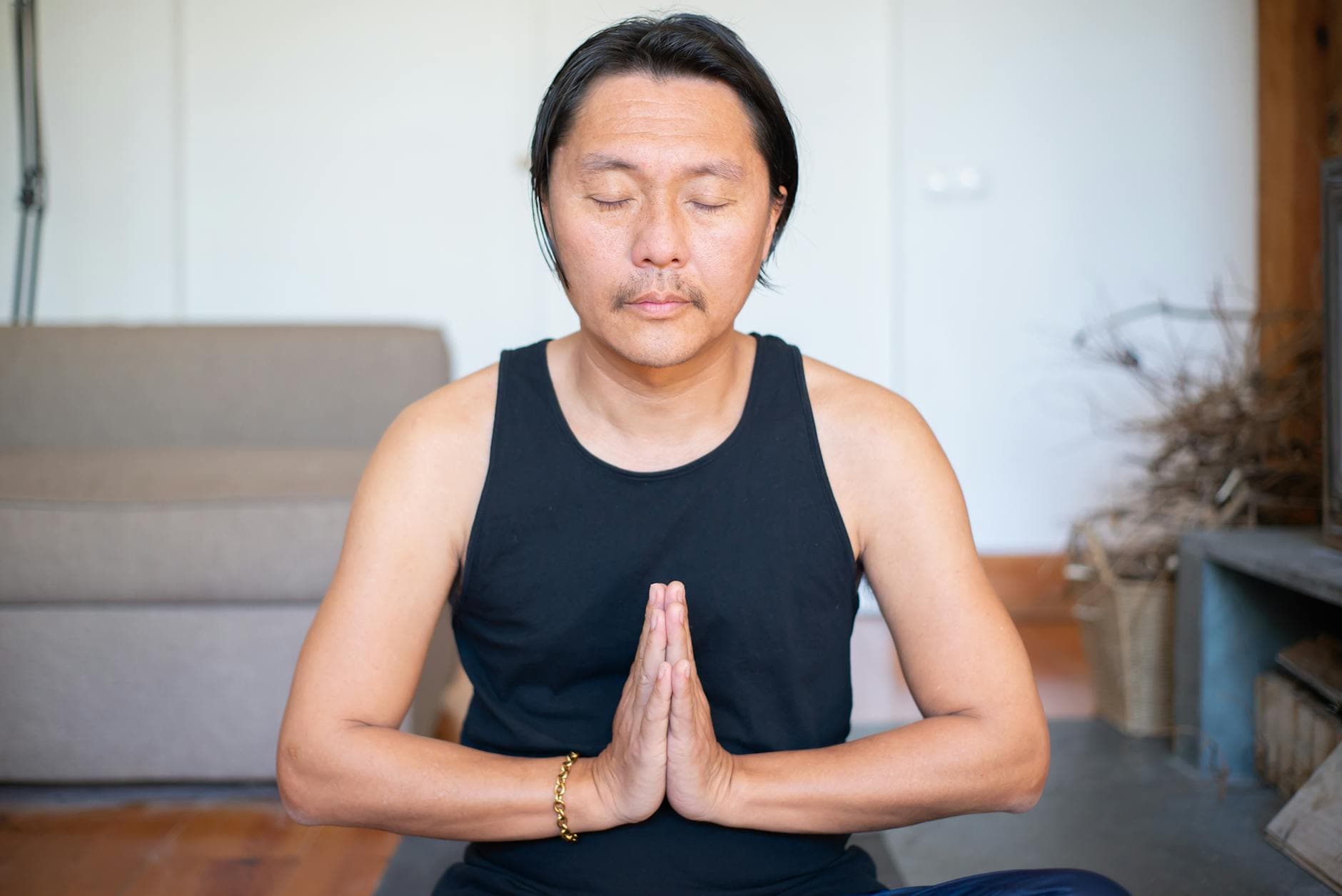
- Sit somewhere ordinary, even if it is only for a few minutes.
- Notice the breath without trying to force it.
- When attention wanders, bring it back without turning the moment into a failure.
- Repeat a few times a week until the practice feels familiar.
The point is not to become perfectly calm. The point is to learn that you can return your attention on purpose.
The evidence base is broad, but the practice still has limits
The wider research landscape supports the kind of practical framing Warren uses. The American Psychological Association describes mindfulness meditation as a research-proven way to reduce stress, and the National Center for Complementary and Integrative Health says meditation and mindfulness are studied for anxiety, depression, pain, and high blood pressure. NCCIH also notes that meditation use among U.S. adults more than doubled, rising from 7.5 percent in 2002 to 17.3 percent in 2022. That growth suggests the practice has moved far beyond the margins.
Still, the most responsible version of the story does not oversell it. NCCIH cites a review of 83 studies involving 6,703 participants in which 55 studies reported negative experiences related to meditation. The takeaway is not that mindfulness is unsafe. It is that it should be taught honestly, with realistic expectations and a clear understanding that some people may encounter discomfort as they practice. That nuance is part of what makes Warren’s approach useful: it is steady, not salesy.
More recent research continues to support the benefits. A 2024 systematic review in *Biomedicines* found that mindfulness and meditation can improve emotional regulation and stress resilience and may reduce amygdala reactivity. A 2026 systematic review and meta-analysis in *npj Mental Health Research* also points in the same direction for non-clinical adults. Together, those findings back up the campus message that mindfulness is less about chasing serenity than about strengthening the mind’s ability to respond.
Where BYU points students next
Warren does not leave the idea in the air. He points people to My Best Self 101, his free set of resources on positive psychology, mindfulness, and self-compassion, along with a YouTube channel of the same name. BYU CAPS also directs students to those materials and lists meditation apps and tools including Headspace, Calm, Meditation Studio, and Insight Timer. That matters because students often need a gatekeeper, a first click, or a guided path before a new practice feels usable.
The larger message is clear: mindfulness at BYU is being presented not as a lofty ideal but as a concrete tool for attention, anxiety, and resilience. In a season when student distress is common and distraction is constant, Warren’s most persuasive move is also his simplest one, he makes meditation small enough to begin.
This article was produced by Prism’s automated news system from verified source data, official records, and press releases, then run through automated quality and moderation checks before publishing. The system is built and supervised by the people who set the standards it runs under. Read our full AI policy.
Did this article answer your question?