Dartmouth mindfulness week offers open access, daily practice, and retreats
Dartmouth is turning mindfulness into a full week of practice with Plum Village monastics, from drop-ins to a 4.5-hour retreat and a two-day retreat.
A campus visit with real lineage
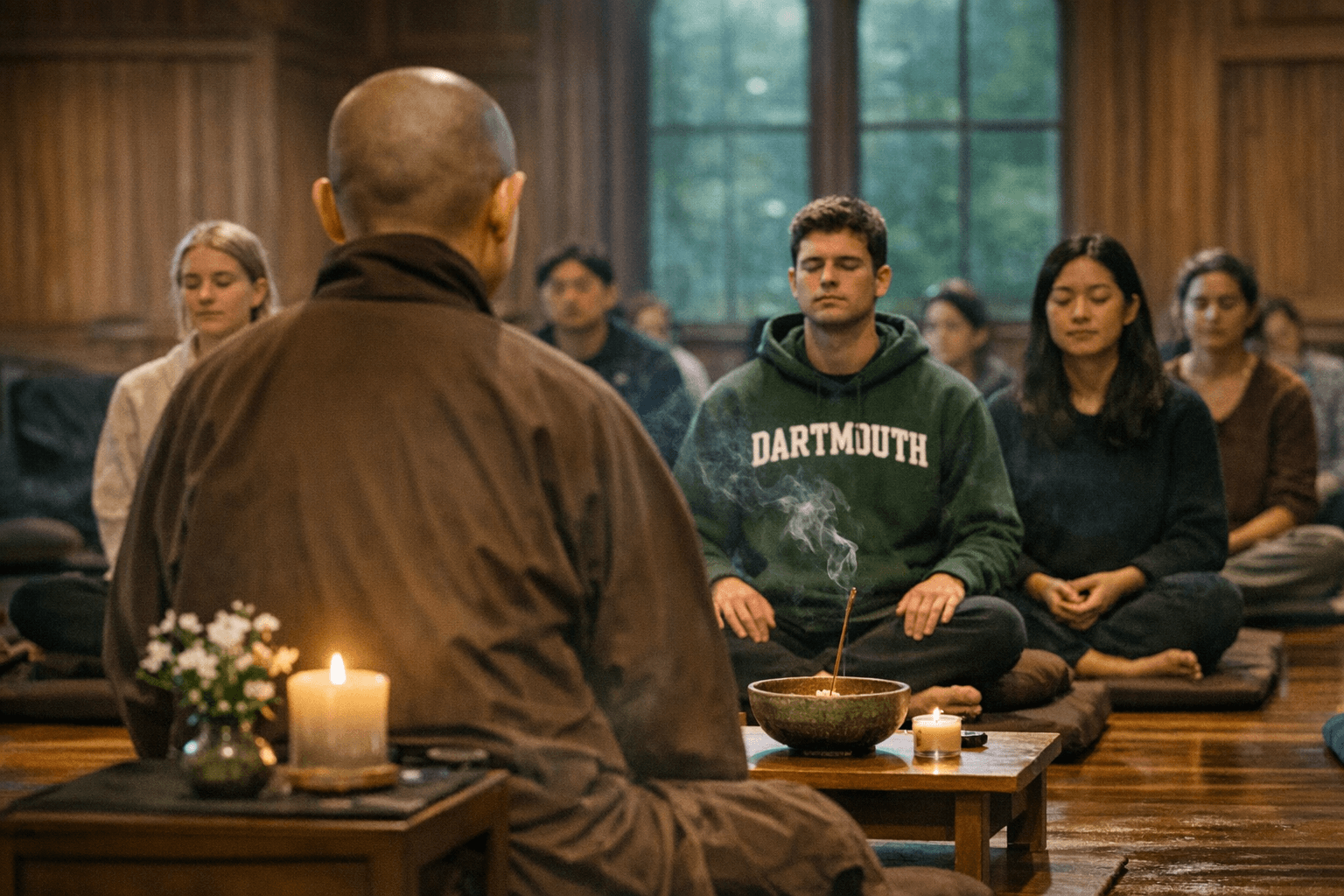
Dartmouth is not just hosting another wellness calendar item. Mindful Dartmouth is bringing in ten Buddhist Dharma teachers from Zen Master Thich Nhat Hanh’s Deer Park Monastery in California, and that gives the week a recognizable lineage that seasoned practitioners will notice immediately. The program runs April 13 to 19, 2026, and Dartmouth says the events are open to the Dartmouth community and the public unless otherwise posted.
That matters because the draw is not a lecture about mindfulness in the abstract. It is repeated exposure to the practice itself, in a setting shaped by Plum Village, the global community of mindfulness practice centers founded by Thich Nhat Hanh, the monk and peace activist widely credited with helping introduce mindfulness to the West. Deer Park Monastery describes itself as one of 12 Plum Village mindfulness practice centers around the world, which helps explain why this feels bigger than a campus wellness series. It is a direct visit from a living tradition.
What the week actually offers
The week is built around daily practice sessions led by the monastics, and the menu is broad enough to show how mindfulness works outside a single seated meditation. Dartmouth’s programming includes guided meditation, mindful movement, talks, mindful eating, live music, and time for meaningful connection. That combination is the point: the schedule treats mindfulness as something embodied, social, and repeatable, not just something you do once and then file away.
For readers who care about the mechanics of practice, the structure is unusually generous. Instead of forcing everyone into one format, Dartmouth has set up a rhythm of short, accessible touchpoints across the week, with optional intensification through a 4.5-hour retreat and a separate two-day retreat. That makes the week useful both as a first contact and as a deeper tune-up for people who already have a sitting practice and want to refresh it inside a community container.
Where newcomers should start
The easiest entry point is the public programming that requires no prior meditation experience. Dartmouth is explicit on that point, and it makes the week feel less like a specialized retreat and more like an open invitation into a Buddhist-informed practice culture. If you have been curious about mindfulness but have not wanted to buy a cushion, learn a whole vocabulary, or worry about doing it “right,” this is the low-barrier version.
The best beginner-friendly sessions are the ones that mix instruction with movement or listening. Guided meditation is the obvious anchor, but mindful movement and talks are especially welcoming because they give structure to people who are still learning how to sit with attention. The live music and mindful eating pieces also help, because they show mindfulness as a full sensory practice, not a silent performance of stillness.
Where committed practitioners can go deeper
For people who already sit regularly, the value here is repetition with a lineage. The week’s daily sessions let you return to the same instructions, the same monastic presence, and the same communal atmosphere day after day, which is often where practice starts to settle. That continuity is what turns an event into an immersion.
The 4.5-hour retreat and the separate two-day retreat are the clearest signals that Dartmouth is not flattening this into a wellness sampler. If you want a more concentrated container, those longer formats create the kind of continuity that allows walking meditation, silence, and longer sitting to start doing their real work. The public sessions may get someone in the door, but the retreat structure is what gives experienced practitioners a reason to clear their calendar.
Why this fits Dartmouth’s broader pattern
Dartmouth has been building toward this for years. The Tucker Center says the Plum Village monastic visit is now in its fourth year at Dartmouth, which makes the 2026 program feel less like a novelty and more like an established part of campus life. That continuity matters because mindfulness communities tend to deepen through repetition, not spectacle.
The school’s earlier coverage shows the shape of that growth. In 2024, Dartmouth described a similar week as including classroom visits, meditation practice, lectures, and retreats, with monastics from Deer Park Monastery in California and Magnolia Grove Monastery in Mississippi. That same year, Dartmouth reported that the monastics led morning meditation for Dartmouth and Upper Valley community members, and that twice during the week people gathered on the Baker-Berry Library lawn for qigong and mindful movement. Those details show the program has already moved beyond a single room and into the daily life of the campus.
Why the public framing matters
One of the smartest things Dartmouth has done is avoid treating this as religious instruction in disguise. The 2025 schedule made that distinction clear: the teachings have roots in Zen Buddhism, but the events are not religious. That language widens the door without flattening the tradition behind it.
For students, faculty, local residents, and anyone in the Upper Valley who is curious about Buddhist-informed mindfulness, that balance is the sweet spot. The week offers enough structure to feel serious, enough accessibility to feel welcoming, and enough repetition to let practice become familiar instead of theoretical. That is the real hook here: a campus program that lets people test mindfulness as a lived rhythm, then decide whether they want a single session, a longer retreat, or a much deeper return.
This article was produced by Prism’s automated news system from verified source data, official records, and press releases, then run through automated quality and moderation checks before publishing. The system is built and supervised by the people who set the standards it runs under. Read our full AI policy.
Did this article answer your question?