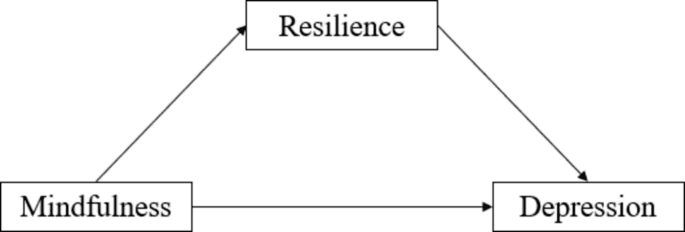
Digital mindfulness eased depression by boosting positive affect
Digital mindfulness may not work by “boosting mindfulness” alone. In this trial, the real lever was brighter daily affect, and that shift tracked with fewer depressive symptoms.
The mechanism that matters is not the one many app stores sell
If you judge a meditation app only by whether it makes people feel more “mindful,” you can miss the part that actually seems to move depression scores. In a new study by Andrew A. Rauch, Colleen S. Conley, and Rebecca L. Silton, the meaningful bridge was positive affect: the small but important lift in warmth, enjoyment, and emotional brightness that appeared to carry the intervention’s benefit.

That is the more useful way to read digital mindfulness now. The question is not just whether an app teaches attention training. It is whether it reliably helps someone feel a little more open, a little more energized, and a little less flat from day to day.
What the trial tested
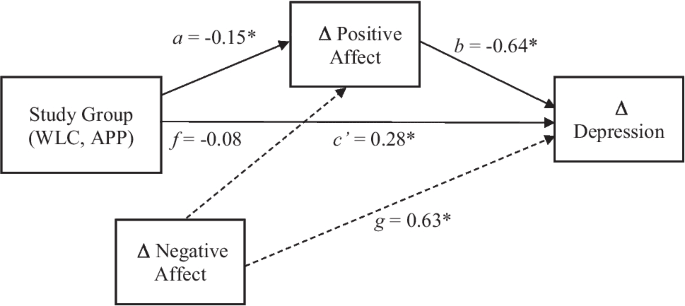
The study followed 127 college students with elevated depression symptoms in an 8-week randomized controlled trial of a technology-delivered mindfulness-based intervention. In the earlier Loyola University Chicago thesis on the same trial, the app was identified as Headspace, and that thesis reached the same core conclusion: only change in positive affect significantly mediated the relation between study group and depression symptoms.
The researchers did not stop at one broad mood check. They looked at positive affect, negative affect, and emodiversity to see what actually shifted when students used the program. That matters, because digital mindfulness often gets discussed as if it works through one clean pathway. This trial suggests the story is messier and more interesting: the benefit was not simply less distress, but a measurable increase in positive emotional experience that lined up with lower depressive symptoms.
Why positive affect is the part to watch
The strongest finding was specific. Increases in positive affect significantly mediated the relationship between the intervention and reduced depression symptoms. In plain language, the app seemed to help students access more positive emotional experience, and that change was tied to fewer depressive symptoms.
That mechanism should change how you evaluate a meditation app. If a program only helps you notice anxiety or reduces stress a bit, that may be useful, but it is not the same thing as improving the emotional climate of the day. This study points to a sharper standard: good digital mindfulness tools should help create conditions for brighter emotional states, not just more awareness of whatever is already there.
The researchers also found that global and positive emodiversity were related to changes in depression symptoms. Still, those measures did not emerge as significant mediators. That is an important distinction for anyone tempted to overread the data. Variety in emotional life may matter, but in this trial it was the lift in positive affect that did the heavy lifting.
How this fits the bigger college mental-health picture
This paper lands in a campus environment where the demand for mental-health support is huge and the delivery format matters. The American College Health Association describes its National College Health Assessment as a nationally recognized survey for health and wellness issues that affect student academic performance. Its Spring 2024 survey period ran from January through June 2024 and drew 103,639 students, the largest reference group since the assessment became fully web-based.
That scale is the reason digital tools keep coming up in student mental health. Not every student will show up for in-person care, and not every campus has enough capacity anyway. A mindfulness app that can move depression symptoms through positive affect is interesting precisely because it can reach students where they already are, on a phone, between classes, after labs, or during the kind of day when the idea of sitting in a counseling center feels like too much.
The research also fits with a broader pattern in the app literature. A 2024 Headspace study of 57 college students tracked 86 minutes of app use over two weeks and found decreases in anxiety and stress, while state depression and mindfulness stayed stable. That is a useful clue: digital mindfulness effects may be domain-specific rather than uniform. Another randomized controlled trial of a mindfulness-based mobile app for depressed college students assigned 145 students to two months of Headspace or waitlist control, showing that this space is still actively being tested in real student populations.
What to look for in a mindfulness app now
If you are choosing between mindfulness tools, this study argues for a more grounded checklist. Don’t just ask whether the app says “mindfulness.” Ask whether it reliably nudges daily experience in a brighter direction.
- Practices that create warmth, gratitude, pleasure, or connection
- Sessions that leave you feeling emotionally lighter, not merely more observant
- A structure that keeps you using it long enough for mood shifts to matter
- Evidence in student or depression-focused samples, not just vague wellness claims
Look for programs that do more than simple breath tracking:
That is the design lesson hiding inside the data. The best digital mindfulness tools may not be the ones that sound the most spiritual or the most technically polished. They may be the ones that help a stressed, depressed student feel a little more emotionally alive, because that is the pathway this trial actually put under the microscope.
The practical read on the result
Rauch’s 2022 thesis at Loyola University Chicago, which examined the same 127-student Headspace-based randomized controlled trial, already pointed in this direction. The new paper by Rauch, Conley, and Silton strengthens the same message: the app’s value was not abstract mindfulness in isolation, but the way it increased positive affect and, through that, eased depression symptoms.
That is the part worth remembering the next time a meditation app promises calm. Calm is nice. But if you want a tool that may actually change how depression feels on a school-night level, watch for the small uptick in positive affect. That is where the mechanism lives, and that is where the better apps should earn their keep.
This article was produced by Prism’s automated news system from verified source data, official records, and press releases, then run through automated quality and moderation checks before publishing. The system is built and supervised by the people who set the standards it runs under. Read our full AI policy.
Know something we missed? Have a correction or additional information?
Submit a Tip